We may earn a commission when you buy through links on this page, at no extra cost to you. How this works.
CAMBIVO 2-Pack Knee Brace Compression Sleeve with Gel Pad & Side Stabilizers
Four gel-infused knee sleeves tested for comfort, stability, and court mobility.
Fit and safety come first
Use the comparison as a shortlist, but keep fit, comfort, and any health or safety constraints ahead of price.
Senior pickleball players face a specific challenge: the sport's quick lateral shifts and sudden stops place repetitive stress on the knee joint, yet traditional rigid braces often limit the range of motion needed for effective play. Gel-infused compression knee sleeves address this by pairing targeted cushioning over the patella with graduated compression that stabilizes the joint without locking it in place.
The gel pad acts as a shock absorber during impact movements - lunges to the net, quick pivots at the baseline - while the sleeve's fabric applies consistent pressure to support surrounding soft tissue. For players over 60 who train three to four times weekly, this combination helps manage the wear that accumulates from repetitive court time. The trade-off lies in fit precision: a sleeve that's too loose won't provide meaningful compression, and one that's too tight can restrict blood flow or bunch behind the knee during play.
Gel pad placement matters more than thickness. A centered oval or donut-shaped pad that sits directly over the kneecap disperses pressure evenly, while off-center or oversized pads can migrate during side-to-side movement. Sleeve height also plays a role - designs that extend 10 - 12 inches vertically offer better coverage during deep bends, but shorter sleeves may suit players who prefer less bulk under athletic wear.
Sizing accuracy determines whether a gel-infused sleeve becomes a reliable training tool or an uncomfortable distraction. Most brands base size charts on mid-patella circumference and thigh measurements; a difference of even one inch can shift you between categories. The sleeves covered here reflect options across fit profiles, gel configurations, and compression grades suitable for regular recreational play.
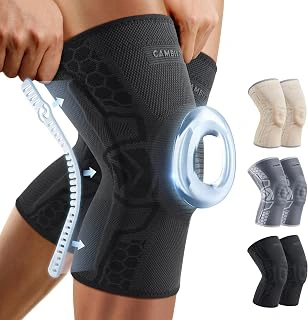
CAMBIVO 2-Pack Knee Brace Compression Sleeve with Gel Pad & Side Stabilizers
The CAMBIVO 2-Pack Knee Brace Compression Sleeve delivers two matching sleeves for $24.85, making it a practical choice when both knees need support during pickleball sessions. Rated 4.4 out of 5, this design combines a gel pad for cushioning over the kneecap with side stabilizers that add structure along the medial and lateral edges of the joint.
Each sleeve uses compression fabric to hold the gel pad in place during quick lateral movements and sudden stops at the net. The gel pad sits directly over the patella, creating a buffer between the knee and any contact with the court surface during low volleys or accidental falls. The side stabilizers are integrated into the fabric rather than rigid plastic stays, which allows some flex while still discouraging unwanted side-to-side wobble.
For senior players with larger or swollen knees, fit accuracy matters more than with single-thickness sleeves. The compression needs to be snug enough to keep the gel pad centered, but not so tight that it bunches behind the knee or restricts circulation during extended play. Check the manufacturer's size chart against both your thigh circumference (measured four inches above the kneecap) and calf circumference (measured four inches below) before ordering, since a mismatch in either dimension can cause the sleeve to roll or slide.
The side stabilizers do add slight resistance to extreme lateral flexion. During fast serve returns or wide split steps, some players may notice the fabric pushing back against the knee's natural range of motion. This tradeoff can feel reassuring if you want gentle guidance to stay within a comfortable movement arc, but it may feel restrictive if you rely on full lateral mobility for defensive digs. The stabilizers work best for players who prioritize steadiness over maximum agility.
Because the pack includes two sleeves, you can rotate them between games or wear both simultaneously if you experience discomfort in both knees. The matched pair also simplifies laundry planning - wash one set while wearing the other. The gel pad and stabilizer features are identical in both sleeves, so you won't have to choose which knee gets the better support. For players on a fixed budget who need bilateral coverage, the per-sleeve cost makes this option more accessible than buying two premium singles.
- ✅ Two sleeves for $24.85 offer matched bilateral support
- ✅ Gel pad cushions the kneecap during contact with the court
- ✅ Integrated side stabilizers add structure without rigid stays
- ✅ Compression fabric holds the pad in position during lateral movement
- ⚠️ Side stabilizers may restrict extreme lateral flexion during wide serve returns
- ⚠️ Fit requires careful measurement of both thigh and calf to prevent rolling or bunching
- ⚠️ Compression can feel tight for seniors with swollen knees if sized incorrectly
How Gel Pads and Compression Work Together
Compression fabric wraps the knee joint in graduated pressure that stabilizes lateral movement and supports soft tissue during quick direction changes. The snug fit reduces excess motion inside the sleeve, which helps limit friction and wobble when you pivot or lunge at the net.
Gel pads sit directly over the patella and distribute impact forces across a wider surface area. When you land from a split step or drop into a low volley position, the gel absorbs and spreads the load instead of concentrating pressure on a single point. This cushioning layer works with the compression fabric to manage both steady joint support and sudden shock.
Pickleball demands repeated stop-and-go sequences - short sprints to the kitchen line, quick lateral shuffles, and frequent weight shifts. Compression alone can stabilize the joint, but it does little to cushion hard landings on indoor or outdoor courts. Gel padding fills that gap by softening contact points during each step and jump. The two materials handle different mechanical challenges: one controls movement, the other absorbs impact.
For senior players, this dual-function design addresses both joint stability during play and comfort after long rallies. Compression helps maintain alignment through the full range of motion, while the gel reduces stress on the kneecap during the repetitive bending and straightening that pickleball requires.
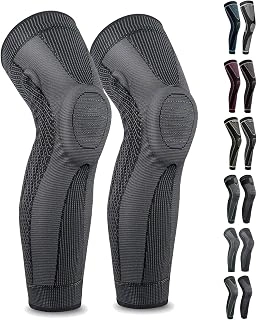
Full Leg Long Compression Sleeves & Knee Sleeves
The Full Leg Long Compression Sleeves extend from mid-thigh to just above the ankle, offering coverage that goes well beyond a standard knee sleeve. Priced at $26.99 with a 4.4 out of 5 rating, this design suits senior players who feel fatigue or discomfort not just at the knee but along the calf or lower thigh during long sessions.
Extended coverage means the sleeve compresses muscle groups along the entire leg, which can help reduce vibration and provide a wrapped feeling some players prefer. The tradeoff is fit: longer fabric has more opportunity to bunch or wrinkle behind the knee when you lunge or bend deeply at the net. If you play a net-heavy style with frequent low volleys, test the sleeve during warm-up drills to confirm it stays smooth through your range of motion.
The sleeve works under most athletic pants without creating bulk, and the fabric stays opaque enough to wear under shorts. Players who already use calf sleeves or experience lower-leg tightness may find the single-piece design simpler than layering separate garments. Because the sleeve covers more skin, expect slightly more warmth than a knee-only option - helpful in air-conditioned gyms, less ideal in outdoor summer heat.
Sizing becomes more critical with full-leg designs. Measure both your thigh circumference and calf circumference, and compare against the product's size chart. A sleeve that fits the knee well but is too loose at the calf will slide down during play; one that's snug at the thigh but tight at the calf can restrict circulation.
Try the sleeve during a practice session before wearing it in competitive play. Walk through your typical movement patterns - split steps, side shuffles, and deep lunges - to confirm the fabric holds position and doesn't create pressure points at the back of the knee. If the sleeve stays put and feels supportive rather than restrictive, the extended design delivers more coverage at a single price point.
- ✅ Extended coverage from thigh to calf for full-leg muscle support
- ✅ Single-piece design eliminates need for separate calf sleeves
- ✅ Works under shorts or athletic pants without excessive bulk
- ✅ Provides added warmth in cooler indoor facilities
- ⚠️ Longer fabric may bunch behind the knee during deep lunges
- ⚠️ Requires accurate measurement at both thigh and calf for proper fit
- ⚠️ Extra coverage increases warmth in hot outdoor conditions
- ⚠️ Sizing mismatch between thigh and calf can cause slipping or restriction
Fit Checklist: Ensuring Your Knee Sleeve Works on the Court
- Measure your knee circumference at mid-patella and 4 inches above and below while standing
- Check that the gel pad sits directly over your kneecap without shifting during a practice lunge
- Confirm the sleeve stays in place through three full squats without rolling or bunching
- Verify you can bend your knee to 90 degrees without the fabric digging into the back of your leg
- Test side-to-side movement: the sleeve should move with you, not against you
- Wear the sleeve for 20 minutes before play to identify any pressure points or circulation issues
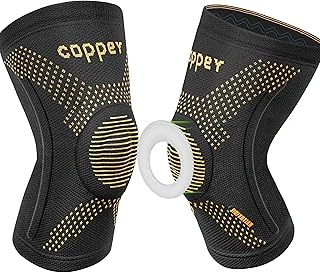
JIUFENTIAN 2-Pack Copper Fiber Knee Braces with Side Stabilizers
The JIUFENTIAN 2-Pack offers copper-infused compression fabric with integrated side stabilizers at $27.99, earning a 4.3 out of 5 rating from users. For seniors playing pickleball multiple times each week, the copper fiber weave is designed to resist odor buildup, a practical advantage when sleeves are worn regularly between wash cycles.
The side stabilizers run vertically along both edges of the knee, adding structure without the bulk of hinged braces. This design helps limit side-to-side drift during lateral movements common in pickleball, while the compression knit still flexes enough for full range of motion during serves and volleys.
Copper-infused fabric tends to be slightly thicker than standard nylon-spandex blends, which adds durability but can reduce airflow. During outdoor summer sessions, some seniors may notice the sleeve feels warmer than lighter-weight compression options, particularly in humid climates or extended play beyond an hour. The tradeoff is a firmer hold and the odor-resistance benefit, which matters more for players who prefer wearing the same pair across back-to-back days.
The two-pack format means you have a backup ready when one is in the wash. Hand-washing is recommended to preserve the copper fiber's integrity and prevent premature breakdown of the infused particles. Machine washing on delicate cycles may work short-term, but repeated high-heat drying will degrade both the compression elasticity and the copper treatment faster than air-drying.
If you prioritize odor control and need side support without a full hinged brace, the JIUFENTIAN pair balances those needs at a budget-friendly price. Players who run hot or prefer maximum breathability in warm weather should weigh the thicker fabric against the stability and freshness advantages.
- ✅ Copper fiber resists odor for seniors playing multiple times weekly
- ✅ Side stabilizers add lateral support without hinged-brace bulk
- ✅ Two-pack format provides backup sleeve between washes
- ✅ Budget-friendly at $27.99 for the pair
- ⚠️ Thicker copper-infused fabric reduces breathability in hot weather
- ⚠️ Requires hand-washing to maintain copper fiber integrity
- ⚠️ May feel warmer than lighter compression sleeves during extended outdoor play
Choosing Between Gel Pad Placement and Stabilizer Design
Gel pad placement and stabilizer design address different stress patterns on the court. Centered gel pads cushion the patella directly, absorbing impact when you lunge forward or land from a jump. If you feel soreness at the front of your knee after volleys or serves, a centered pad distributes pressure across the kneecap and may reduce that discomfort during repetitive forward motion.
Side stabilizers - usually silicone strips or reinforced panels along the medial and lateral edges - resist sideways knee drift during pivots and lateral shuffles. Players who notice their knee wobbling inward or outward when changing direction, or who feel instability along the sides of the joint, benefit more from lateral reinforcement than from frontal cushioning alone.
Some sleeves combine both features, placing a gel pad over the patella and adding stabilizer bands on each side. This hybrid approach works well if you experience both front-of-knee soreness and side-to-side instability, though the trade-off is often a bulkier fit and slightly less breathability. Single-feature designs stay lighter and cooler but target only one movement plane.
Match the design to your primary complaint: front soreness calls for centered gel, lateral wobble calls for side stabilizers, and mixed symptoms call for a combined structure.
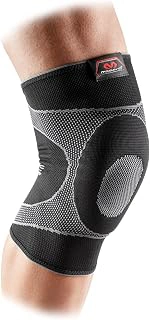
McDavid Gel Knee Brace Elastic Compression Sleeve
The McDavid Gel Knee Brace Elastic Compression Sleeve comes from a brand with a long history in sports medicine gear, priced at $26.72 for a single sleeve with a 4.2 out of 5 rating. That rating sits lower than some two-pack competitors in this guide, but the McDavid name carries weight for players who value brand recognition and want a sleeve backed by decades of feedback from athletes across many sports.
This sleeve delivers graduated compression through an elastic knit fabric, with a sewn-in gel buttress positioned over the kneecap. The gel pad adds localized cushioning during impact and helps distribute pressure across the patella. Over months of repeated laundering and court time, compression fabrics can lose elasticity, but McDavid's construction has a track record of maintaining consistent tension longer than budget alternatives.
Where this option stands out is durability. Players who replace sleeves frequently due to stretched-out fabric or flattened gel pads often find the McDavid unit holds its shape through a full season of three-times-per-week play. The gel buttress remains pliable rather than hardening or cracking, which can happen with cheaper formulations exposed to sweat and sun.
The single-sleeve format means you pay more per knee compared to two-pack bundles. If you need coverage on both legs, the cost doubles to over fifty dollars. For senior players with asymmetric needs - one knee requiring more support than the other - buying individually makes sense. The 4.2 rating reflects some fit complaints: McDavid's sizing tends to run snug, especially if you measure a cold knee in the morning. Measure mid-game when your knee is warm and slightly swollen from activity to avoid ordering a sleeve that feels too tight during actual play.
Compression consistency matters most during long tournament days when you're wearing the sleeve for hours at a stretch. The McDavid unit doesn't bunch behind the knee or roll down the calf as much as thinner sleeves, though the snugger fit can feel restrictive if you're between sizes. The gel pad stays centered over the kneecap without significant migration, which is a common issue with adhesive or loosely sewn pads.
The trade-off here is clear: you're paying a premium for brand trust and build quality that shows up after months of use, not just the first few matches. If you've burned through cheaper sleeves that lose compression or develop thin spots within weeks, the McDavid option justifies the higher per-sleeve cost. If budget is the priority and you need two sleeves immediately, a two-pack competitor offers better upfront value even if replacement comes sooner.
- ✅ Brand with long sports medicine track record
- ✅ Gel pad durability through repeated laundering
- ✅ Compression fabric maintains tension over months
- ✅ Gel buttress stays pliable and centered
- ⚠️ Single-sleeve format doubles cost for two knees
- ⚠️ Sizing runs snug, especially on cold measurements
- ⚠️ 4.2 rating lower than some two-pack alternatives
Compression Levels and Seniors: What the Ratings Mean
Compression ratings measure how much pressure a sleeve applies to the limb, expressed in millimeters of mercury (mmHg). Most pickleball knee sleeves fall into the moderate range - 15 to 20 mmHg - which supports circulation and helps reduce minor swelling without restricting your range of motion during play. This level works well for active wear because it stays snug enough to stabilize the joint but doesn't squeeze so tightly that it causes discomfort or fatigue over a two- or three-hour session.
Firm compression, typically 20 to 30 mmHg, delivers stronger pressure and is sometimes used for recovery or post-activity support. For many seniors, that tighter fit can feel restrictive, especially if worn all day or during extended matches. If you have circulation concerns, varicose veins, or peripheral artery disease, firm compression may not be appropriate without medical guidance.
None of the sleeves in this guide are classified as medical-grade compression devices. They are designed for athletic support and comfort, not to treat or manage vascular conditions. If you experience numbness, tingling, or significant swelling in your legs or knees, consult your physician before using any compression garment. Understanding these ratings helps you choose a sleeve that balances support with comfort for your specific needs on the court.
How to Break In Your Sleeve and Maintain Gel Integrity
Proper care extends the functional life of both the compression fabric and the gel inserts. Wash your sleeve in cold water by hand or on a gentle machine cycle, then air dry it flat or hanging - never use a dryer, because high heat can weaken elastic fibers and loosen the adhesive bond that holds gel pads in place. Many sleeves lose their snug fit or experience gel pad separation after just a few hot-water or dryer cycles.
Before wearing your sleeve in a tournament or multi-hour session, break it in during a few short practices. This confirms the band sits comfortably behind your knee, the gel pad aligns with your kneecap, and the compression level doesn't pinch or roll during lateral movement. If the fabric bunches or the pad shifts, adjust the rotation or try the next size before committing to extended wear.
Inspect the gel pads once a month for cracks, thin spots, or edges peeling away from the fabric. Early detection lets you retire a sleeve before a pad failure mid-game. Store sleeves flat or loosely rolled in a drawer rather than crumpled in a bag, which can crease gel and accelerate breakdown. Following these steps keeps your sleeve delivering consistent support and cushioning across dozens of matches.
When to Size Up: Swelling, Fit, and Multi-Hour Sessions
Knee swelling during or after play changes how a compression sleeve should fit. Players who notice puffiness around the kneecap or just above it by the end of a session often find that their usual size becomes uncomfortably tight, cutting off circulation or leaving red rings on the skin.
If you typically experience swelling during play, sizing up one increment can prevent the sleeve from becoming a tourniquet. A slightly looser sleeve still provides support and warmth but allows the fabric to expand with tissue changes. This approach works well for players with fluid retention, those on certain medications that affect circulation, or anyone whose knees swell predictably after 90 minutes on the court.
Sensitive skin is another reason to consider a larger size. Thinner or more fragile skin - common in players over 60 - can react poorly to sustained compression. If you see persistent red marks, itching, or broken capillaries after wearing a sleeve, the pressure is too high. A roomier fit reduces shear and allows better airflow without sacrificing the gentle stability that helps with tracking and proprioception.
Back-to-back sessions or tournament days present a different challenge. Wearing a compression sleeve for four or five hours straight can fatigue the tissue underneath, especially if the fit is snug. On multi-hour days, starting with a size up can keep comfort consistent from the first game to the last. You trade a small amount of immediate compression for sustained wearability.
Maximum stabilization requires snugness. If your primary goal is controlling side-to-side wobble or supporting a knee that feels loose during lateral movement, a tighter fit is necessary. The fabric needs to grip the joint firmly enough to influence alignment. Players recovering from a sprain or dealing with ligament laxity usually need their true size or even a size down, provided circulation remains healthy and the sleeve can be worn without pain.
Play frequency also informs the decision. If you play twice a week for an hour, a snug fit is manageable. If you play daily or wear the sleeve for practice plus errands, comfort over time becomes more important than peak compression. In that case, sizing up prevents the cumulative fatigue that comes from constant pressure on the same tissue.
A practical test: if you can slide two fingers under the top band without force, the sleeve will accommodate mild swelling. If you cannot, and your knee swells routinely, go up a size. If the sleeve rotates or bunches behind the knee during a lunge, it is too loose. The right fit stays in place through a full range of motion but does not leave deep marks or numbness after an hour of wear.
Frequently Asked Questions About Gel Knee Sleeves for Pickleball
Senior pickleball players often wonder whether gel-infused compression knee sleeves fit their specific needs, court conditions, and daily routines.
You can wear these sleeves under pants if they are sized correctly. A sleeve that fits snugly without bunching will layer under warm-ups or athletic pants without discomfort. Oversized sleeves, however, create fabric rolls that dig in and distract during play.
Gel pads do lose cushioning over time. With regular use - three to four times per week - most gel inserts compress and thin after six to twelve months. Once the pad feels flat or shifts inside the pocket, cushioning performance drops and it's time to replace the sleeve.
Wearing one sleeve or two depends on where you feel discomfort. If only one knee needs extra support and cushioning, a single sleeve is sufficient. If both knees ache after matches or feel unstable during lateral movement, wearing a pair offers balanced compression and symmetry.
These sleeves work on both indoor and outdoor courts. Indoor gyms with climate control present no issues. Outdoor play in warm weather, though, can make thicker sleeves trap heat. Look for models with moisture-wicking fabric or mesh ventilation panels if you play outside regularly in summer months.
Understanding these practical factors helps you choose a sleeve that matches your playing schedule, climate, and comfort preferences without guesswork.
Making the Right Choice for Your Play Style and Comfort Needs
Choosing the right gel-infused compression knee sleeve depends on your play schedule, budget, and the type of support you need most during court movement. If you play several times a week and want two sleeves without stretching your budget, CAMBIVO delivers solid compression and secure gel pad coverage for both knees. Players who feel strain higher in the thigh or hamstring should look at the Full Leg design, which extends compression and stabilization well above the knee joint. For those who practice in warm climates or sweat heavily during long sessions, JIUFENTIAN's anti-odor fabric keeps the sleeve fresher between washes. If long-term durability and brand reliability matter more than a low price, McDavid's construction and warranty support make it a dependable choice for seasons of regular use.
Fit accuracy drives comfort and performance more than brand name or extra features. Measure your knee circumference at the center of the kneecap and your thigh six inches above it, then compare those numbers against each manufacturer's size chart rather than assuming your usual clothing size will work. Gel pad placement also varies: some sleeves center the cushioning directly over the kneecap, while others angle it slightly to protect the sides during lateral lunges and pivots. Test your new sleeve during a low-pressure warm-up session to check for bunching behind the knee, pressure points along the edges, or slipping during quick direction changes. A sleeve that stays in place and feels secure without cutting circulation will let you focus on the game instead of adjusting gear between points.
Match your choice to how you actually play rather than features you think you might need. Budget and comfort preferences narrow the field quickly, but the sleeve that fits your measurements and supports your movement pattern will always outperform a higher-priced option that slides or binds. Take the time to measure, compare, and test before committing to tournament or league play.