We may earn a commission when you buy through links on this page, at no extra cost to you. How this works.
CSITE 6 Pack Cooling Towels (47x12) for Neck and Face
Four proven cooling towels that help senior players stay comfortable and safe during hot-weather tournaments.
Fit and safety come first
Use the comparison as a shortlist, but keep fit, comfort, and any health or safety constraints ahead of price.
Senior pickleball players face a higher risk of overheating during summer tournaments because the body's ability to regulate temperature declines with age. Sweating becomes less efficient, thirst signals often diminish, and circulation slows, making it harder to dissipate heat quickly during back-to-back matches under direct sun.
Heat exhaustion can set in faster than many players realize. Early symptoms include dizziness, fatigue, headache, and confusion - signs that can be mistaken for simple tiredness or dehydration. Without intervention, heat exhaustion can progress to heat stroke, a medical emergency that requires immediate attention.
A cooling towel is not a substitute for hydration, shade breaks, or recognizing your limits, but it serves as a practical tool in a broader heat safety plan. When activated with water, these towels use evaporative cooling to lower skin temperature on the neck, forehead, and wrists - areas where blood vessels sit close to the surface. This can help your body shed excess heat between games and during breaks.
Unlike ice packs that melt quickly or damp towels that grow warm in minutes, cooling towels stay cool for extended periods when kept moist. They fold into tournament bags, dry quickly, and can be reactivated throughout the day. For senior players managing multiple matches in high heat, this repeatable cooling effect makes them a smart, affordable piece of safety gear.
The key is to integrate a cooling towel into your routine: apply it during changeovers, keep it draped on your neck between matches, and pair it with frequent water intake and rest in shaded areas. Staying cool is not about comfort alone - it is about protecting your health so you can compete safely all day.
How Cooling Towels Work to Lower Your Body Temperature
Cooling towels rely on evaporative cooling, the same principle that allows sweat to regulate body temperature. When you wet the towel, wring out excess water, and snap it open, the moisture spreads across the microfiber weave. Air moving over the damp fabric causes water molecules to evaporate, pulling heat away from your skin in the process.
Microfiber fabric holds moisture longer than cotton because of its tightly woven synthetic fibers, which create more surface area and trap water within the weave rather than absorbing it completely. This means the towel stays cool and damp for extended periods without feeling soaked. A properly activated cooling towel can reduce skin temperature by 10 to 20 degrees compared to the surrounding air.
The cooling effect lasts 20 to 40 minutes depending on temperature, humidity, and how much you're moving. In dry, hot conditions, evaporation happens faster and the towel cools more aggressively but also dries out sooner. In humid environments, evaporation slows, so the towel stays damp longer but doesn't feel as cold. Once the fabric dries, a quick re-wet restores the cooling.
The activation process matters. A light wring leaves enough water for evaporation without drips, and snapping or swinging the towel spreads moisture evenly across the fibers. Skipping the snap can leave dry patches that won't cool effectively. Understanding this cycle helps you time re-wetting breaks during long tournament days rather than waiting until you feel overheated.
What to Look for When Choosing a Cooling Towel for Tournament Play
Tournament play puts different demands on a cooling towel than casual practice. Between matches, you need quick relief without carrying bulky equipment, and a towel that stays in place while you hydrate or stretch gives you hands-free cooling when it matters most.
Length matters more than width when you're draping a towel around your neck. A 40-inch towel wraps comfortably and covers both the back of your neck and the sides, where major blood vessels run close to the skin. Shorter towels slide off or require constant adjustment. Anything over 47 inches can feel heavy when wet and takes longer to wring out between uses.
Multi-packs make sense for tournament weekends. A fresh towel between matches feels better than re-wetting the same one repeatedly, and having a backup means you can rinse one properly without cutting into your rest time. Single towels work fine for day trips, but three or four towels give you rotation options during multi-day events.
Fabric weight creates a tradeoff. Lighter microfiber fabrics dry faster in your bag and feel less bulky around your neck, but they warm up more quickly and need re-wetting every 20 to 30 minutes. Heavier fabrics hold their coolness longer - sometimes 60 minutes or more - but take more effort to wring out and add noticeable weight when soaked. Think about your break length: short turnarounds favor lighter towels, while longer breaks between bracket rounds let you use a heavier towel that stays cool through your entire rest period.
A storage case keeps your towel separated from grips, balls, and snacks in your tournament bag. Wet fabric against other gear creates a mess, and a sealed tube or pouch also keeps the towel damp longer if you pre-soak it before leaving for the courts. If the towel comes without a case, plan to pack a small ziplock bag or waterproof pouch.
How to Properly Use Your Cooling Towel During a Match
Getting the most out of a cooling towel starts with proper activation. Before your first match, soak the towel completely in cold water - tap water works fine, though ice water will give you a stronger initial chill. Once saturated, wring out the excess until the towel is damp but not dripping; too much water reduces the evaporative cooling effect and leaves you with a wet mess instead of steady relief.
After wringing, snap or shake the towel three or four times. This motion spreads the moisture evenly through the fabric and kicks off the cooling process. Drape it around your neck during changeovers, or fold it and place it on your head or forearms where circulation brings heat to the surface. The cooling sensation should feel immediate.
During play, the towel will warm as it absorbs body heat and moisture evaporates. Plan to re-wet every twenty to thirty minutes, or sooner if the towel feels warm to the touch. A quick rinse and wring between games keeps the cooling consistent without breaking your rhythm. Many players make the mistake of letting the towel dry out completely, which stops the cooling and stiffens the fabric.
Between matches, store your damp towel in a sealed plastic bag or small wet-gear pouch. This keeps the moisture locked in and extends the cooling window without needing constant trips to the water fountain. A dry towel requires full re-soaking, which wastes time and water when you're moving between courts. Keep a small bottle of water courtside if fountains are far from your assigned court, and you'll have everything you need to stay cool from the first serve to the final point.
Pairing Your Cooling Towel with Other Heat Safety Strategies
A cooling towel works best when it's part of a complete heat safety routine, not a substitute for hydration or rest. Drink 16 to 20 ounces of water two hours before you step onto the court, then continue sipping throughout the morning. Waiting until you feel thirsty means you're already behind.
Schedule five-minute breaks between games when the temperature climbs above 85°F. Use that time to sit in the shade, reapply your cooling towel, and drink another 8 ounces of water. Light-colored, moisture-wicking shirts help sweat evaporate faster, and sunscreen on your neck and forearms prevents the added stress of sunburn during long tournament days.
Watch for warning signs that signal you've crossed from warm to dangerously overheated. Dizziness, nausea, confusion, or a sudden stop in sweating all require immediate action: move to shade, stop playing, and get fluids. No cooling towel can reverse heat exhaustion once it starts, so recognize the symptoms early and respond without hesitation. Treating summer heat as a serious planning challenge keeps you competitive and safe through every round.
When to Replace Your Cooling Towel
A cooling towel that no longer cools properly wastes space in your bag and leaves you vulnerable during long matches. The most obvious sign of decline is reduced cooling duration - if your towel used to stay cold for 90 minutes but now barely lasts 30, the fabric's moisture-retention properties have degraded. Stiffness is another warning: towels should remain pliable even when dry, so fabric that feels brittle or cardboard-like after multiple washes has lost its engineered structure.
Persistent odor even after thorough washing indicates bacteria have embedded in the fibers, which compromises both hygiene and cooling efficiency. Visible fraying along the edges or thinning sections means the weave is breaking down and won't hold water evenly. If you play three to four times per week in hot conditions, plan to replace your towel every season. Occasional players who use their towel once a week or less can stretch replacement to every two seasons, though storage conditions matter - towels left damp in bags degrade faster than those dried and stored properly.
Multi-packs give you the flexibility to rotate towels and retire one that's past its prime without losing coverage during tournaments. Keeping a fresh towel in reserve means you won't be caught without reliable cooling when temperatures spike.
Making the Right Choice for Your Tournament Schedule
Choosing the right cooling towel starts with your tournament calendar. Players competing every weekend benefit from larger packs that reduce laundry cycles and ensure a fresh towel for each match, while casual participants save money with smaller bundles or single-towel options. Pack size directly affects cost per towel - four-packs typically offer better value than singles, but only if you'll use them all before the season ends.
Length matters for coverage and convenience. Standard 40-inch towels wrap around the neck with enough length to drape over shoulders, keeping the carotid arteries cool during breaks. Compact 32-inch versions fit more easily into paddle bags but provide less surface area for cooling. Heavier players or those who sweat heavily often prefer longer towels that cover more skin, while travel-focused athletes prioritize packability over maximum coverage.
All four towels in this comparison use evaporative cooling - wet fabric draws heat away as water evaporates - so performance differences come down to fabric weight, activation speed, and how long they stay cool between re-wetting. Budget constraints become clearer when you calculate cost per towel and compare it against how many tournaments you'll play. A $25 four-pack works out to $6.25 per towel, reasonable for a full summer schedule, whereas a $12 single towel makes sense if you play once or twice a month.
Match your purchase to actual play frequency rather than aspirational plans. Two towels cover most recreational players - one in use, one in the wash - while serious competitors rotating through back-to-back matches need at least four. Staying cool between games protects focus and reduces heat-related fatigue, making the right towel a practical investment in safe, comfortable summer pickleball.
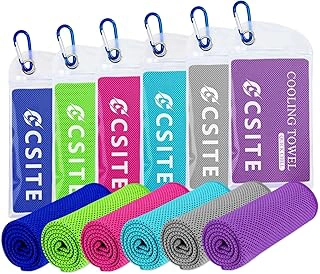
CSITE 6 Pack Cooling Towels (47x12) for Neck and Face
Players who spend weekends in round-robin tournaments or multi-match events need more than one towel to stay comfortable. The CSITE 6-pack delivers a 47-inch length that wraps around the neck and drapes over shoulders, giving you more coverage than standard larger options when you need to cool down between games.
Having six towels means you can start each match with a fresh one, avoid the discomfort of reusing a warm towel, or split the pack with your doubles partner. The longer dimensions work well for draping the towel during changeovers without it slipping off, and the extra length helps when you want to cover both the back of your neck and your forehead at the same time.
At $20.99 for the six-pack, the per-towel cost comes to around multiple, which makes sense if you play frequently or want backups in your tournament bag. The tradeoff is the upfront price - you're paying more than a single-towel option, but you gain the convenience of always having a clean towel ready and the ability to share without running short.
This pack suits serious tournament players who compete in multi-day events, coaches managing teams, or anyone who prefers not to wash a single towel constantly during peak summer season. If you only play occasionally or prefer to pack light, a smaller quantity may be more practical.
- ✅ Six towels provide a fresh option for every match
- ✅ 47-inch length offers better neck and shoulder coverage
- ✅ Per-towel cost around $3.50 makes sense for frequent players
- ✅ Easy to share with doubles partners or teammates
- ⚠️ Higher upfront cost at $20.99 compared to single-towel options
- ⚠️ Six-pack may be excessive for casual or occasional players
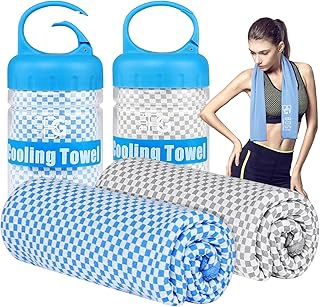
BOGI Cooling Towels for Neck and Face
Players who only need one towel per match or who want to try cooling technology without buying a multi-pack will find the BOGI offers a practical middle ground. Priced at $12.99, this towel delivers quality fabric and cooling performance in a single unit, making it a sensible entry point for occasional tournament play or for pickleball players who stick to one or two matches per session.
The BOGI is designed for neck and face use, which means it covers the areas where most players feel heat stress first. The coverage is shorter than the larger CSITE option, so it wraps comfortably around the neck without excess fabric dragging or needing to be folded multiple times. This focused size works well for quick cooling between games when you want fast relief without managing a longer towel.
The single-towel format also means you can test the cooling activation process and fabric feel before committing to a larger pack. If you find the evaporative cooling effective, you can always add more towels later. If it turns out cooling towels aren't your preference, you've spent under fifteen dollars rather than the cost of a four-pack.
At 4.5 out of 5, the BOGI maintains a strong rating that suggests reliable performance for its price point. The balance between cost and quality makes this towel a straightforward choice for players who value flexibility and want to avoid over-purchasing before they know how often they'll use a cooling towel during summer play.
- ✅ Middle price point at $12.99 for a single towel
- ✅ Neck and face coverage without excess length
- ✅ 4.5/5 rating reflects reliable performance
- ✅ Low-cost way to test cooling towel technology
- ⚠️ Single unit offers no backup if towel gets too warm
- ⚠️ Shorter design compared to full-body options like CSITE
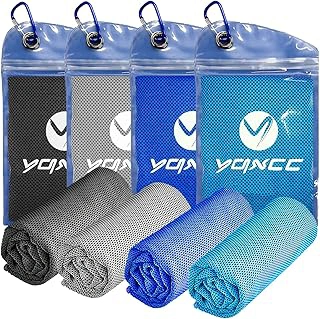
YQXCC 4 Pack Cooling Towels (40x12) for Neck
Players who train several times a week face a simple logistics problem: one or two towels mean constant washing, while a six-pack often sits unused. The YQXCC 4 Pack Cooling Towels (40x12) splits the difference, giving you enough towels to rotate through four or five sessions without running a load of laundry mid-week.
Each towel measures the listed size long and the listed size wide. That's slightly shorter than some larger options, but it still wraps comfortably around the neck for most adults and covers the back of the neck and upper shoulders when draped. The width handles quick face and forearm wipes between games without feeling narrow.
At $11.99 for four towels, the math works out to about the listed cost per towel. That sits between bulk six-packs (often under multiple each) and premium singles (frequently multiple alone). For someone playing three or four times weekly, four towels cover Monday, Wednesday, Friday, and Saturday with one wash cycle at week's end. You're not managing daily laundry, and you're not storing extras you won't use.
The pack suits players who want a fresh towel each session but don't need the volume that comes with larger bundles. If you play daily or share towels with a doubles partner, a six-pack may make more sense. If you play once a week, a single higher-end towel might feel more practical. For the regular recreational player juggling work, family, and three to four weekly court blocks, four towels cover the rotation without excess.
The 4.5 out of 5 rating reflects solid everyday performance. These aren't the longest towels available, and they don't come with premium features like antimicrobial coatings or travel tubes. They activate with water, cool when damp, and dry out for reactivation. That straightforward function, paired with a sensible quantity and a mid-range price per towel, makes this pack a practical choice for consistent play schedules.
- ✅ Four towels cover a week of regular play without constant laundry
- ✅ About $3 per towel balances affordability and quantity
- ✅ 40-inch length wraps comfortably around the neck for most players
- ⚠️ Shorter than 48-inch options, less coverage for taller players
- ⚠️ No premium features like antimicrobial treatment or carry cases
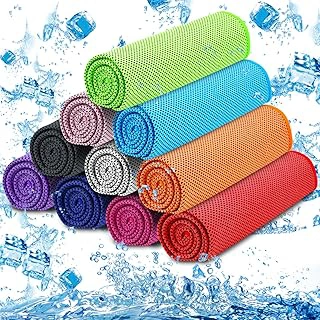
MENOLY 10 Pack Cooling Towels for Neck and Face
When you need cooling towels in multiple bags, one for every family member, or extras to share with fellow club players, the MENOLY 10-pack brings the per-unit cost down dramatically. At $8.99 for ten towels, you're spending less than a dollar per towel - a fraction of the cost of single or dual packs. This makes the set practical for players who want a towel at home, another in the car, and several in rotation during multi-day tournaments without worrying about laundry schedules.
The trade-off comes in the form of a 4.2 out of 5 rating, slightly lower than the multiple and multiple options reviewed earlier. In practical terms, this difference often shows up as minor variation in cooling duration or fabric durability after repeated wash cycles. Some users report these towels lose their chill a bit faster or show pilling sooner than premium single-unit models. For many players, that difference matters less when you have ten towels on hand - you can swap a fresh one mid-match without hesitation.
The bulk format suits coaches stocking a team cooler, families attending weekend tournaments together, or recreational leagues that want to offer cooling towels as part of a welcome kit. You'll have spares when someone forgets theirs, and replacing a worn towel doesn't sting when the cost per unit is so low.
If you value having backups in every location and don't mind slightly shorter cooling intervals between re-wetting, this ten-pack delivers functional coverage at an unbeatable price point.
- ✅ Lowest per-unit cost in the group at under $1 per towel
- ✅ Ten-pack provides extras for multiple bags, family members, or club sharing
- ✅ Practical for tournaments where you want fresh towels in rotation
- ⚠️ 4.2 rating suggests some variation in cooling duration or fabric longevity
- ⚠️ May show pilling or reduced chill retention sooner than premium options