We may earn a commission when you buy through links on this page, at no extra cost to you. How this works.
Heel spurs create a sharp focal point of pressure beneath the heel bone, making each footstrike during pickleball's rapid side-to-side movement uncomfortable or even painful. Senior players face a dual challenge: the bony protrusion demands targeted cushioning exactly where impact is greatest, while the sport's quick pivots and lateral cuts require firm arch support and a stable platform that won't shift inside the shoe.
Pickleball places different stress on feet than walking or jogging. The constant weight transfer during split-steps, the explosive push-off toward the net, and the sudden stops at the kitchen line all magnify pressure on the heel. An insole built only for maximum cushioning may feel soft during a casual stroll but compress unpredictably during a fast rally, reducing court feel and increasing the risk of ankle roll. Conversely, a thin, performance-oriented insole may keep you stable but leave the heel spur bearing too much direct force against the midsole.
The right insole balances these competing needs. Look for a design that places a gel or foam cushion pod directly under the heel spur site, paired with a structured arch that limits excessive pronation and keeps the foot aligned during quick direction changes. Profile matters, too: the insole must fit inside a pickleball shoe without crowding the toes or lifting the heel so high that stability suffers. Senior players also benefit from moisture-wicking top layers and antimicrobial treatments, since extended court sessions can lead to heat and odor buildup.
Understanding this tradeoff helps narrow the field. A successful insole for heel spurs and pickleball won't simply be the softest or the most rigid - it will deliver focused relief at the pressure point while maintaining the responsive, low-profile support that keeps you confident through every volley.
Fit and safety come first
Use the comparison as a shortlist, but keep fit, comfort, and any health or safety constraints ahead of price.
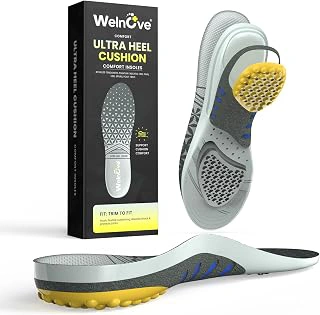
Achilles Tendonitis Relief Insoles with Heel Cushion and Shock Absorption
Players struggling with rear-foot discomfort during quick pickleball pivots often need thicker heel padding than standard insoles provide. The Achilles Tendonitis Relief Insoles with Heel Cushion and Shock Absorption focus that cushioning directly under the heel, using layered foam designed to reduce impact when you land after a split-step or shuffle backward to retrieve a lob.
The heel cup sits deeper than many flat sport insoles, cradling the rear of your foot to stabilize the heel bone during lateral movement. That extra depth works well in court shoes with moderate heel counters, though players wearing minimalist or racing-style sneakers may find the cup pushes against the shoe's back seam. The shock-absorbing layers compress visibly under body weight, which softens hard court surfaces but slightly reduces ground feel compared to firmer arch-support designs.
Arch rigidity is modest; the insole prioritizes rear-foot padding over aggressive midfoot structure. If you need strong arch control for pronation, you may notice less support through the instep than stiffer orthotic alternatives. Forefoot thickness remains low, preserving toe-box room and allowing natural push-off during volleys at the net.
Fit within standard pickleball shoes is straightforward when you trim to the printed sizing line on the insole base. The deep heel cup adds roughly a larger amount of stack height at the back, so test them in your usual court shoe before a match to confirm heel lockdown and check for any Achilles pressure against the collar. Players who already use thick factory sockliners should remove the original insert to prevent heel lift or instability.
At $28.25 with a 4.2/5 rating, these insoles suit senior players who want maximum heel cushioning and can accept moderate arch support in exchange for softer rear-foot landings on hard pickleball courts.
- ✅ Deep heel cup stabilizes rear foot during lateral pickleball movement
- ✅ Layered shock-absorbing foam softens impact on hard courts
- ✅ Low forefoot profile preserves toe-box space and natural push-off
- ✅ Trimable sizing fits most standard court shoes
- ⚠️ Modest arch rigidity may not control pronation for all players
- ⚠️ Deep heel cup can conflict with minimalist or low-collar shoes
- ⚠️ Softer cushioning reduces ground feel compared to firmer orthotic insoles
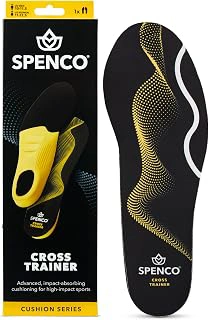
Spenco Polysorb Cross Trainer Full-Foot Insoles with Cushioning & Odor Control
Full-foot cushioning becomes essential when heel spur discomfort radiates beyond the heel cup during long matches or tournament days. The Spenco Polysorb Cross Trainer spreads a continuous layer of EVA foam from heel to toe, distributing load across the entire plantar surface rather than concentrating pressure in the rearfoot. This broader contact area can reduce localized heel strain during the repeated impact of split steps and recovery footwork.
The insole uses a polypropylene arch plate embedded within the foam stack, offering moderate arch lift without the aggressive height of rigid orthotics. For senior players whose heel spurs sit near the plantar fascia attachment, this mid-level support may provide enough tension relief to keep inflammation manageable across multi-hour play sessions. The arch contour is less pronounced than the Superfeet Premium, making it a better match for medium or low arches that don't need maximum control.
Odor control comes from a moisture-wicking top fabric treated with an antimicrobial finish. Seniors playing indoor courts or warm climates will appreciate the reduction in bacterial buildup, though the fabric layer does add a small amount of surface friction - some players prefer a slicker top cloth for easier pivots. Cushioning firmness sits between plush running insoles and the stiffer heel-focused designs, offering shock absorption that won't bottom out quickly but may feel softer than dedicated court insoles during aggressive lateral cuts.
Trim-to-fit sizing requires cutting along printed guides at the toe, and the full-length design means you'll need to remove factory liners completely. Most pickleball shoes accommodate the Polysorb stack height without crowding, but narrow or snug-fitting court shoes may feel tighter after installation. Check that your shoe has a removable liner and at least moderate volume before ordering. The $29.99 price and 4.4/5 rating reflect solid everyday performance for recreational to intermediate players who want whole-foot comfort rather than heel-only intervention.
- ✅ Full-foot EVA cushioning distributes pressure beyond the heel
- ✅ Moderate arch support suits medium and low arches
- ✅ Moisture-wicking top fabric with antimicrobial treatment
- ✅ Trim-to-fit sizing adapts to most shoe shapes
- ⚠️ Softer cushioning may compress faster during hard lateral cuts
- ⚠️ Top fabric adds slight friction during pivots
- ⚠️ Full-length design requires complete removal of factory liners
- ⚠️ Less aggressive arch lift than rigid orthotic alternatives
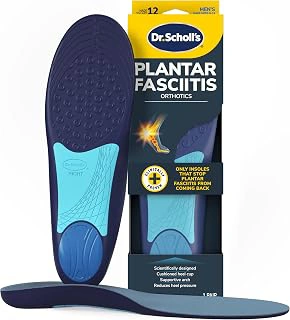
Dr. Scholl’s Plantar Fasciitis Relief Orthotic Insoles with Arch Support
Dr. Scholl's Plantar Fasciitis Relief Orthotic Insoles offer a budget-conscious option for players dealing with heel spur discomfort. At $14.97, they deliver targeted arch support and a contoured heel cradle designed to redistribute pressure away from sensitive heel tissue - a design approach that overlaps closely with heel spur relief needs, since both conditions benefit from reducing concentrated stress on the plantar fascia attachment point.
The arch structure is firm enough to provide lift without feeling rigid, though players accustomed to deeper cushioning may notice the trade-off: this insole prioritizes structured support over plush padding. That choice makes sense for lateral court movement, where stability matters more than shock absorption alone, but it does mean you'll feel the court surface more directly than you would with a thicker foam design.
The heel cradle wraps the back of the foot to keep it centered during quick direction changes, which helps maintain alignment when you pivot or lunge. The insole's relatively low profile fits most pickleball shoes without crowding the toe box, though it may shift slightly in shoes with roomy heel pockets unless you adjust lacing tension.
Because the price point is modest, replacement frequency becomes practical rather than painful - most players find these insoles compress noticeably after three to four months of regular court time, which aligns with the typical wear cycle for this category. If you need immediate relief without a large upfront investment and can accept a firmer underfoot feel, this insole balances cost and function effectively for heel spur management on the court.
- ✅ Affordable at $14.97 with practical replacement cycle
- ✅ Firm arch support and heel cradle reduce plantar fascia stress
- ✅ Low-profile design fits most pickleball shoes without crowding
- ⚠️ Thinner cushioning layer trades plush comfort for structured support
- ⚠️ May shift in shoes with loose heel pockets
- ⚠️ Noticeable compression after three to four months of regular use
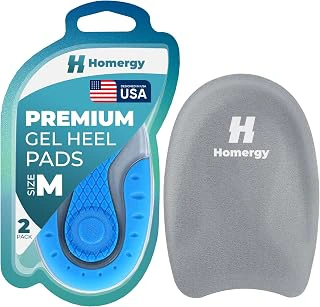
Orthopedic Heel Cups for Plantar Fasciitis & Bone Spur Relief
Heel cups target the exact spot where bone spurs and plantar fasciitis tension concentrate. This orthopedic pair uses gel cushioning under the heel bone to absorb shock during the hard landings that happen in pickleball's stop-and-pivot rallies. The anatomical cradle shape lifts the heel slightly and redistributes pressure away from the spur point, which can make a noticeable difference during long tournament days.
Because these are heel-only inserts, they slip into your existing court shoes without replacing the factory insole. That preserves whatever arch support or forefoot cushioning you already rely on. The tradeoff is clear: you get concentrated relief exactly where heel spurs hurt, but zero additional support for the arch or ball of the foot. If your pain sits squarely at the back of the heel and you're happy with the rest of your shoe's fit, this targeted approach keeps things simple.
The gel layer compresses under load, so heavier players or those who play multiple matches in a day may notice the cushioning packs down by the second or third hour. Lightweight players and those rotating between two pairs of shoes will extend the effective lifespan. At $14.95, the price point makes it easy to try heel cups first before committing to a full-length insole replacement.
Check that your shoe has enough volume in the heel counter to accommodate the added thickness. Low-profile court shoes or narrow heel pockets can feel tight once the cup is in place. If the fit becomes snug enough to lift your heel during lateral cuts, size up or switch to a thinner full-length insole that spreads cushioning across the entire footbed instead of stacking it all at the rear.
- ✅ Gel cushioning targets the heel spur pressure point directly
- ✅ Works with your existing insole so you keep current arch support
- ✅ Budget-friendly entry for players unsure about full insole replacement
- ⚠️ No forefoot or arch support beyond what your shoe already provides
- ⚠️ Gel may compress during extended play sessions
- ⚠️ Requires extra heel-counter volume that some court shoes lack
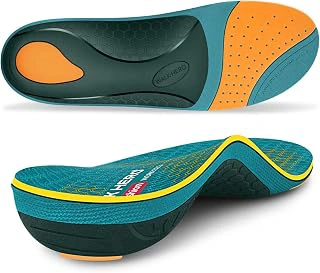
WalkHero Arch Support Orthotic Boot Insoles for Plantar Fasciitis & Heel Pain
The WalkHero Arch Support Orthotic Boot Insoles target plantar fasciitis and heel pain with a structured arch bridge that offers noticeably firmer support than softer gel alternatives. Rated 4.3 out of 5, this $17.99 option emphasizes stabilization over cushion, making it worth considering if you prioritize lateral control during quick direction changes on the court.
The rigid arch helps limit excessive foot roll, which can reduce strain on the plantar fascia during side-to-side pivots common in pickleball. That same firmness may feel less forgiving underfoot than memory foam insoles, so players accustomed to plush cushioning should expect an adjustment period. The design is labeled for boot use, which typically means a higher-volume fit; check that your court shoes have enough depth to accommodate the insole without crowding your toes or lifting your heel.
Heel support centers on a structured cup rather than gel padding, delivering stability but less shock absorption on hard surfaces. If your heel spur pain responds better to firm positioning than deep cushioning, this structure may complement your court shoe's existing midsole. Players needing maximum impact dampening may find the heel feel too stiff for all-day tournament wear.
At under multiple, the WalkHero insole offers a budget-friendly entry into structured arch support. The tradeoff is clear: you gain lateral stability and arch control, but sacrifice some of the plush comfort found in higher-priced gel or multi-layer designs. Consider the firmer arch feel and boot-style volume when matching this insole to your court shoe - low-profile sneakers may not provide enough room, while roomier pickleball shoes should accommodate the added structure without pinching.
- ✅ Structured arch bridge helps limit foot roll during lateral pivots
- ✅ Firm heel cup provides stable positioning for heel spur support
- ✅ Budget-friendly at $17.99 for players testing structured insoles
- ✅ Rated 4.3 out of 5 for plantar fasciitis and heel pain use
- ⚠️ Firmer feel may require adjustment if you prefer plush cushioning
- ⚠️ Boot-style volume may not fit low-profile court shoes without crowding
- ⚠️ Less shock absorption than gel or multi-layer designs on hard courts
Why Standard Shoe Inserts Fall Short for Senior Players
Most off-the-shelf foam inserts provide cushioning but skip the structural features that matter when heel spurs meet the quick pivots of pickleball. A heel spur creates a concentrated pressure point at the bottom of the calcaneus, and without a deep, contoured heel cup to cradle and stabilize that bone, every lateral shuffle drives the spur into soft tissue. Generic foam compresses unevenly under side-to-side loads, leaving the spur exposed and forcing your foot to wobble inside the shoe.
Arch support becomes critical because a collapsing arch lengthens the plantar fascia and pulls harder on the heel attachment where spurs form. Standard drugstore inserts usually offer a gentle bump rather than firm, posted support that holds the arch at a neutral height during movement. Senior players need that posted structure to reduce tensile stress across the fascia with each step.
Bulk creates a second problem. Pickleball shoes sit lower than running shoes, and many have a snug heel counter by design. Drop a thick orthotic into that narrow space and you lose heel lock, invite blisters, or push your foot so high that ankle stability suffers. The right insole for court play balances structured support with a slim enough profile to preserve the shoe's original fit and keep your heel seated during rapid direction changes.
Effective insoles for heel spurs combine a firm heel cup, graduated arch posting, and a low-volume shape that fits pickleball footwear without forcing you to size up or sacrifice lateral control.
How to Properly Fit Insoles in Your Pickleball Shoes
Getting the fit right matters as much as choosing the right insole - poor alignment can shift pressure onto the heel spur instead of relieving it. Start by removing the factory sock liner from your pickleball shoe; most insoles are designed to replace, not stack on top of, the original liner. Pull the old liner out gently, checking whether it lifts cleanly or if adhesive holds it in place.
If your new insole requires trimming, use the factory liner as a template. Lay the two side by side and mark the toe area where cuts are needed, staying well clear of the arch and heel zones where the structural support lives. Trim conservatively - you can always remove more, but you cannot add material back. Small scissors or a sharp utility knife work best for clean edges.
Place the trimmed insole into the shoe and check that the heel cup nests fully into the shoe's heel counter without riding up the back. The arch dome should sit directly under your arch, not forward or behind it; misalignment here can create new pressure points. Slide your foot in and feel for bunching at the toe box or gaps under the midfoot.
Walk around indoors on a hard surface, then test a few lateral shuffle steps to mimic pickleball movement. The insole should stay anchored without sliding or twisting inside the shoe. If you feel the heel lifting or the arch pushing into the wrong spot, the insole may be too thick for that shoe's volume, or the size may need adjustment. Address any fit issues before stepping onto the court - playing through discomfort can aggravate a heel spur rather than protect it.
Final Recommendations for Playing Pain-Free
Choosing the right insole comes down to balancing cushioning depth against court feel. Maximum gel or foam cushioning can reduce impact pain but may blur the ground feedback you rely on for quick direction changes, while firmer arch supports maintain stability yet offer less immediate shock absorption. Budget-friendly options often use lighter foam that compresses faster, so if you play three or more times each week, investing in a denser construction will delay replacement cycles and keep support consistent.
Full-length insoles distribute pressure across the entire foot and work well when discomfort extends beyond the heel, but they also add more thickness - confirm your shoe has removable factory liners and at least 3 - 4 mm of extra volume before ordering. Heel-only cups or wedges slip in without taking up forefoot space, making them easier to fit in snug court shoes, though they won't address arch fatigue if that becomes a secondary issue.
Match your choice to spur severity and playing frequency: mild heel tenderness during warm-up often responds to moderate cushioning and structured arch support, while sharp pain that persists after the first few games typically requires deeper gel pockets or firmer heel cradles to limit bone-on-pad contact. Once you install a new insole, increase your on-court time gradually - add ten to fifteen minutes per session rather than jumping back into two-hour matches - so surrounding soft tissue can adapt to the altered footbed geometry.
If your current shoes feel snug at the midfoot or if laces need to be loosened significantly after inserting an insole, the added thickness is too much for that particular model. In that case, either size up half a size in your next shoe purchase or switch to a lower-profile insole design. Pairing the right cushioning level with proper shoe volume keeps your foot stable through lateral slides and lets you focus on placement and timing instead of heel discomfort.
What Senior Players Should Look for in an Ergonomic Insole
- Heel cup depth: look for a contoured cradle that centers the spur pressure point over the cushioning
- Arch support height: match your natural arch to avoid new pressure points on the midfoot
- Material firmness: softer gels absorb impact but compress over time; firmer EVA holds shape longer
- Trim-to-fit versus sized: check whether your court shoe has a removable factory liner and adequate volume
- Forefoot thickness: excess padding under the ball of the foot can reduce court feel and increase stumble risk
- Moisture wicking: senior skin is more prone to blisters when insoles trap sweat