We may earn a commission when you buy through links on this page, at no extra cost to you. How this works.
Shoulder stiffness changes how you experience every swing. A paddle that felt fine at full strength can suddenly amplify fatigue, send vibration up your arm, or force you into awkward compensations that make the discomfort worse.
Weight alone does not tell the whole story. A seven-ounce paddle with a head-heavy balance can strain your shoulder more than an eight-ounce model that keeps the weight near your hand. The way a paddle absorbs impact matters just as much: cores that dampen vibration reduce the shock traveling through your rotator cuff and upper arm with each ball strike.
Senior players managing shoulder stiffness benefit most from paddles that combine lighter overall mass with thoughtful weight distribution and softer core materials. This combination reduces the effort required to accelerate the paddle, minimizes jarring feedback, and lets you maintain a relaxed grip without sacrificing control.
The paddles reviewed here weigh between 6.9 and 7.6 ounces and use polymer or foam cores designed to soften impact. Each offers a different blend of maneuverability, stability, and feel. Choosing the right one depends on whether your shoulder responds better to maximum lightness, better balance, or extra vibration dampening - and whether you prioritize quick hands at the net or steadier groundstrokes from the baseline.
Understanding these tradeoffs helps you match paddle characteristics to your specific comfort needs rather than chasing specifications that sound good on paper but feel wrong during a two-hour session.
Quick comparison
| JOJOLEMON Carbon Fiber Pickleball Paddle with 16mm Polymer Core | Check current price and user reviews |
| JoncAye Fiberglass Pickleball Paddles Set of 4 or 2 | See set options and pricing |
| TENVINA Thermoformed T700SC Carbon Fiber Pickleball Paddle | View paddle details and availability |
Fit and safety come first
Use the comparison as a shortlist, but keep fit, comfort, and any health or safety constraints ahead of price.
What to Look for When Shopping for a Shoulder-Friendly Paddle
- Total weight under 8 ounces (7.0 - 7.8 oz is ideal for most seniors)
- Polymer or polypropylene core at least 13mm thick for vibration absorption
- Head-light balance or evenly balanced design to reduce shoulder torque
- Cushioned grip at least 4.25 inches in circumference for secure hold without squeezing
- Fiberglass or carbon fiber face for lighter weight compared to composite
- USAPA approval to ensure quality standards and tournament legality if desired
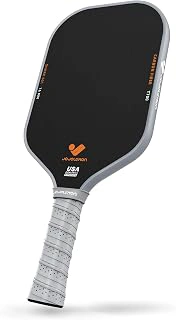
JOJOLEMON Carbon Fiber Pickleball Paddle with 16mm Polymer Core
The JOJOLEMON Carbon Fiber Pickleball Paddle pairs a 16mm polymer core with a carbon fiber face to reduce the impact felt in your shoulder and elbow during play. Thicker cores like this one absorb more of the ball's energy at contact, sending less vibration up the handle compared to thinner multiple or multiple designs. For senior players managing moderate shoulder stiffness, that difference translates to less strain over a full match or practice session.
Carbon fiber construction keeps the surface stiff enough for responsive control without adding weight, while the polymer core softens the feedback on off-center hits. This combination works well if you want consistent ball response but need to minimize harsh jolts that aggravate joint discomfort. The paddle's 4.8 out of 5 rating reflects solid build quality and user satisfaction at the $56.69 price point, positioning it in the mid-range category where you get meaningful engineering without premium cost.
Players with mild to moderate shoulder stiffness who prioritize vibration dampening over maximum power will find this paddle's thicker core helpful. If your stiffness is more severe or you fatigue quickly, you may still want to compare the overall weight and balance point to lighter options in this guide. The 16mm core does add a small amount of heft compared to slimmer paddles, so handle the tradeoff between shock absorption and total mass based on how your shoulder responds during extended play.
Check current price and user reviewsto see recent buyer feedback on comfort and durability, especially from players managing joint concerns.
- ✅ 16mm polymer core absorbs more impact vibration than thinner designs
- ✅ Carbon fiber face delivers responsive control without extra weight
- ✅ 4.8/5 rating indicates strong user satisfaction
- ✅ Mid-range $56.69 price offers quality engineering without premium cost
- ⚠️ Thicker core adds slight weight compared to slimmer paddles
- ⚠️ May not provide enough relief for players with severe shoulder stiffness
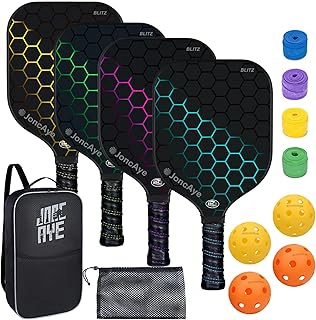
JoncAye Fiberglass Pickleball Paddles Set of 4 or 2
Seniors managing shoulder stiffness who play doubles or want a spare paddle will find practical value in the JoncAye Fiberglass Pickleball Paddles Set. Available as a set of two or four, this option delivers a shoulder-friendly design at a lower entry point than premium carbon models.
The fiberglass face construction offers a softer feel on contact compared to many carbon alternatives. This surface gives you a forgiving sweet spot that helps absorb shock across the paddle face, reducing the vibration that can aggravate shoulder tension during extended play. While fiberglass doesn't deliver the same crisp response as higher-end carbon fiber, the tradeoff brings gentler feedback that many senior players prefer when stiffness is a concern.
The set configuration makes this paddle especially useful for doubles players who want matching equipment or anyone who likes keeping a backup in their bag. At $59.90, the value proposition centers on accessibility rather than premium performance, but the 4.8/5 rating suggests solid reliability for recreational use.
Expect a less refined feel than carbon paddles in the multiple-plus range. The fiberglass construction won't provide the same power transfer or control precision, but it maintains the light touch and reduced strain that matter most when shoulder comfort drives your paddle choice. For seniors prioritizing budget fit and the convenience of a multi-paddle set, this option balances shoulder-friendly characteristics with practical value.
- ✅ Set of 2 or 4 paddles offers doubles convenience and backup option
- ✅ Fiberglass face provides softer feel and forgiving sweet spot
- ✅ Budget-friendly entry point at $59.90
- ✅ 4.8/5 rating reflects strong user satisfaction
- ⚠️ Less premium feel than carbon fiber paddles
- ⚠️ Power transfer and control precision below higher-end models
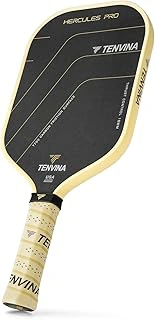
TENVINA Thermoformed T700SC Carbon Fiber Pickleball Paddle
Thermoformed construction uses one-piece molding to bond the face, core, and edge guard into a single unit, eliminating gaps where vibration can amplify. The TENVINA Thermoformed T700SC Carbon Fiber Pickleball Paddle applies this process to reduce edge rattle and deliver more predictable feedback with each hit, which matters when shoulder stiffness makes unexpected jolts uncomfortable.
The T700 carbon fiber face offers a higher-grade material than entry-level fiberglass, providing a stiffer, more responsive surface that transfers energy efficiently without requiring extra swing effort. For seniors who play several times a week, this combination of thermoformed durability and responsive carbon fiber helps the paddle maintain consistent performance over months of use, so you're not adjusting your stroke to compensate for wear or loose components.
At $59.99, this paddle balances advanced construction with accessible pricing. The one-piece design means fewer parts that can separate or degrade, and the solid edge guard protects the paddle perimeter during ground contact or net scrapes. If you want a paddle that feels the same in month six as it did on day one - and you prefer a stiff, direct feel over plush dampening - the TENVINA offers long-term reliability without the premium price of tour-level thermoformed models.
Thermoformed paddles tend to produce a firmer, crisper sound and feel compared to traditional foam-core designs. Seniors who prefer softer, more cushioned feedback may find the direct response less forgiving on mishits. The carbon fiber face also requires a short break-in period as the surface texture settles, so expect slightly less spin in the first few sessions.
This paddle suits frequent players managing shoulder stiffness who value consistency and durability over maximum vibration dampening. The thermoformed construction keeps the paddle stable and rattle-free, and the T700 carbon fiber delivers efficient energy transfer that reduces the need for forceful swings.
- ✅ One-piece thermoformed construction eliminates edge rattle and loose-part vibration
- ✅ T700 carbon fiber face offers responsive, efficient energy transfer
- ✅ Durable design maintains consistent feel over extended use
- ✅ Solid edge guard protects paddle perimeter
- ✅ Accessible price for advanced construction at $59.99
- ⚠️ Firmer feel may be less forgiving on mishits for players preferring cushioned feedback
- ⚠️ Carbon fiber face requires short break-in period for full spin performance
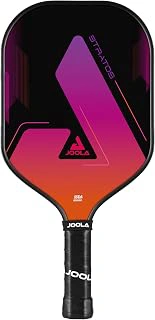
JOOLA Stratos Pickleball Paddle – Lightweight Fiberglass with Polypropylene Core - USAPA Approved - Large Sweet Spot for Added Control - Pickle Ball Paddle for All Players - Multiple Color Options
The JOOLA Stratos arrives at $49.16, making it the most affordable option in this comparison. Its polypropylene core and fiberglass face create a softer feel on contact, which matters when shoulder stiffness makes every jarring hit uncomfortable. The large sweet spot helps reduce vibration from off-center strikes, a practical feature for players whose timing may be affected by limited range of motion.
USAPA approval confirms the paddle meets tournament standards, even at this entry-level price point. The lightweight construction reduces the load on your shoulder through the swing, though the materials are less premium than higher-priced alternatives. The 4.3 rating reflects this tradeoff: buyers report adequate performance for recreational play but note the paddle lacks the durability and refined touch of carbon fiber or composite models.
This paddle fits newcomers testing whether a lighter design alleviates their shoulder discomfort without committing to a multiple+ investment. The polypropylene core absorbs shock better than some harder cores, and the fiberglass face provides enough control for social games. Players who stick with pickleball long-term often upgrade, but the Stratos offers a low-risk entry point to gauge whether weight reduction makes a meaningful difference in your comfort. The multiple color options let you choose a style that suits your preference while keeping the budget intact.
- ✅ Most affordable option at $49.16
- ✅ Polypropylene core provides soft feel to reduce impact shock
- ✅ Large sweet spot minimizes vibration from mis-hits
- ✅ USAPA approved for quality assurance
- ✅ Multiple color options available
- ⚠️ Lower 4.3 rating reflects less premium materials
- ⚠️ Fiberglass face less durable than carbon fiber alternatives
- ⚠️ May lack refined touch and longevity for frequent play
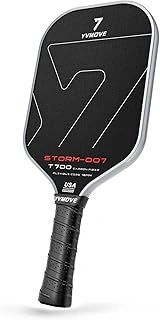
YVmove Raw Carbon Fiber Pickleball Paddle
Raw carbon fiber surfaces deliver texture that coated paddles cannot match. The YVmove Raw Carbon Fiber Pickleball Paddle features an uncoated carbon face that provides direct contact with the ball, allowing for enhanced spin generation when you brush the ball with an angled swing. For seniors managing shoulder stiffness, this design offers a responsive feel that requires less effort to shape shots and control placement.
The uncoated carbon construction means the paddle surface feels different under your hand compared to traditional polymer-coated options. You'll notice more grip on the ball during serves and dinks, which translates to better control in the soft game where precision matters most. This responsiveness is especially valuable when shoulder discomfort limits your ability to generate power through larger swings.
At $79.99, this paddle sits at the premium end of the lightweight category. The 4.8 rating reflects strong user satisfaction, particularly among players who prioritize touch and control over raw power. The investment makes sense if you've moved past entry-level play and want materials that respond immediately to subtle wrist adjustments rather than requiring forceful strokes.
Raw carbon fiber does require an adjustment period. Without a coating, the surface may wear differently over time, and the texture can feel abrasive during initial use. Some players find the direct carbon contact too responsive at first, especially if they're accustomed to the more forgiving feedback of polymer cores with coated faces.
Consider this paddle if you play three or more times weekly, value precise shot placement, and have the budget for premium materials. The uncoated surface rewards players who use finesse and spin rather than relying on arm speed. If you're still determining whether lightweight paddles suit your game, or if budget is a primary concern, a mid-range option with a coated face may be a safer starting point.
- ✅ Uncoated carbon fiber surface provides enhanced texture for spin generation
- ✅ Responsive feel requires less swing effort for control
- ✅ 4.8 rating indicates strong user satisfaction
- ✅ Direct ball contact improves touch in the soft game
- ⚠️ Premium price point at $79.99
- ⚠️ Uncoated surface requires adjustment period
- ⚠️ May wear differently than coated paddles over time
- ⚠️ Surface texture can feel abrasive during initial use
How We Evaluated Paddles for Shoulder-Friendly Features
Choosing a paddle that won't aggravate shoulder stiffness depends on understanding how weight, balance, and construction affect each swing. We focused on five factors that directly influence shoulder comfort without making clinical claims about injury prevention or pain relief.
Total weight matters first. Paddles under 7.8 ounces reduce the load your shoulder carries through hundreds of swings per session. it helps to compare manufacturer-listed weights and noted where head-light balance shifts the center of mass closer to your hand, lowering rotational strain during volleys and dinks.
Core material and thickness determine how much shock travels up your arm. Polymer cores between 13 mm and 16 mm absorb more impact than thinner honeycomb designs. We examined spec sheets to identify which paddles use softer core compounds and how that trades off against power on drives.
Grip circumference and cushioning also play a role. A 4-inch or 4.25-inch circumference with a cushioned wrap encourages a relaxed hold, while thinner grips can force you to squeeze harder. Surface texture influences vibration transfer: textured carbon fiber or fiberglass faces can amplify feedback, whereas smooth composite surfaces tend to feel quieter on off-center hits.
These comparisons draw on published specifications, paddle geometry, and patterns in verified user feedback - not practical use or clinical trials. The goal is to surface real tradeoffs so you can match paddle characteristics to your own comfort needs and playing style.
Weight vs. Balance: Why Both Numbers Matter for Your Shoulder
Understanding paddle weight alone won't tell you how your shoulder will respond during a match. A paddle listed at 7.5 ounces can feel easier to swing than one marked 7.2 ounces if the heavier paddle places more mass near the handle instead of the head.
Balance point determines how much force your shoulder absorbs with each stroke. Head-heavy paddles - those with more weight concentrated in the hitting surface - require greater effort to accelerate and decelerate. Your rotator cuff and deltoid work harder on quick volleys, overhead smashes, and defensive blocks when the mass sits farther from your hand. Stiff or recovering shoulders notice this difference within the first few games.
Head-light or evenly balanced paddles reduce the load. The weight stays closer to your grip, so less torque transfers through your wrist and shoulder joint during rapid exchanges at the net. You'll maintain better control without fighting the paddle's momentum on every swing.
To check balance before you buy, rest the paddle horizontally across one extended finger. Slide the paddle until it balances without tipping. If the pivot point sits closer to the handle, the paddle is head-light. If it tips toward the face, it's head-heavy. Most lightweight paddles for senior players aim for a balance point within one to two inches of center, slightly favoring the handle side.
When comparing paddles in the same weight range, prioritize the one with a balance point closer to your hand. That choice will feel lighter in motion and spare your shoulder unnecessary strain across longer play sessions.
Grip Size and Cushioning: The Overlooked Comfort Factor
Grip size directly affects how hard you squeeze the paddle, and that tension travels straight up your forearm to your shoulder. A grip that is too small forces you to clench tighter to keep the paddle secure, which amplifies shock transmission on every hit and recruits shoulder muscles unnecessarily throughout the match. A grip that is too large reduces fine control and often causes players to compensate with wrist adjustments that shift strain patterns and can irritate the shoulder from a different angle.
To find the right fit, hold the paddle in your playing hand as if you are about to hit. Look at the gap between your fingertips and the base of your palm. You should be able to fit roughly one finger width in that space. If your fingers wrap all the way around and touch your palm, the grip is too small. If there is room for two fingers or more, it is too large.
Cushioning matters just as much as diameter. Paddles often ship with basic synthetic grips that offer minimal shock absorption. An overwrap or replacement grip with gel or foam padding adds a layer of vibration dampening without changing the paddle's core performance. These upgrades typically cost between five and fifteen dollars and take minutes to install, making them one of the most cost-effective comfort improvements available. Even if your paddle is the correct weight and balance, a hard or worn grip can still funnel impact shock into your shoulder with every swing.
When to Choose Fiberglass vs. Carbon Fiber for Your Shoulder
Choosing the right face material affects how your shoulder feels after every shot. Fiberglass faces offer a softer, more cushioned contact that absorbs some of the ball's energy before it reaches your arm. The sweet spot on fiberglass paddles tends to be larger and more forgiving, which means off-center hits won't jar your shoulder as much. These paddles typically weigh a fraction more than carbon fiber models, but that slight difference often translates to gentler feedback on impact.
Carbon fiber faces deliver a lighter overall paddle and crisper ball response. You'll notice more control and quicker reactions at the net, but the stiffer surface can send more vibration up the handle if the core underneath isn't thick or well-dampened. For players with moderate shoulder sensitivity who value precision, carbon fiber works well when paired with a polymer honeycomb core that's at least 16 mm thick.
Core construction plays a larger role than face material alone. A thin core under either fiberglass or carbon fiber will transmit more shock, while a thicker polymer or Nomex core adds cushioning regardless of the surface. If your shoulder stiffness flares up easily, start with fiberglass and a thicker core. If you're managing mild discomfort and want the lightest possible paddle, carbon fiber with robust core engineering gives you both speed and reasonable vibration dampening.
Match your choice to how your shoulder responds during play. Fiberglass suits players who need maximum impact absorption and a forgiving touch. Carbon fiber fits those who can tolerate slightly firmer feedback in exchange for lighter weight and sharper control.
Frequently Asked Questions About Paddles and Shoulder Stiffness
Choosing a paddle that works with shoulder stiffness raises practical questions about weight, comfort, and whether upgrades truly help. These answers focus on real tradeoffs and what you can reasonably expect when managing shoulder discomfort on the court.
Will a lighter paddle really reduce my shoulder discomfort?
A lighter paddle reduces the load your shoulder muscles and tendons must control through every swing, backswing, and overhead. Dropping from 8.5 ounces to 7.2 ounces means less effort to accelerate, stop, and position the paddle quickly during rallies. Many seniors notice reduced fatigue and less post-game soreness when they switch to paddles in the 6.8 - 7.4 ounce range. Weight alone will not eliminate existing shoulder issues, but it does lower the mechanical demand each time you play.
What weight should I target if I have arthritis or rotator cuff issues?
Most seniors with shoulder conditions find the 7.0 - 7.5 ounce window offers the best balance between control and reduced strain. Paddles lighter than 7.0 ounces minimize load but may feel less stable during hard drives. Models above 7.6 ounces deliver more pop and momentum, yet the added mass can aggravate tender rotator cuff muscles or arthritic joints over longer sessions. Start at the lighter end and add a grip overwrap if you need a touch more heft without jumping to a heavier paddle.
Does a thicker core really make a difference in vibration?
Yes. Cores 13 millimeters or thicker absorb more impact energy before it travels up the handle into your wrist and shoulder. Polymer honeycomb cores in the 13 - 16 mm range flex slightly on contact, spreading the shock across a larger area and reducing the sharp jarring feel that can trigger discomfort in stiff joints. Thinner cores - around 11 mm - deliver crisper response and more power but send more vibration into your arm with every hit.
Can I add an overwrap to make my current paddle more comfortable?
Adding a cushioned overwrap can improve grip comfort and dampen some vibration, but it also adds 0.3 - 0.6 ounces to the paddle and shifts the balance slightly toward the handle. If your current paddle is already near 8 ounces, the extra weight may counteract the comfort benefit. An overwrap works best when your existing paddle is light enough that the added mass still keeps you below 7.8 ounces total and when the original grip feels too firm or thin.
Are expensive paddles worth it for recreational senior players?
Not always. The fifty to sixty dollar range offers solid polymer cores, comfortable grip sizes, and weights under 7.5 ounces - enough to address shoulder stiffness for casual or intermediate play. Premium paddles above one hundred dollars often feature carbon-fiber faces, edge guards, and manufacturing tolerances that improve spin and control, but those refinements matter less if your priority is simply reducing joint strain during social games. Focus your budget on verified weight, core thickness, and grip comfort rather than brand prestige.
Playing Smarter: Paddle Choice Is One Part of Shoulder Care
Choosing a lightweight paddle with the right balance and vibration control addresses one important piece of shoulder comfort, but equipment alone won't prevent stiffness or strain. Your warm-up routine, swing mechanics, and recovery habits play equally important roles in keeping your shoulder healthy for the long term.
Before stepping onto the court, spend five to ten minutes on dynamic stretches that target the shoulder, rotator cuff, and upper back. Arm circles, cross-body stretches, and light resistance band pulls prepare the joint for repetitive motion. After play, consider icing your shoulder for fifteen minutes if you notice any lingering tightness or discomfort - this simple step can reduce inflammation before it builds up overnight.
Pay attention to your swing path and grip tension. A death grip on the paddle handle forces your forearm and shoulder to work harder on every shot, amplifying fatigue. Relaxing your grip between points and focusing on smooth, controlled swings rather than explosive power shots reduces the cumulative load on your shoulder over a two-hour session.
When you switch to a new paddle, give yourself three full sessions to evaluate how your shoulder responds. Immediate feel on the court matters, but soreness patterns the next morning tell you whether the paddle truly suits your body. Keep a mental note of which shots feel easiest, whether your arm tires earlier or later than usual, and if you wake up with less stiffness compared to your previous paddle.
The goal isn't to hit harder or win every point - it's to play consistently and comfortably for years to come. A thoughtfully chosen paddle supports that goal by reducing unnecessary stress on your shoulder, but pairing it with smart habits on and off the court makes the real difference.