We may earn a commission when you buy through links on this page, at no extra cost to you. How this works.
Carrying a full pickleball setup - two or three paddles, a dozen balls, court shoes, water bottles, towels, sunscreen, and personal items - can easily add up to fifteen or twenty pounds, and traditional shoulder bags concentrate that weight on one side of your body. For senior players managing joint sensitivity or reduced shoulder mobility, this asymmetric load creates strain across the neck, upper back, and rotator cuff with every trip from the car to the court. Wheeled bags eliminate lifting entirely by rolling the load behind you, while ergonomic backpacks distribute weight evenly across both shoulders and engage your core and hips instead of isolating smaller muscle groups.
The right bag design also affects how you move: a low center of gravity and padded, adjustable straps keep the load close to your spine, reducing forward lean and the compensatory stress on your lower back and knees. Organizational features - dedicated paddle sleeves, zippered ball pockets, ventilated shoe compartments - matter because they let you access gear without setting the bag down repeatedly or digging through a single chaotic cavity, which means less bending and twisting during setup and pack-up.
This guide evaluates backpack designs with those strain-reduction principles in mind. None of the products reviewed here are rolling suitcase-style bags; instead, we focus on backpacks that pair smart weight distribution with enough capacity and structure to replace awkward duffels or single-strap totes. We compare paddle capacity, pocket layout, strap adjustability, and stability to help you match a bag to your mobility needs, typical gear load, and the surfaces you'll navigate - whether that's gravel paths, gym floors, or uneven parking lots. The goal is to find a design that keeps your shoulders, back, and knees comfortable so you can save your energy for the court.
Quick comparison
| Ytonet Pickleball Paddle Backpack with Shoe Compartment and Fence Hook | Check fit details |
| GOBUROS Pickleball Backpack for 4 Paddles with Shoe Compartment and Fence Hook | View product details |
| Pickleball Bag Backpack with Shoe Compartment, Fence Hook, and 4+ Paddle Capacity | View product details |
Fit and safety come first
Use the comparison as a shortlist, but keep fit, comfort, and any health or safety constraints ahead of price.
Backpack vs. True Rolling Bags: Why We Focused on Backpacks
Pickleball backpacks and true rolling bags serve different needs, and understanding the distinction helps you choose the right carry solution for your situation. The products reviewed in this guide are all backpacks - some with exceptional organization, padded straps, and ergonomic designs - rather than suitcase-style rolling bags with retractable handles and wheels.
True rolling bags eliminate lifting entirely and work best when you're moving heavy loads across smooth pavement, parking lots, or indoor courts. They shine for players transporting multiple paddles, balls, and gear by car to facilities with level surfaces. The trade-off is bulk and limited terrain capability: rolling bags struggle on grass, gravel, stairs, and uneven court approaches common at outdoor venues.
Well-designed backpacks distribute weight across both shoulders and often include chest and waist straps that transfer load to your core and hips. This ergonomic approach dramatically reduces strain compared to single-shoulder duffels or tote bags, even though you're still carrying the weight. Backpacks also keep your hands free, work on any surface, and fit more easily in car trunks or storage lockers.
For most active players, a quality backpack with proper fit and load distribution offers the best balance of mobility, versatility, and strain reduction. Consider a true rolling bag if you have significant shoulder, back, or hip limitations that make any weight-bearing uncomfortable, if you regularly transport unusually heavy loads, or if you play exclusively at smooth-surface venues with convenient car access. For everyone else, the backpacks in this guide provide practical relief without the terrain and storage limitations of wheeled luggage.
How to Pack Your Bag to Minimize Strain and Maximize Court Readiness
Even the best wheeled pickleball bag can strain your back if you pack it poorly. How you organize and distribute weight inside your bag affects your posture, shoulder comfort, and how often you bend or lift during play.
Start by placing the heaviest items - shoes, full water bottles, and extra balls - closest to the back panel or wheel base. This keeps the center of gravity near your body when you carry the bag by the handle or wear it as a backpack, reducing shoulder fatigue and back torque. Pack lighter gear like towels, sunscreen, and snacks toward the front or top compartments.
Use outer pockets for items you access frequently: your phone, keys, court reservation card, and fresh pickleballs. Keeping these essentials in designated exterior pockets eliminates the need to dig through the main compartment between games, which means less bending and fewer awkward lifting angles.
If your bag includes a fence hook, use it consistently. Hanging your bag on the court fence keeps it off the ground and at waist height, so you avoid repeated squatting or stooping to retrieve paddles, water, or towels during breaks. This single habit can save dozens of strain-inducing motions during a session.
Avoid overpacking. A bag stuffed beyond its intended capacity becomes rigid, harder to close, and forces you into awkward lifting postures. Carry only what you need for that day's play, and leave non-essentials at home or in your car.
Check weight balance before you leave. Lift the bag by the top handle and notice whether one side pulls harder than the other. If it tilts or twists, redistribute items until the load feels even. Balanced packing reduces strain on one shoulder or side of your back and makes wheeled transport smoother over uneven pavement.
Finally, pack your paddles vertically in their dedicated compartment with handles facing up, so you can grab them quickly without wrestling zippers or shifting other gear. Proper organization improves accessibility and keeps you court-ready without unnecessary physical effort.
When to Upgrade: Signs Your Current Bag Is Hurting Your Game
Shoulder soreness that lingers hours after you leave the court often points to a bag that's working against you, not with you. When you notice strap marks on your skin, feel reluctant to grab your gear for a quick game, or find yourself bending awkwardly just to fish out a paddle, your current bag has shifted from tool to burden.
Pain that appears only on carrying days - tightness across your upper back, stiffness in your neck, or a dull ache along one shoulder - signals that the weight distribution is unbalanced or the bag itself is heavier than your body wants to manage. If you've started skipping court sessions because hauling your equipment feels like a second workout, the bag is limiting your play frequency and stealing time you'd rather spend on the court.
Straps that dig in, even when the load feels light, indicate poor padding or a design that concentrates pressure on small contact points. Difficulty reaching gear without kneeling or straining suggests the bag's layout doesn't match your mobility, forcing compensations that add up over weeks and months.
Upgrading to a bag with wheels, organized compartments, and ergonomic handles removes these friction points and shifts the effort from your shoulders to the ground. Investing in a well-designed bag means investing in your ability to play longer, recover faster, and show up consistently without the dread of the haul. The bags reviewed in this guide address these exact pain points - smooth-rolling wheels for effortless transport, cushioned straps for backup carry, and layouts that let you access gear without contortion.
Final Recommendation: Match Your Bag to Your Play Frequency and Physical Needs
Choosing the best pickleball bag on wheels or backpack comes down to matching capacity, comfort, and durability to how often you play and what your body needs. The Ytonet rolling bag works well for budget-conscious players who carry minimal gear and play occasionally - its lightweight design and simple organization make it easy to handle, though the thinner fabric and basic wheels may not hold up to heavy weekly use. For players who value balanced organization and shoulder comfort, a mid-range backpack with padded straps and multiple compartments distributes weight evenly and keeps smaller items accessible without the bulk of a rolling bag. The GOBUROS rolling duffel delivers extra capacity and sturdy construction for group play or players who bring balls, snacks, and extra apparel, though its larger footprint and weight require more storage space at home and in the car. Serious players who log court time multiple times per week should prioritize the ONIX rolling bag for its reinforced chassis, durable wheels, and padded handle that reduce joint stress during frequent transport. The net set serves a different purpose entirely - it's built for court setup and event organization, not daily gear transport, so it doesn't replace a personal bag.
Strap comfort, capacity fit, and long-term durability matter more than price alone when your goal is to play comfortably for years without aggravating your back or shoulders. A bag that fits your current play frequency prevents strain today, while durable materials and reliable wheels protect your investment and your joints over time. Before purchasing, verify the bag's dimensions against your typical gear load, check return policies in case the fit isn't right, and consider whether rolling or backpack carry better suits your storage space and physical comfort. The right bag reduces strain, protects your body, and makes it easier to stay active on the court as long as you want to play.
What Seniors Should Look for in a Pickleball Bag to Protect Joints
- Padded shoulder straps with chest or waist stabilizers to distribute weight evenly
- Shoe compartment to separate dirty or wet footwear from paddles and balls
- Fence hook or external attachment point to keep bag off wet or dirty court surfaces
- Paddle capacity matching your typical load (2 for solo, 4 if you carry for doubles partners)
- Durable zippers and reinforced stitching to handle repeated loading and unloading
- Water bottle pockets or hydration sleeve for easy access during play
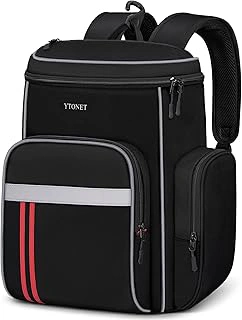
Ytonet Pickleball Paddle Backpack with Shoe Compartment and Fence Hook
The Ytonet Pickleball Paddle Backpack with Shoe Compartment and Fence Hook is the most budget-friendly option in this guide at $24.99, carrying a 4.8 out of 5 rating from buyers who value accessible organization without rolling hardware. While this is a backpack rather than a wheeled bag, its lightweight design and low price make it a practical choice for players who want to reduce clutter and keep gear off their shoulders during short walks from the car or between courts.
The backpack includes a dedicated shoe compartment to separate footwear from paddles and accessories, plus a fence hook that lets you hang the bag courtside for quick access to water, balls, and snacks. This design keeps everything in one place and reduces the need to dig through a mixed pile of gear. For seniors who can comfortably wear a backpack for short distances - parking lot to court, or locker room to benches - the Ytonet offers a low-cost way to stay organized without the weight and bulk of a rolling system.
Strap padding and overall capacity should be verified against your typical gear load. The $24.99 price point reflects simpler construction compared to higher-priced bags, so check that the shoulder straps provide enough cushioning if you carry multiple paddles, water bottles, and shoes regularly. This backpack works best for players with moderate gear needs who prioritize affordability and courtside convenience over heavy-duty hauling or long-distance carry comfort.
- ✅ Most affordable option at $24.99
- ✅ Dedicated shoe compartment separates footwear from gear
- ✅ Fence hook for courtside hanging and quick access
- ✅ Lightweight backpack design for short-distance carry
- ⚠️ Backpack format, not a wheeled bag
- ⚠️ Strap padding and capacity should be verified for heavier gear loads
- ⚠️ Simpler construction reflects budget price point
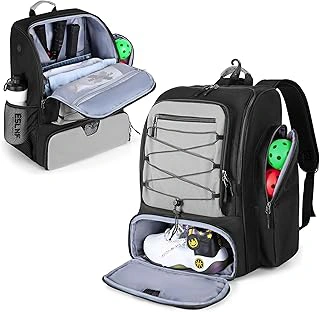
GOBUROS Pickleball Backpack for 4 Paddles with Shoe Compartment and Fence Hook
Players who carry gear for partners or play multiple matches in one outing often need more than two-paddle capacity, and the GOBUROS Pickleball Backpack addresses that with dedicated storage for four paddles, a shoe compartment, and a fence hook - all priced at $45.99 with a 4.4/5 rating.
The backpack organizes four paddles in individual slots, reducing the risk of paddle contact and surface scratches during transport. The separate shoe compartment keeps court shoes isolated from clean gear, a practical feature for players who change footwear at the facility. The integrated fence hook lets you hang the bag courtside, keeping it off wet or dusty surfaces and within easy reach between games.
At this price point, the GOBUROS sits between budget single-compartment bags and premium wheeled duffels. The four-paddle layout makes it useful for doubles teams who share transport, parents bringing gear for family play, or tournament players carrying backup paddles. However, a fully loaded backpack with four paddles, shoes, balls, and accessories can weigh significantly more than a two-paddle option, which may challenge shoulder and back comfort during longer carries - especially for seniors managing joint sensitivity or limited upper-body strength.
Strap padding and weight distribution become critical when capacity increases. If you rarely carry more than two paddles, the extra compartments may add bulk without functional benefit. Conversely, if you regularly transport gear for others or prefer having backup equipment on hand, the organizational structure justifies the added weight and cost compared to a simple drawstring bag.
The fence hook offers a tangible courtside advantage, but evaluate whether the four-paddle capacity aligns with your actual usage pattern or simply adds unnecessary load to your shoulders on the walk from the parking lot.
- ✅ Dedicated storage for four paddles reduces contact and scratches
- ✅ Separate shoe compartment isolates dirty footwear
- ✅ Fence hook keeps bag off ground and accessible courtside
- ✅ Organized layout for doubles teams or family play
- ⚠️ Fully loaded weight may strain shoulders and back for seniors
- ⚠️ Higher price than basic two-paddle backpacks
- ⚠️ Extra capacity adds bulk if you rarely carry four paddles
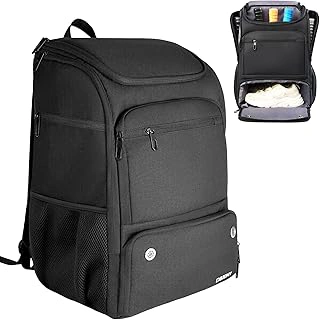
Pickleball Bag Backpack with Shoe Compartment, Fence Hook, and 4+ Paddle Capacity
The Pickleball Bag Backpack with Shoe Compartment, Fence Hook, and 4+ Paddle Capacity is priced at $38.89 and carries a 4.7/5 rating, positioning it as a mid-range option for players who carry gear for doubles partners or longer sessions. With capacity for four or more paddles, a dedicated shoe compartment, and a fence hook, this backpack organizes gear into separate zones, reducing the need to dig through a single main pocket.
The shoe compartment keeps dirty or damp court shoes away from paddles and apparel, which is useful after outdoor play or gym sessions. The fence hook lets you hang the bag at courtside, keeping straps and zippers off wet or dusty surfaces. For players who alternate between indoor and outdoor courts or share gear with a partner, the 4+ paddle slots and separated storage layout can simplify packing and retrieval.
Compared to the Ytonet backpack, this model offers a similar backpack form factor but adds the fence hook and clearly defined shoe section. The $38.89 price point sits between budget slings and larger wheeled duffels, making it a reasonable choice if you prefer shoulder-carry over rolling transport and need compartments that match a typical doubles-day load: multiple paddles, balls, shoes, and a water bottle. Strap ergonomics and padding details are not specified, so test the fit with your usual load before committing to long walks or public-transit commutes.
This backpack works best when your gear list is predictable and you value organized access over maximum volume. If you regularly carry extra layers, a cooler, or tournament paperwork, confirm that the compartment count and layout align with your routine.
- ✅ 4+ paddle capacity suits doubles partners or families
- ✅ Dedicated shoe compartment separates dirty footwear from paddles
- ✅ Fence hook for courtside hanging
- ✅ 4.7/5 rating at mid-range price of $38.89
- ⚠️ Strap padding and back-panel ergonomics not detailed
- ⚠️ No wheels; weight carried entirely on shoulders
- ⚠️ Compartment layout may not suit players with variable or bulky gear
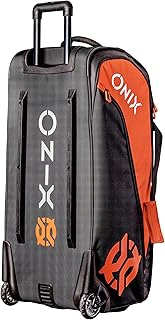
ONIX Pickleball Pro Team Backpack — Durable and Spacious Bag with Dedicated Paddle Pocket, Multiple Storage Compartments, and Comfortable Carrying for All Your Pickleball Gear
The ONIX Pickleball Pro Team Backpack sits at the premium end at $138.99, a significant step up from budget and mid-range options, with a 4.3 out of 5 rating. This backpack is built around a dedicated paddle pocket, multiple storage compartments, and a carrying system designed to distribute weight comfortably across your back and shoulders - features that matter most when you're hauling gear to frequent play sessions or tournaments.
At this price point, the focus shifts from basic function to durability and weight distribution. The ONIX Pro Team uses materials and strap engineering that aim to reduce pressure on joints and provide long-term reliability, making it a consideration for seniors who play several times per week and want a bag that won't sag, tear, or dig into shoulders after a season of use. The dedicated paddle pocket keeps your paddles separate and protected, while the multiple compartments let you organize balls, towels, water bottles, and personal items without digging through a single crowded space.
The 4.3 rating, while solid, suggests some trade-offs. At $138.99, expectations run high, and any design quirks - whether zipper placement, pocket sizing, or strap adjustment range - stand out more than they would on a multiple bag. The price jump is easiest to justify if you play frequently, value premium construction, and have experienced discomfort or early wear with cheaper bags. If you play casually or are testing the sport, the cost may outweigh the benefits, especially when mid-range options deliver good comfort and organization for half the price.
For seniors prioritizing joint protection and long-term durability, the ONIX Pro Team offers a carrying system and build quality that can reduce cumulative strain over months of use. The investment makes the most sense if you've already identified backpack features that work for your body and need a bag engineered to last. Given the price, confirming the return policy before purchase is wise - comfort and fit are personal, and what works for one player may not suit another's frame or carrying preference.
- ✅ Dedicated paddle pocket keeps paddles separate and protected
- ✅ Multiple storage compartments for organized gear access
- ✅ Comfortable carrying system designed to distribute weight and reduce shoulder pressure
- ✅ Premium materials and construction aimed at long-term durability
- ⚠️ $138.99 price is a significant jump over budget and mid-range options
- ⚠️ 4.3 rating suggests some design or fit trade-offs at this premium level
- ⚠️ Cost may not be justified for casual players or those new to the sport
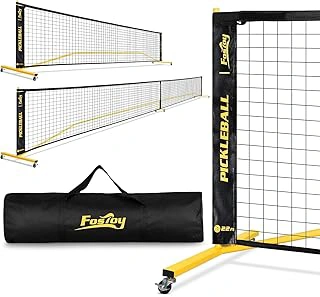
Portable Pickleball Net Set with Wheels, 22 FT & 11 FT Sizes, Metal Frame & Carry Bag
This portable pickleball net set is designed for players who organize games in driveways, parks, or neighborhood courts and need to transport a full net setup without heavy lifting. Priced at $89.99 with a 4.7/5 rating, it includes a metal frame, wheeled carry bag, and two size options: 22 FT for regulation play and 11 FT for confined spaces or practice drills.
The wheeled carry bag addresses the challenge of moving net equipment from your garage or car to the playing surface. Instead of hauling poles, stakes, and netting separately, the integrated wheels let you roll the entire kit in one trip - helpful for seniors who coordinate regular play sessions or set up temporary courts. The metal frame provides stability once assembled, and the dual size options mean you can adapt to full-court regulation play or a scaled-down layout when space is limited.
This product complements, rather than replaces, a dedicated pickleball gear bag. While it solves the problem of net transport, you'll still need separate storage for paddles, balls, water bottles, and accessories. It's best suited for players who host games, manage community play, or frequently set up courts in locations without permanent nets. If you only play at established facilities with nets already installed, a wheeled gear bag for your paddles and personal items will serve you better. But if you're the one bringing the court to the neighborhood, the wheeled net carrier reduces the physical demand of setup and takedown, letting you focus energy on play instead of logistics.
- ✅ Wheeled carry bag eliminates heavy lifting of net components
- ✅ Two size options (22 FT regulation and 11 FT compact) for different spaces
- ✅ Metal frame construction for stable setup
- ✅ All-in-one transport solution for net, poles, and hardware
- ⚠️ Does not hold paddles, balls, or personal gear - requires separate bag
- ⚠️ Only useful if you regularly set up nets; unnecessary for players at equipped facilities
- ⚠️ Larger 22 FT size may still require significant storage space at home