We may earn a commission when you buy through links on this page, at no extra cost to you. How this works.
CAMBIVO Elbow Compression Sleeve with Removable Strap & Gel Pad, 1 Pair
Four adjustable braces with gel cushioning tested for senior pickleball comfort.
Fit and safety come first
Use the comparison as a shortlist, but keep fit, comfort, and any health or safety constraints ahead of price.
Senior pickleball players often discover elbow discomfort after long sessions of dinking, drives, and overhead smashes - movements that load the lateral forearm muscles in ways tennis and golf do not. The search for an effective tennis elbow brace becomes more complicated when you add thinner arm circumferences, shifting soft tissue, and skin that bruises or chafes under rigid straps. That's where adjustable braces with gel pads separate themselves from generic counterforce bands.
Adjustability matters because senior arm dimensions vary widely, and a brace that slips or bunches during play disrupts the targeted compression needed to support strained tendons. Gel pads distribute pressure across a wider contact area than hard plastic inserts, reducing hotspots and allowing longer wear without numbness. The trade-off is that gel can feel bulkier and may retain more heat, so breathability becomes a secondary but real consideration for court sessions lasting ninety minutes or more.
This guide compares four adjustable braces chosen for their strap range, gel pad placement, and design features that accommodate senior forearm profiles. You'll see differences in sleeve versus strap-only construction, where the gel sits relative to the lateral epicondyle, and how fabric choices affect ventilation. The goal is to match your forearm shape, comfort preferences, and play frequency to the brace that stays in place without creating new pressure problems.
Comparing the Four Braces: Key Decision Points
- Choose the CAMBIVO single-pad model if you need a pair for both arms and want the lowest upfront cost
- Choose the CAMBIVO dual-pad model if you experience forearm muscle tension in addition to elbow joint discomfort
- Choose the DR. BRACE Elite if breathability during long sessions or summer play is your top priority
- Choose the FREETOO counterforce band if you prefer lighter, targeted compression without full sleeve coverage
- All four braces share similar adjustability ranges - final fit depends on your exact forearm circumference and taper
- All four include gel pads, but pad size and firmness vary; expect some trial adjustment for pressure placement
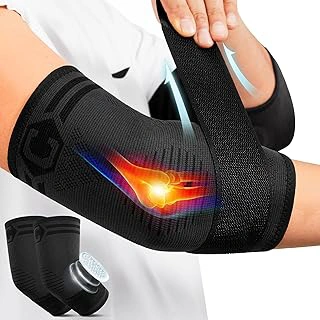
CAMBIVO Elbow Compression Sleeve with Removable Strap & Gel Pad, 1 Pair
The CAMBIVO Elbow Compression Sleeve delivers two sleeves per package at a price point that makes bilateral elbow support accessible for seniors who need relief on both arms during pickleball sessions. The removable strap system separates this design from fixed-strap competitors, allowing you to wear the compression sleeve alone when less targeted pressure is preferred or attach the strap and gel pad when you need focused support over the forearm tendon area.
Each sleeve uses a knit fabric that provides compression around the entire elbow joint, while the detachable strap adds a second layer of adjustable tension. The gel pad sits between the strap and your forearm, distributing pressure across a wider surface than a narrow strap alone. This two-component approach gives you flexibility: on lighter play days or during warm-up, the sleeve by itself may offer enough support; when fatigue sets in or discomfort increases, you can add the strap for firmer, localized compression.
At $16.99 for a pair, this is the most budget-friendly option in this comparison, but that lower cost comes with tradeoffs. The 4.3-star rating reflects common feedback about fit variability - some users find the sleeve runs small or the strap buckle difficult to adjust mid-game, while others report the fabric loses elasticity after repeated washing. Sizing consistency is less predictable than with higher-priced brands, so checking the manufacturer's sizing chart against your actual elbow circumference is essential before ordering.
The removable strap feature is the key differentiator here. Fixed-strap designs lock you into one configuration, but CAMBIVO's system lets you adapt support intensity as your arm responds during play or recovery. For seniors managing elbow discomfort on both sides, the pair format reduces the need to purchase two separate braces. The gel pad provides cushioning that makes the strap more comfortable during extended wear compared to bare elastic or Velcro alone.
Fit consistency concerns mean this option works best for players who can tolerate some trial and error with sizing or who prefer a lower upfront investment while testing whether a sleeve-plus-strap design suits their needs. If precise fit and durable construction are priorities, a higher-priced single brace may deliver more reliable long-term performance.
- ✅ Includes two sleeves, supporting both elbows at a lower per-unit cost
- ✅ Removable strap lets you adjust support intensity or wear the sleeve alone
- ✅ Gel pad distributes strap pressure more evenly than bare elastic
- ✅ $16.99 price makes it the most accessible option for budget-conscious seniors
- ⚠️ 4.3-star rating reflects fit variability and sizing inconsistencies
- ⚠️ Fabric may lose elasticity faster than premium brands
- ⚠️ Strap buckle can be difficult to adjust during play
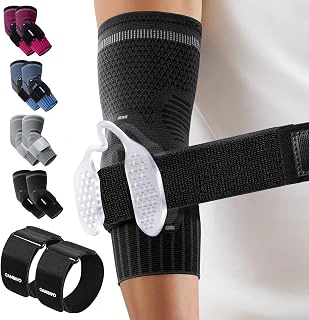
CAMBIVO Tennis Elbow Support Sleeve with Dual Gel Pads & Adjustable Strap, 1 Pair
The CAMBIVO Tennis Elbow Support Sleeve uses two gel pads instead of one, spreading compression across a wider section of the forearm. One pad sits over the lateral epicondyle while the second targets the muscle belly below, which helps distribute pressure when you grip the paddle during overhead serves or third-shot drops.
At $19.99 for a pair, this option costs slightly more than single-pad braces but offers broader coverage for players who feel tension in multiple spots along the forearm. The adjustable strap routes around both pads so you can dial in compression independently, useful if one area needs more support than the other during extended play.
Rated 4.7 out of 5, the dual-pad design appeals to seniors who want targeted relief without relying on a single point of contact. The tradeoff is added bulk: two gel inserts make the sleeve thicker under long-sleeved performance shirts, and some players may find the wider profile less comfortable in hot weather or during back-to-back matches.
Check the size chart carefully - arm circumference directly affects how the gel pads align with your epicondyle and forearm musculature. A sleeve that rides too high or low will place the pads off-target, reducing the benefit of the dual-pad layout. Each package includes two sleeves, so you can use one on each arm if needed or keep a spare for rotation between washings.
- ✅ Two gel pads distribute pressure across epicondyle and muscle belly
- ✅ Adjustable strap allows independent compression tuning
- ✅ Includes a pair for two-arm use or rotation
- ✅ 4.7 rating reflects solid user feedback
- ⚠️ Dual-pad design adds bulk under long sleeves
- ⚠️ Thicker profile may feel warm during extended matches
- ⚠️ Requires accurate sizing for proper gel pad alignment
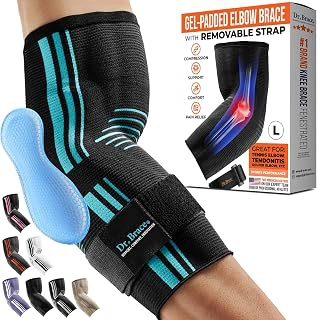
DR. BRACE Elite Elbow Brace Support Compression Sleeve with Gel Pad
The DR. BRACE Elite sleeve uses a compression design with a single gel pad positioned over the forearm extensor muscles. Unlike the dual-pad CAMBIVO models, this brace combines fabric compression with one targeted gel pad, which reduces bulk around the elbow joint while still providing focused pressure where tennis elbow discomfort typically occurs.
The this product fabric claim matters most for players who experience multiple-hour sessions or play in warm weather. The sleeve's moisture-wicking material reduces the sticky, overheated feeling that solid neoprene braces often create after the second or third game. If you've dealt with sweat pooling under a brace mid-session, the open-weave fabric here addresses that specific problem.
At $19.97, this brace sits between budget gel-pad options and premium dual-pad models. The 4.2 rating reflects consistent feedback on fit and breathability, though some users note the single pad offers less coverage than dual-pad designs. The tradeoff is straightforward: you gain ventilation and range of motion but lose the secondary compression point that wraps around the upper forearm.
The sleeve style slides on rather than wrapping with multiple straps, which simplifies adjustments between games but may feel less secure if you prefer the locked-down feel of a strap-and-buckle system. The gel pad stays centered during play without shifting, though the compression level depends entirely on choosing the correct sleeve size rather than tightening a strap on the fly.
This design works well for senior players who prioritize arm mobility and airflow over maximum compression coverage. If your primary concern is keeping your forearm cool during back-to-back matches, the this product fabric delivers measurable comfort. If you need adjustable pressure or dual-zone support, the CAMBIVO models with two gel pads and customizable straps offer more control.
- ✅ Breathable fabric reduces overheating during multi-hour sessions
- ✅ Single gel pad provides focused compression without bulk
- ✅ Sleeve design allows full elbow range of motion
- ✅ Mid-tier $19.97 price balances ventilation and gel-pad support
- ⚠️ Single gel pad offers less coverage than dual-pad models
- ⚠️ Sleeve fit is fixed - no on-the-fly tightening like strap designs
- ⚠️ Compression level depends on accurate sizing, not adjustable straps
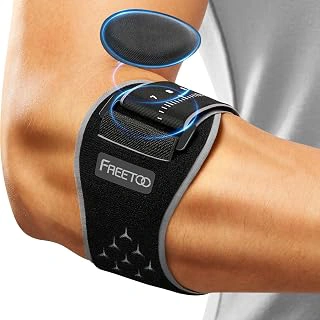
FREETOO Adjustable Counterforce Elbow Brace with Gel Pad for Tendonitis
The FREETOO counterforce brace takes a different approach than the full-sleeve designs reviewed earlier. Instead of covering your entire forearm, this band wraps around a single zone just below the elbow joint. That targeted placement delivers compression where the forearm tendons attach, which many senior players find sufficient for forearm support during pickleball without the bulk of a full sleeve.
At $18.99 with a 4.4 rating, the counterforce design trades graduated forearm compression for simplicity. You pull the strap through a single buckle, position the gel pad over the muscle group, and tighten. The narrow band means less fabric against your skin - an advantage when playing in warm weather or if you prefer minimal coverage on your arm. Because there is no sleeve to roll or align, putting the brace on and adjusting tension takes seconds.
The tradeoff is straightforward: you lose the forearm-wide stability and wrist-to-elbow support that a sleeve provides. This brace focuses pressure on one area rather than distributing it along the entire forearm. For players who find sleeves too restrictive, too warm, or difficult to slide over the hand, the counterforce band removes those friction points. For those who need broader support or prefer the feel of fabric wrapping the arm, a full sleeve will be more comfortable.
Measure your forearm circumference two inches below the elbow before ordering. The adjustable strap accommodates a range of sizes, but accurate measurement ensures the band sits snug without sliding during side-to-side movement or overhead shots. If your primary concern is reducing bulk and heat while still supporting the tendon attachment zone, the FREETOO counterforce design delivers focused compression in a lighter package.
- ✅ Narrow band design minimizes fabric bulk and heat buildup
- ✅ Single-strap system makes adjustment and removal quick
- ✅ Targeted compression zone below elbow joint
- ✅ Less restrictive than full sleeves for players who prefer minimal coverage
- ⚠️ No graduated compression along the forearm
- ⚠️ Does not provide wrist-to-elbow stability like sleeve designs
- ⚠️ Focused support may feel insufficient for players needing broader forearm coverage
Why Adjustable Braces with Gel Pads Work Better for Seniors
Arm circumference in senior players often shifts through a match - muscles warm up, tissue expands, and morning stiffness fades. Adjustable straps let you dial tension in or out without removing the brace, so you maintain the right level of counterforce as your arm changes size. Fixed-circumference sleeves either start too loose or finish too tight.
Gel pads distribute pressure across a broader footprint than hard plastic inserts. For seniors with thinner subcutaneous tissue, that softer contact reduces the sharp edge feeling that can make rigid counterforce bands uncomfortable during long rallies. The gel also flexes with forearm movement, so you keep stability without the chafing that stiff materials can cause when your wrist pivots through volleys and dinks.
Sleeve-plus-strap hybrids strike a balance: the sleeve offers light compression to support circulation and warmth, while the adjustable strap delivers focused counterforce to the extensor tendons. Full compression sleeves spread pressure evenly but lack targeted relief at the lateral epicondyle. Counterforce-only bands concentrate force well but skip the broader stabilization that many senior players find reassuring when managing everyday joint laxity. The hybrid design covers both needs in one piece, and the adjustability means you can tighten the strap for competitive play and loosen it during warm-up or cool-down.
How to Properly Wear Your Elbow Brace for Pickleball
Correct placement starts with finding the right compression zone: measure one to two inches below the crease of your elbow joint, where the forearm muscle begins to swell. This is where the brace should sit to apply targeted pressure without interfering with the joint itself.
Slide the sleeve or band up your forearm rather than stretching it over your hand. Pulling fabric over the widest part of your hand can overstretch the elastic and reduce the brace's ability to hold tension during play.
When you fasten the strap, aim for firm contact - not tight enough to cause tingling or numbness, but snug enough that the brace won't migrate down your arm during a swing. A practical test: you should be able to slide one fingertip underneath the strap with light resistance.
The gel pad needs to sit directly over the lateral epicondyle, the bony bump on the outside of your elbow where the forearm tendons attach. If the pad rotates toward your bicep or tricep, loosen the strap, reposition the brace, and refasten. Misalignment reduces the support where you need it most.
After your first few practice swings or the opening game, pause and check the strap tension again. As your arm warms up and blood flow increases, the forearm may swell slightly, causing the brace to feel looser or tighter than it did at first. Adjust before discomfort sets in rather than playing through poor fit.
Additional Strategies for Managing Pickleball Elbow
Managing discomfort in the elbow during pickleball often requires more than a brace. Adjusting paddle weight can reduce the load transmitted through your forearm with each swing. Many senior players find that switching to a lighter paddle - typically in the 7.0 to 7.5 ounce range - eases strain without sacrificing control.
Simple forearm stretches before you step onto the court help prepare the muscles and tendons for repetitive motion. Extend one arm forward with your palm facing down, then gently pull your fingers back toward your body with the opposite hand. Hold for fifteen to twenty seconds on each side. Repeat the same stretch with your palm facing up to target the other side of the forearm.
After a session, ice application can help manage inflammation. Wrap a cold pack in a thin towel and apply it to the outer elbow for ten to fifteen minutes. This can be especially useful on days when you play longer matches or practice drills intensively.
Rotating between backhand and forehand drills distributes the workload across different muscle groups. If you notice more strain during backhand volleys, spend part of your practice time on forehand dinks or serves to give the affected tendons a break. Varying your shot selection during recreational games serves the same purpose.
These strategies work best when combined with a well-fitted brace that provides targeted compression. Adjusting your play habits and recovery routine reduces the cumulative stress that leads to persistent elbow trouble, letting you stay on the court longer without pushing through discomfort.
Staying Comfortable and Consistent on the Court
Choosing a brace that fits well and stays in place means you can keep playing instead of sitting out. The four adjustable models with gel pads reviewed above provide different levels of compression, strap configuration, and targeted cushioning to accommodate various arm shapes and comfort preferences. Fit remains the deciding factor: a brace that slips or pinches will distract you mid-rally, while one that matches your forearm circumference and desired compression level can feel almost invisible after the first few games.
Before ordering, confirm your measurements against the manufacturer's size chart. Measure your forearm circumference about two inches below the elbow crease, and note whether the brand uses small/medium/large labels or numeric ranges. If you fall between sizes, the adjustable strap design on each of these models provides overlap, but starting closer to your true measurement reduces the need for constant re-tightening.
Wear the brace during warm-up and adjust tension as your muscles warm and blood flow increases. Forearm circumference can change slightly between the first serve and the third game, so check strap security after ten minutes of play. During cooldown, loosen the strap to avoid restricting circulation while your arm returns to its resting state. Testing one model over three or four sessions gives you enough data to decide whether the gel pad placement, strap width, and overall compression suit your movement patterns and comfort tolerance.