We may earn a commission when you buy through links on this page, at no extra cost to you. How this works.
Most overgrip recommendations focus on tack and feel for players chasing spin or power, but those priorities fall short when arthritis or weak hands limit your grip strength and make every session a balance between control and comfort. Standard advice overlooks the three constraints that matter most: joint sensitivity that turns thin, firm grips into pain triggers; reduced hand strength that makes squeezing a narrow handle exhausting; and installation challenges that leave you struggling with stubborn adhesive and tight wraps.
Choosing an overgrip for arthritis or weak hands means flipping the usual decision tree. Thickness comes first, because adding 1 to 2 millimeters of cushioned material can reduce the force needed to hold the paddle and distribute pressure across a larger surface area. Tackiness matters, but aggressive sticky surfaces that demand constant re-gripping can fatigue weak hands faster than a slightly smoother texture that allows micro-adjustments without full releases. Durability and ease of replacement become practical concerns when peeling off old tape and stretching new material around beveled edges taxes finger dexterity.
Paddle geometry also plays a role: elongated handles require more wrapping and tension control, while shorter grips on widebody paddles may limit how many layers you can add before the handle feels bulky. Play frequency determines whether you need a long-lasting overgrip that withstands daily use or a softer, more forgiving option you can swap out weekly. The right overgrip accommodates your hand constraints first, then adapts to your paddle and schedule, rather than forcing you to adapt to a product designed for players without joint or strength limitations.
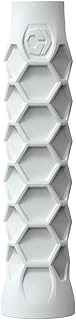
Hesacore Elongated Original Grip Pickleball Paddle
Players who struggle to find a consistent grip or whose fingers drift during play may benefit from the Hesacore Elongated Original Grip, which uses a honeycomb geometry to guide finger placement. Instead of wrapping around a smooth cylinder, your hand settles into molded wells that distribute pressure across the palm and fingers, reducing the force needed to hold the paddle securely. This passive alignment can help when arthritis or weak hands make it difficult to maintain a stable grip without conscious effort.
The grip fits elongated paddle handles and installs over the existing handle by sliding on from the butt cap. Because it adds geometric structure rather than simple cushioning, there is a learning curve - your hand must adapt to the finger wells, and players accustomed to shifting hand position mid-rally may find the fixed geometry restrictive at first. Once familiar, many report less grip fatigue because the honeycomb distributes load instead of concentrating it in a few pressure points.
At $27.90, this grip costs more than conventional overgrips, and the honeycomb design means it cannot be trimmed or adjusted for length. If you need tactile cues to keep your fingers in place and want to reduce the muscular effort of gripping, the Hesacore offers a distinct approach. If you prefer freedom to rotate or slide your hand, or if budget is a primary concern, a traditional cushioned overgrip may serve better.
- ✅ Honeycomb wells guide finger placement and reduce grip force
- ✅ Distributes pressure across palm and fingers
- ✅ Fits elongated pickleball paddle handles
- ⚠️ Higher price at $27.90
- ⚠️ Learning curve for hand positioning
- ⚠️ Fixed geometry limits hand movement during play
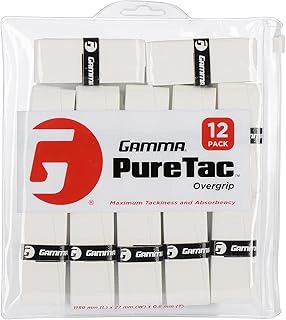
GAMMA Sports PureTac Extra Tacky Moisture Absorbent Tennis Overgrip
Players with sweaty hands often struggle to maintain a secure hold on their paddle, which can worsen fatigue in arthritic fingers and weak grips. The GAMMA Sports PureTac Extra Tacky Moisture Absorbent Tennis Overgrip is designed to maximize surface tack and absorb moisture during play, providing a sticky, confident hold even when hands perspire heavily.
The extra-tacky surface creates immediate friction against your palm and fingers, reducing the force needed to keep the paddle from twisting or slipping. For players who compensate for weak grip strength by squeezing harder - a pattern that aggravates arthritis pain - this high-tack texture can lower the effort required to maintain control through each stroke. The moisture-absorbent layer pulls sweat away from your skin, sustaining grip security across longer sessions.
That sticky feel does come with tradeoffs. Tacky overgrips tend to wear faster than dry or textured alternatives, especially when exposed to dirt, dust, or court debris that clings to the adhesive surface. You'll likely need to replace the PureTac more frequently than a smooth or perforated grip, which adds to ongoing cost and maintenance effort. The surface can also feel slightly gummy in very humid conditions, and some players find that excessive tack creates drag when adjusting hand position between points.
Rated 4.7 out of 5, the PureTac has earned consistent feedback for delivering the grip security it promises. If your primary challenge is moisture-related slippage and you're willing to replace overgrips regularly to maintain peak tack, this option addresses that need directly. Players who prefer a dry, less sticky feel or want longer replacement intervals may find better alignment with perforated or embossed alternatives.
The overgrip installs using standard peel-and-wrap technique, with an adhesive backing that stays in place during play. Because the tacky surface can collect oils and debris over time, plan to monitor wear and swap the grip as soon as tack begins to fade - typically every few weeks of regular play, depending on hand moisture and court conditions.
- ✅ Extra-tacky surface reduces squeezing effort for weak or arthritic hands
- ✅ Moisture-absorbent layer sustains grip security when hands sweat
- ✅ High friction minimizes paddle twisting and slippage during strokes
- ⚠️ Tacky surface wears faster and collects dirt, requiring more frequent replacement
- ⚠️ Can feel gummy in humid conditions
- ⚠️ May create drag when repositioning hand between points
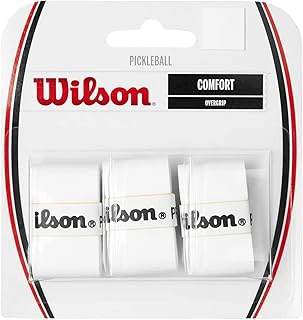
WILSON Pro Overgrip Pickleball Grip - White
The WILSON Pro Overgrip Pickleball Grip offers a thin, budget-friendly option for players who want to preserve paddle feel while adding a modest layer of grip security. At $5.31, this overgrip suits players with mild hand weakness who prioritize minimal handle circumference increase and direct paddle feedback over maximum cushioning.
The slim profile keeps the handle close to its original size, which helps maintain familiar finger placement and wrist mechanics. Players who experience light joint sensitivity but do not require thick padding may find this overgrip provides enough tack to reduce grip tension without the bulk of cushioned alternatives. The white finish stays clean longer than darker colors and shows wear patterns clearly, making it easy to plan replacement.
However, this overgrip does not offer the advanced cushioning or vibration dampening found in thicker, gel-infused options. Players with moderate to severe arthritis or significant hand fatigue will likely need more shock absorption than this thin wrap delivers. The lack of specialized texture also means grip security depends primarily on tack rather than contoured patterns that lock the hand into place.
Installation is straightforward, with a smooth, even surface that wraps cleanly around most paddle handles. The overgrip stays put during typical play but may shift slightly under heavy moisture or extended sessions. For players testing overgrip preferences or those with light grip concerns, the Wilson Pro provides an accessible entry point without committing to a premium price.
This overgrip works best for players who value paddle responsiveness and only need minor tack improvement, not those managing significant joint discomfort or seeking maximum cushioning.
- ✅ Thin profile preserves paddle feel and handle size
- ✅ Budget-friendly at $5.31
- ✅ Clean white finish shows wear clearly
- ✅ Easy installation on standard handles
- ⚠️ Limited cushioning for moderate to severe arthritis
- ⚠️ No advanced vibration dampening
- ⚠️ Tack-only grip security without contoured texture
- ⚠️ May shift under heavy moisture
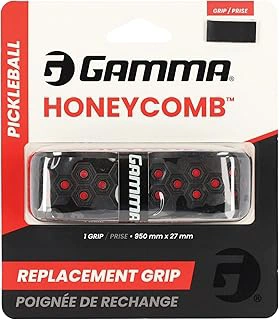
Gamma Honeycomb Cushion Grip for Pickleball Paddles
Players with arthritis or weak hands who want cushioning without excessive bulk often find the Gamma Honeycomb Cushion Grip a practical middle-ground option. The grip features a structured honeycomb surface that provides passive tactile cues to help align your hand without requiring a tight squeeze, and the cushioned material helps absorb vibration that would otherwise reach wrist and knuckle joints.
At $11.99, this overgrip sits between budget-friendly thin wraps like the Wilson Pro and more expensive geometric options like the Hesacore. The honeycomb texture is less aggressive than Hesacore's pronounced ridges, making it easier to adjust your grip mid-point while still offering enough surface variation to reduce the pressure needed to hold the paddle securely. The cushioning layer is thicker than standard tacky grips, which helps dampen shock on off-center hits - a common comfort issue when hand strength is limited.
Installation follows the standard wrap-on method used by most overgrips, so you don't need special tools or complicated alignment. The material adds modest thickness to the handle, typically increasing diameter by the listed size, which can improve comfort for players who find slim handles harder to grip but may feel too thick if you already use a built-up handle or have very small hands. The cushioning compresses slightly with use, so expect the grip to soften and conform over the first few play sessions.
Compared to thinner grips, the Gamma Honeycomb trades some direct paddle feedback for joint protection and reduced grip fatigue. Players who prioritize fine touch and precision may prefer a firmer surface, while those managing arthritis discomfort often benefit from the vibration damping. The honeycomb pattern stays consistent across the grip, so you won't lose texture or cushioning in high-contact zones as quickly as with smoother materials.
This grip works well if you need more cushioning than a basic overgrip provides but don't want the geometric bulk or higher cost of a Hesacore-style replacement grip. It's a straightforward upgrade that addresses vibration and grip security without requiring you to relearn your hold or significantly change paddle balance.
- ✅ Honeycomb texture provides passive grip alignment without tight squeezing
- ✅ Cushioned material dampens vibration to reduce joint stress
- ✅ Less aggressive geometry than Hesacore, easier to adjust grip mid-play
- ✅ Standard wrap-on installation, no special tools required
- ✅ Priced at $11.99, balancing cost and cushioning features
- ⚠️ Adds 2 - 3 mm to handle diameter, may feel bulky on already thick handles or for small hands
- ⚠️ Cushioning reduces direct paddle feedback compared to thinner grips
- ⚠️ Material compresses with use, requiring break-in period for final feel
Who This Selection Guide Is For
This guide is designed for pickleball players who experience arthritis, reduced grip strength, joint stiffness, or finger dexterity challenges that make holding a paddle uncomfortable or difficult. If you find that standard grips cause hand fatigue, aggravate joint pain, or require too much squeezing force to maintain control during play, the right overgrip can make a meaningful difference in your comfort and ability to enjoy the game.
The recommendations here prioritize cushioning, thickness, and ease of installation over features like maximum tack for spin generation or ultra-thin tournament-level feel. Players seeking aggressive spin enhancement or competitive edge may find other guides more relevant, but if your primary goal is to reduce hand strain and play longer without discomfort, this selection approach will help you identify overgrips that accommodate your specific needs.
Whether you deal with osteoarthritis in the fingers, weakened grip from nerve conditions, or general age-related hand strength decline, choosing an overgrip with appropriate padding and surface texture can reduce the force required to hold your paddle securely. The goal is to support your grip without adding unnecessary strain, allowing you to focus on gameplay rather than managing discomfort.
Thickness and Circumference: How Much Cushion vs. Control
Overgrip thickness directly affects both comfort and control, creating a tradeoff that players with arthritis must balance based on their specific hand challenges. Thicker overgrips, typically ranging from 2.0 to 3.0 mm, add substantial cushioning that can reduce vibration and soften impact forces, which may benefit individuals with arthritis in the wrist or forearm by dampening shock transmission. However, adding thickness increases the paddle's overall grip circumference by as much as 1/8 to 1/4 inch, which can make the handle harder to close your fingers around and may reduce fine motor control for players whose arthritis affects finger joints or grip strength.
Thinner overgrips, usually 0.5 to 1.5 mm, preserve the original handle size and maintain better tactile feedback, allowing more precise paddle angle adjustments and shot placement. This thinner profile works well for players who need to maximize dexterity and avoid the additional finger strain that comes from wrapping around a larger circumference. The tradeoff is less vibration damping, meaning more impact energy travels directly to your hand, wrist, and elbow - a consideration if your arthritis is aggravated by repetitive shock rather than grip effort.
If arthritis primarily affects your knuckles or finger joints, prioritize thinner grips that don't force your hand into a wider span, even if it means accepting slightly more vibration. If wrist, forearm, or elbow discomfort is your main concern, a thicker cushioned overgrip can absorb enough shock to outweigh the circumference increase. Some players find success layering a thin base overgrip for tack with a second, thicker wrap on the lower two-thirds of the handle where the palm absorbs most impact, leaving the upper section thinner for better finger control.
Measure your current grip circumference before adding an overgrip, and test how an additional 1/8 inch feels by temporarily wrapping athletic tape around the handle. This simple check reveals whether the added cushion is worth the reduced finger agility, helping you choose a thickness that supports your joints without compromising your ability to hold and maneuver the paddle confidently.
Surface Texture: Tack, Dry, and Perforated Options
The surface texture of your overgrip determines how securely you can hold the paddle without excessive squeezing, which matters when hand strength is limited. Tacky grips feel sticky to the touch and absorb moisture quickly, offering strong initial hold even with a light grip - ideal if arthritis makes it hard to squeeze firmly. Because they collect sweat and oils, tacky overgrips typically need replacement every few weeks of regular play. Dry-texture grips last longer and shed moisture well, but they require slightly more grip pressure to prevent slippage, so they work best if you have enough residual hand strength to maintain contact without strain. Perforated or structured surfaces - honeycomb patterns, ribbed channels, or raised textures - create passive friction and can help guide finger placement without relying solely on tack or compression. If your hands sweat heavily or you play in humid conditions, a perforated tacky grip balances moisture management with secure hold. If durability and low maintenance matter more, a dry or lightly textured overgrip reduces the frequency of rewrapping. Match the texture to your grip strength and moisture level: choose tack when you need maximum hold with minimal effort, dry when you want longevity and can apply light pressure, and structured options when you benefit from tactile cues that reduce the need to constantly adjust your hand position.
Cushioning Technology: Foam, Gel, and Honeycomb Structures
Cushioning technology in pickleball overgrips reduces the shock and vibration that travel from paddle to hand with every contact, which matters when arthritis makes joints sensitive to repetitive impact. Different materials - foam cores, gel pads, honeycomb cells, and solid polymer blends - absorb energy in distinct ways, and understanding the trade-offs helps you choose a grip that protects your hands without sacrificing the paddle feedback you need for control.
Foam-core overgrips embed closed-cell or open-cell foam between the surface layer and adhesive backing. Closed-cell foam compresses less and offers durable, consistent dampening over many games. Open-cell foam feels softer initially and absorbs more moisture, but it can flatten faster under firm grip pressure. Both types spread contact force across the palm and fingers, lowering peak pressure on knuckle and thumb joints. Players who hold the paddle moderately tight usually notice less ache in the base of the thumb and index finger after a session.
Gel-infused overgrips position pockets or strips of soft gel - silicone or polyurethane - at high-pressure zones such as the heel of the palm or along the finger channels. Gel deforms on impact and then recovers, which blunts sharp vibration spikes when you mishit near the paddle edge. Because gel is denser than foam, these grips add slightly more weight to the handle, typically an extra five to eight grams. That small increase can improve stability for weak hands by raising the paddle's swing weight, but it may fatigue the wrist during long rallies if grip strength is already limited.
Honeycomb-structure grips use a lattice of hexagonal or diamond-shaped cells molded into the grip's core layer. Air trapped in the cells compresses under load and rebounds quickly, offering a blend of cushioning and responsiveness. The open architecture keeps weight low - often lighter than solid foam - and promotes ventilation, which helps when sweaty palms loosen your hold. Honeycomb designs tend to preserve more paddle feedback than thick solid-foam wraps, so players who rely on finesse for dinks and drop shots may prefer this middle ground.
Solid polymer overgrips skip internal voids and rely on the polymer's own viscoelastic properties to dampen vibration. High-end thermoplastic elastomers can absorb energy effectively without adding bulk, keeping the handle diameter close to stock while still reducing joint stress. These grips feel firmer than foam or gel options, which some players find easier to control but others perceive as less forgiving on inflamed knuckles.
Maximum cushioning is not always the best choice. Very thick or soft grips can dull the tactile cues that tell you whether the ball contacted the sweet spot or the edge, making it harder to adjust spin and placement mid-point. If you depend on subtle wrist adjustments and fingertip pressure changes for touch shots, a moderately cushioned honeycomb or thin gel strip may protect your joints without masking paddle response. Conversely, if vibration triggers immediate pain and you play a power-baseline style with fewer finesse exchanges, a thicker foam or multi-zone gel grip will prioritize comfort over feedback, letting you swing confidently through volleys and drives.
Installation Tips When Dexterity Is Limited
Installing an overgrip can be challenging when arthritis or weak hands limit finger strength and dexterity. Starting with a clean, secure anchor is essential: peel back the starting tab, press it firmly against the base of the handle, and hold it in place for a few seconds to ensure it doesn't slip. If maintaining pressure is difficult, a small binder clip or clothespin can hold the starting edge while you begin wrapping.
Tension control matters more than speed. Wrap with light, consistent tension rather than pulling hard - overtightening can cause hand fatigue and uneven overlap, while too loose a wrap may bunch or shift during play. Aim for roughly one-third overlap on each pass around the handle, which balances cushioning with a smooth surface. If keeping overlap consistent is difficult, some players mark the grip with a pen or use the diagonal edge of the previous wrap as a visual guide.
Finishing the wrap securely can be tricky with limited dexterity. Most overgrips include a small strip of finishing tape; press this tape down firmly along the top edge of the final wrap, smoothing from one side to the other. If the adhesive strip is hard to handle, clear packing tape cut into a narrow strip works as an alternative. For players who find the entire process difficult, many local pro shops and sporting goods stores will install an overgrip for a small fee or at no charge, and staff can also demonstrate the technique for future attempts.
Using a tabletop or your lap to stabilize the paddle during wrapping reduces the need to grip tightly with one hand. Take breaks if your fingers tire, and remember that practice makes the process easier over time - each installation builds familiarity with tension and overlap.
Common Mistakes to Avoid
Choosing an overgrip based on brand reputation alone often leads to a mismatch between the grip's actual characteristics and your hand's specific needs. A well-known brand may produce excellent grips for players with healthy hands, but thickness, tack level, and cushioning matter more than name recognition when accommodating arthritis or weak grip strength.
Ignoring how added thickness affects your paddle's circumference can increase hand fatigue rather than reduce it. Each layer of overgrip adds approximately 1 - 2 millimeters to the handle diameter, and even small increases force your fingers to open wider and grip harder to maintain control. If your hand already struggles with endurance, verify the final circumference stays within a comfortable range for your hand size.
Over-wrapping to create excessive thickness in pursuit of cushioning creates a handle that requires more muscular effort to hold securely. Two or three layers may feel softer initially, but the larger diameter demands stronger finger flexion throughout every rally, accelerating fatigue and undermining the benefit you sought.
Delaying replacement of worn overgrips compromises both comfort and control. As the surface smooths and cushioning compresses, tack diminishes and your hand compensates by gripping harder, placing additional stress on inflamed joints. Replace grips when you notice reduced surface texture or flattened cushioning, not when they visibly tear.
Assuming one overgrip works for all hand conditions overlooks the variety of symptoms and limitations among players. Osteoarthritis in the base of the thumb benefits from different features than tendonitis in the fingers or generalized weakness from neuropathy. Match grip properties to your specific challenges rather than adopting another player's recommendation without evaluating whether your conditions align.
When to Replace Your Overgrip
Knowing when to replace your overgrip helps maintain the cushioning and tack that reduce hand strain during play. A worn overgrip loses its ability to absorb shock and provide the consistent grip surface your hands rely on, especially when managing arthritis or reduced grip strength.
Replace your overgrip when you notice loss of tack - when the paddle begins to slip or rotate in your hand during normal strokes. Visible compression of the cushioning layer is another clear signal; if the grip feels thinner or harder than when new, it no longer provides the same support. Fraying edges, tears, or visible wear patterns indicate the material has broken down and should be replaced.
Increased hand fatigue after sessions of typical length is a functional sign that your overgrip no longer absorbs impact effectively. If you find yourself gripping harder to maintain control, the overgrip has likely lost its tackiness or cushioning. Slippage during play - particularly on serves or hard volleys - means the surface can no longer hold your hand securely.
Players managing arthritis or weak hands benefit from more frequent replacement than the average player. While a typical overgrip might last several weeks of regular play, replacing every one to two weeks - or sooner if you notice any of the signs above - ensures you maintain consistent cushioning and grip security. Keeping a fresh overgrip on your paddle reduces the compensatory tension in your hands and forearm, helping you play more comfortably and with better control.
Final Takeaway: Match Grip to Your Hand, Not Marketing Claims
Choosing the right overgrip for arthritis or weak hands starts with understanding your specific needs, not chasing marketing promises. Measure your current paddle handle circumference, assess your joint sensitivity, and identify whether you need maximum cushioning, reliable tack, or both. Thicker overgrips add comfort and shock absorption but increase handle size - test the final circumference before committing to ensure you can still maintain a relaxed grip without straining smaller joints or fatigued muscles.
Prioritize texture and material based on how your hands respond during play. If moisture triggers slipping or discomfort, a tacky or perforated surface helps maintain control without excessive grip pressure. If joint pain flares with impact, a cushioned poly or foam overgrip absorbs more shock than a thin, firm alternative. Plan to replace overgrips regularly as they compress and lose tack; a worn grip forces compensatory squeezing that aggravates arthritis and accelerates fatigue.
Comfort and injury prevention matter more than any performance claim. A grip that reduces pain, supports a relaxed hold, and stays secure through sweat will improve your consistency and enjoyment far more than one marketed for power or spin. Match the overgrip to your hand's real constraints, and you'll play longer with less discomfort.
Key Hand and Play Factors to Assess Before You Shop
- Measure your current grip circumference with a soft tape measure around the paddle handle
- Note whether your joints are more sensitive at the knuckles, wrist, or base of thumb
- Estimate how much hand perspiration you produce during a typical 60-minute session
- Check whether you can comfortably stretch and wrap tape without assistance
- Identify if your paddle has an elongated or standard handle shape