We may earn a commission when you buy through links on this page, at no extra cost to you. How this works.
Pickleball elbow, also known as lateral epicondylitis or tennis elbow, develops when the muscles and tendons on the outside of your forearm become strained from repetitive stress. For pickleball players, the backhand motion - especially two-handed backhands and dinking rallies - places constant tension on the forearm extensors that attach near the elbow's bony point. Over time, this leads to aching, tenderness, and a sharp sensation when gripping the paddle or lifting objects off the court.
Kinesiology tape offers a non-restrictive way to support those stressed muscles and reduce discomfort during play. Unlike rigid braces, the elastic tape moves with your arm, lifting the skin slightly to improve circulation and reduce pressure on irritated tissue. It provides a gentle reminder to maintain better wrist alignment and can help you stay on the court while you address the underlying strain through rest and strengthening.
Taping is not a cure. It works best as part of a broader management plan that includes proper warm-up, form adjustments, and recovery time. The tape's support helps you maintain stability through your forearm without locking out natural movement, which is crucial for paddle control and quick volleys. When applied correctly, each strip targets specific muscle groups - extensors, flexors, or the wrist stabilizers - to address your particular pattern of discomfort.
Understanding where your pain originates will guide which taping technique to use. Outer elbow pain typically points to extensor strain, while inner elbow discomfort suggests flexor involvement. Wrist instability can also contribute to elbow stress, so some techniques focus on stabilizing the joint itself. The next sections walk through five targeted approaches, each designed to address a common source of pickleball elbow pain and keep you playing with greater comfort and confidence.
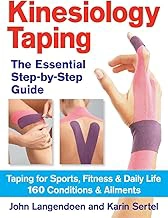
Kinesiology Taping The Essential Step-By-Step Guide
Players who prefer a printed reference often find video tutorials hard to pause or replay mid-application, especially when dealing with an active elbow flare-up. TheKinesiology Taping The Essential Step-By-Step Guideoffers illustrated instructions that stay open on the table while you work, making it easier to follow each strip placement without toggling between screens.
This guide covers multiple taping applications beyond the elbow, including shoulder, wrist, and knee techniques that pickleball players over multiple may need as they manage multiple joint concerns. The diagrams show hand position, tape angle, and stretch percentage in a way that's straightforward for beginners who haven't taped before. Each technique includes troubleshooting notes - helpful when the tape isn't adhering properly or you're unsure whether the tension feels right.
At $14.00 with a 4.5/5 rating, the book provides an affordable way to learn foundational skills without committing to a workshop or one-on-one session. The layout uses large type and clear photos, which suits older learners who appreciate visual clarity over dense text blocks. You can mark pages, add sticky notes, and revisit techniques as your elbow pain changes through the season.
The guide assumes no prior taping experience, walking through prep steps like skin cleaning, hair removal, and measuring tape length before cutting. For seniors managing pickleball elbow at home, having a reference that explainswhyeach strip runs parallel to the muscle fiber or crosses the joint at a specific angle builds confidence and reduces waste from trial-and-error attempts.
- ✅ Illustrated instructions that stay open on the table during application
- ✅ Covers elbow, shoulder, wrist, and knee techniques for multi-joint management
- ✅ Large type and clear photos suited to older learners
- ✅ $14.00 price point for foundational taping skills
- ✅ Troubleshooting notes for adhesion and tension issues
- ⚠️ Print format requires good lighting and flat workspace
- ⚠️ Does not include pre-cut tape or practice strips
- ⚠️ May need to cross-reference multiple pages for complex applications
How Kinesiology Tape Works to Alleviate Pain and Support Muscles
Kinesiology tape addresses pickleball elbow by lifting the skin slightly away from the tissues underneath. This creates space that reduces pressure on pain receptors in the forearm and elbow, which can ease discomfort during play. The lifting effect also encourages better fluid movement beneath the skin, helping to clear away the buildup that sometimes contributes to soreness after repetitive motion.
The tape provides sensory feedback to your muscles and joints without locking them in place. This proprioceptive input helps your forearm muscles coordinate more efficiently during shots, which may reduce strain on tendons. Because the tape stretches and moves with you, it allows full range of motion while offering a gentle reminder to maintain better mechanics at the net or baseline.
Unlike rigid braces, kinesiology tape works by enhancing your body's natural support systems rather than restricting movement. The elastic quality mimics the give of skin, so you can grip the paddle, execute volleys, and follow through on serves without feeling held back. The result is ongoing support that adapts to the dynamic demands of pickleball rather than forcing your arm into a single position.
Understanding this mechanism makes it easier to apply the tape strategically - placing it along the forearm extensors or around the elbow targets the areas most affected by repetitive backhand and overhead motions. The tape becomes a supplemental layer that works alongside muscle activation, not a replacement for proper warm-up or technique adjustments.
Choosing the Right Kinesiology Tape for Older, More Sensitive Skin
Older skin can be thinner and less elastic, making tape selection more important than color or brand recognition. Cotton-blend kinesiology tape is gentler than synthetic alternatives because it allows the skin to breathe and reduces the risk of irritation during extended wear. Hypoallergenic adhesives are designed to minimize reactions, especially for players who sweat heavily or wear tape for several days between matches.
Standard two-inch tape works well for most elbow applications. It covers the forearm extensor muscles without excessive bulk, and it stays flexible enough to move with your arm during volleys and serves. Water-resistant formulations hold up better when you sweat, but they can be harder to remove, so balance durability with how your skin responds.
Remove tape slowly and at a low angle, not straight up. Wetting the tape with warm water or using a small amount of baby oil loosens the adhesive and reduces pulling on delicate skin. If redness or itching appears after removal, give your skin a day to recover before applying a new strip. Cotton-blend tape with hypoallergenic adhesive offers the best combination of hold and skin-friendliness for players over sixty.
Preparation: How to Prep Your Skin for Taping
- Clean the elbow and forearm area with soap and water, then dry completely
- Remove oils or lotions that could weaken adhesive bond
- Shave or trim excess hair if present to prevent painful removal
- Round the corners of each tape strip to reduce edge lift during movement
- Apply tape at least 30 minutes before play to allow adhesive to set
Technique 1: The Basic 'I' Strip for Direct Pain Relief
A single vertical strip placed directly over the point of discomfort offers targeted support when pain clusters around the outside of the elbow. Position your arm with the wrist bent slightly downward to create tension along the forearm, which ensures the tape contacts the tissue in a functional position. Cut a strip long enough to start about two inches below the bony bump on the outside of your elbow and extend four to five inches up the forearm toward the wrist.
Press the bottom inch firmly against the skin without any pull - this anchor needs to stay put. As you move upward, apply about 25 percent stretch through the middle section that crosses the tender spot, smoothing the tape from the center outward to avoid wrinkles. Release all tension for the final inch at the top, creating a second no-stretch anchor. The mild stretch in the middle gently lifts the skin, which may improve circulation and reduce localized discomfort during play.
This method works well when pain remains in one clear spot rather than spreading across the forearm. The vertical orientation follows the natural line of the forearm muscles, and the simplicity makes it easy to apply solo before a match. If discomfort radiates more widely or involves multiple muscle groups, consider pairing this strip with additional techniques that address surrounding areas.
Technique 2: The 'Y' Strip for Forearm Muscle Support
Players who feel muscle fatigue along the top of the forearm, rather than sharp pain at the elbow joint, often get more support from a Y-shaped strip. This technique distributes tension across the extensor muscle belly and can reduce the workload on overused fibers during long rallies or practice sessions.
Cut a piece of tape long enough to span from just below your elbow to mid-forearm. Starting about two inches from one end, snip the tape lengthwise down the center to create two tails, leaving the bottom portion intact as a single anchor. Round the corners of all three ends to prevent lifting.
Anchor the uncut base two to three inches below the bony bump on the outside of your elbow, applying no stretch. Extend your wrist forward to lengthen the forearm muscles, then guide the first tail along the outer muscle ridge with 15 - 25 percent stretch. Smooth the second tail slightly inside the first, following the natural contour of the muscle group. Finish both tails with zero stretch to lock the application.
This layout works well when tightness or a dull ache runs along the muscle rather than concentrating at the tendon attachment. If discomfort sits right at the elbow, the I-strip approach in Technique 1 will likely feel more targeted.
Technique 3: The Decompression Strip for Targeted Pain Points
When you have a specific tender spot on the outer elbow bone, a short horizontal strip can help reduce direct pressure on that painful area. This decompression technique uses a different approach than the support strips: instead of pulling or stabilizing, it gently lifts the skin to create space over the inflamed tissue.
Cut a strip about two inches long. Find the exact spot that hurts when you press on the bony prominence of your elbow. Bend your arm to about 90 degrees, which compresses the skin slightly over the epicondyle. Apply the strip horizontally across that tender point with zero stretch - do not pull the tape at all. Press it down firmly so the adhesive sets.
When you straighten your arm, the skin naturally stretches and the tape stays its original length, creating a lifting effect that takes pressure off the underlying tissue. This mechanical lift can make a noticeable difference during gripping and backhand strokes, where direct pressure on the epicondyle is common.
This strip works best when combined with one of the forearm support techniques, not as a standalone solution. The decompression effect is localized, so it addresses sharp point tenderness but does not provide muscle support. If your pain is more diffuse across the forearm rather than concentrated at one spot, the full-length strips will usually be more useful.
Technique 4: Medial Elbow Support for Golfer's Elbow-Type Pain
Pain on the inside of the elbow - along the bony bump and down the inner forearm - signals stress in the flexor tendons that control wrist and finger bending. This pattern often appears in players who grip the paddle tightly during serves or snap their wrist through forehand drives. The medial side absorbs repeated pull from those motions, especially when fatigue sets in late in a match or tournament day.
Use a single I-strip for medial support. Measure from just below the inner elbow bump to mid-forearm, approximately six to eight inches depending on your arm length. Round the corners of the tape to prevent lifting. Start with your elbow bent at ninety degrees and your wrist extended back, which places the flexor group on mild stretch. Anchor the tape below the bony prominence without tension, then apply the middle section with twenty-five to fifty percent stretch as you follow the inner forearm down toward your wrist. Lay down the final inch without tension.
The key difference from lateral taping is location and the muscle group involved. Medial pain responds to support along the inner forearm, not the outer side. If you feel soreness in both areas, you can apply I-strips to each side, but make sure each piece adheres fully and does not overlap at the elbow joint itself. Rub the tape for several seconds after application to activate the adhesive and improve durability through sweat and movement.
This taping approach helps stabilize the flexor tendons during gripping and wrist flexion, which may reduce the load on irritated tissue. It works best when combined with lighter grip pressure and attention to wrist position during serves and drives.
Technique 5: A Combination Technique for Comprehensive Support
Players dealing with both joint discomfort and muscle fatigue around the elbow often find that a single taping pattern addresses only part of the problem. A combination technique layers the decompression strip with the Y-strip to target inflammation at the lateral epicondyle while simultaneously supporting the extensor muscles along the forearm. This approach provides more comprehensive coverage when symptoms involve multiple tissues, though it requires careful attention to tape placement and tension to avoid restricting blood flow.
Start by applying the decompression strip first, following the same steps outlined in Technique 4: anchor it two inches below the tender spot on the outer elbow with zero stretch, then apply the center section with 50 - 75% stretch directly over the point of discomfort, and finish with a second zero-stretch anchor two inches above. Rub the tape to activate the adhesive and allow it to settle for a minute. This base layer creates space and reduces pressure at the joint.
Next, layer the Y-strip over and around the decompression tape, beginning the anchor on the back of the hand between the second and third knuckles with no stretch. Apply the tails with 25 - 50% stretch up the forearm, guiding one tail along the outer edge of the extensor muscles and the other slightly more toward the center. The tails will cross over portions of the decompression strip near the elbow; keep overlap minimal and avoid adding extra tension in these zones. The goal is to support muscle function without compressing the joint area where the decompression strip is already working.
Check your forearm immediately after application: you should be able to bend and straighten your elbow fully, and your fingers should feel warm with normal color. If you notice tingling, numbness, or skin blanching, the tape is too tight or overlapping excessively. Remove it, let the skin rest, and reapply with less stretch, particularly in the Y-strip tails. This combination works well for extended play sessions or tournament days when fatigue and inflammation both become factors, but it is not a substitute for rest when symptoms intensify.
Tips for Wearing and Safely Removing Kinesiology Tape
- Leave tape on for 3-5 days maximum; replace if edges lift or adhesive weakens
- Pat tape dry after showering; avoid rubbing to preserve adhesion
- Remove tape slowly in the direction of hair growth, using oil or adhesive remover to ease separation
- Stop wearing tape immediately if you notice rash, blistering, or increased pain
- Reapply fresh tape before each session if you prefer single-use application for hygiene
When to Consult a Doctor About Your Elbow Pain
Kinesiology tape can help you maintain comfort and support during play, but it does not repair damaged tendons or replace medical care. If your elbow pain persists or worsens despite taping and rest, a professional evaluation is the next step.
Sharp, stabbing pain during serving or volleys is a warning sign that your forearm extensors may be strained beyond what supportive taping can address. Pain that continues when you're off the court - especially at rest or during everyday tasks like gripping a coffee mug - suggests inflammation or microtears that need more than tape. Visible swelling around the lateral epicondyle, warmth to the touch, or tenderness that doesn't improve after a few days of modified activity all warrant a visit to your doctor or physical therapist.
Numbness, tingling, or weakness in your fingers can indicate nerve involvement rather than simple tendon irritation. These symptoms should never be ignored, because delayed treatment may lead to longer recovery times. Similarly, if you've been taping and adjusting your play for two weeks without noticeable improvement, it's time to seek guidance. A sports medicine specialist can assess your elbow mechanics, identify compensatory movement patterns, and recommend targeted exercises or manual therapy.
Taping works best as part of a broader recovery plan that includes adequate rest between sessions, daily forearm stretches, and gradual return to full intensity. Think of tape as a tool that supports your body while it heals, not a fix that allows you to push through serious injury. When in doubt, err on the side of caution and schedule an appointment - early intervention often means shorter downtime and a faster return to the court.