We may earn a commission when you buy through links on this page, at no extra cost to you. How this works.
Summer pickleball sessions can quickly turn uncomfortable when your knee brace becomes a sweat trap. Senior players who rely on knee support for stability and compression face a frustrating choice: traditional neoprene braces that provide solid structure but overheat within minutes, or lighter knit options that breathe well but might not deliver the same level of control during rapid lateral moves and pivots.
When temperatures climb above 85 degrees, a neoprene sleeve can feel like a heating pad wrapped around your joint. Moisture gets locked against your skin, the brace slides during play, and you spend more time adjusting than focusing on the game. Yet many players hesitate to switch materials because they worry this product knit designs won't stabilize a knee that already feels vulnerable on quick direction changes.
The material you choose affects more than just comfort. A brace that causes you to overheat can shorten your playing time and reduce your willingness to stay active during peak summer months. One that slides or fails to support your knee properly can undermine your confidence on the court. For active seniors managing mild instability, previous strains, or general joint wear, the goal is finding a solution that handles both the biomechanical demand and the environmental reality of outdoor summer play.
This comparison breaks down how neoprene and this product knit knee braces perform in hot conditions. You'll see the specific tradeoffs in heat retention, moisture management, compression consistency, and structural support so you can match the right material to your knee needs and typical game schedule.
Fit and safety come first
Use the comparison as a shortlist, but keep fit, comfort, and any health or safety constraints ahead of price.
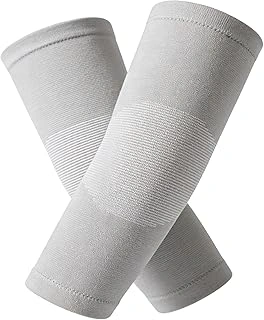
Bamboo Charcoal Compression Knee Sleeve, Gray, X-Large
The Bamboo Charcoal Compression Knee Sleeve in gray brings a different material approach to Bamboo Charcoal Compression Knee Sleeve, Gray, X-Large support, priced at $16.99 with a 4.6 out of 5 rating. Bamboo charcoal fiber construction moves moisture away from skin more efficiently than basic synthetic knit while adding natural odor control - two advantages that matter during long outdoor sessions in summer heat.
This X-Large sleeve relies on graduated compression to stay in place without the adhesive backing or bulkier straps found in neoprene designs. That sizing becomes critical: measure your thigh circumference six inches above the kneecap to confirm the X-Large fits your leg properly. Too loose and the compression won't stabilize effectively; too tight and circulation becomes uncomfortable during extended play.
The knit fabric allows air circulation around the knee joint, reducing the sweat buildup and heat retention common with neoprene sleeves. You'll feel the difference within the first few games on a hot court. The tradeoff is less rigid support compared to hinged or heavily reinforced braces - this sleeve works best for players who need mild to moderate compression rather than maximum lateral stability.
Bamboo charcoal fiber naturally resists odor development better than standard polyester or nylon blends, which helps when you're playing multiple days per week without washing the sleeve between every session. The material also dries faster after washing, keeping the sleeve ready for your next outing.
Start with shorter practice sessions to test how the compression feels during movement. Some players find graduated compression sleeves need a break-in period to settle into the right balance of snugness and comfort. Verify the $16.99 price point before purchasing, and measure carefully to ensure the X-Large matches your thigh dimensions - returning a sleeve because of sizing guesswork adds unnecessary delay.
- ✅ Bamboo charcoal fiber wicks moisture and controls odor naturally
- ✅ Graduated compression design eliminates bulky straps
- ✅ Air circulation reduces heat buildup during summer play
- ✅ Dries quickly after washing
- ✅ Affordable at $16.99
- ⚠️ X-Large sizing requires careful thigh measurement for proper fit
- ⚠️ Provides less rigid support than hinged or heavily reinforced braces
- ⚠️ Graduated compression may need break-in period for comfort
Understanding Neoprene Knee Braces: Pros and Cons
Neoprene knee braces use a closed-cell foam structure that delivers firm, consistent compression around the joint. The material wraps the knee in a synthetic rubber layer that holds its shape well and provides a snug fit without much stretch or give. That structure explains why neoprene braces feel supportive right out of the package - the foam pushes back against your skin, creating the compression many players associate with stability.
The same closed-cell design that produces compression also traps heat. Air cannot move through the foam, so moisture from sweat stays between the brace and your skin. During a two-hour summer session, that trapped warmth builds quickly, and the inside of the brace becomes damp and uncomfortable. Many senior players notice the heat more than younger athletes, and the sensation can distract from footwork and focus on the court.
Neoprene braces are durable. The material resists tearing, holds up through repeated washing, and maintains compression over months of regular use. Most neoprene options fall between twenty and forty dollars, making them an affordable choice for players who need reliable support without a large upfront cost. The trade-off is comfort in warm weather: the same density that provides durability and compression also limits breathability, leaving your knee warmer and wetter than lighter materials would.
If you play primarily in air-conditioned gyms or during cooler months, neoprene's warmth may not be an issue. For outdoor summer pickleball in direct sun, though, the heat retention becomes the primary drawback, and that factor often outweighs the material's compression and durability advantages for players prioritizing comfort over long matches.
Exploring Breathable Knit Knee Braces: Pros and Cons
this product knit knee braces use open-weave synthetic fabrics or bamboo-blend materials designed to allow air circulation while maintaining compression around the joint. Unlike the closed-cell structure of neoprene, knit construction creates small channels between fibers that let heat escape and moisture evaporate. Many models incorporate graduated compression zones - tighter around the knee cap, lighter above and below - to focus support where lateral movement and pivoting create the most stress during pickleball play.
The primary advantage is temperature management. Players report feeling less trapped heat during long summer sessions, and sweat moves away from skin rather than pooling inside the brace. Most knit braces are also lighter and less bulky, which can improve comfort under athletic clothing. The fabric stretches in multiple directions, making it easier to pull on and adjust without assistance.
Compression consistency is the tradeoff. Knit materials provide moderate compression, but the open weave means less uniform pressure distribution compared to neoprene's continuous surface contact. For players who need firm, even compression to manage mild instability or post-activity swelling, knit may feel less supportive. Some knit models add silicone grip strips or stabilizing stays to address this, but these features also reduce breathability in those zones.
Fit varies by design. Compression sleeves made entirely of knit fabric slide on like a tube and rely on elastic tension alone. Hinged models combine knit fabric with side stays and straps, offering adjustable support but adding weight and reducing the ventilation benefit. Sleeves work well for general support during recreational play, while hinged versions suit players returning from injury who need controlled range of motion.
Price typically ranges from fifteen to thirty-five dollars. Lower-cost models use basic polyester-spandex blends and simple tube construction. Mid-range options add moisture-wicking treatments, anti-odor coatings, or anatomical shaping for the left and right knee. Higher-end knit braces incorporate graduated compression mapping or bamboo-blend fabrics that feel softer and wick moisture faster than standard synthetics.
Durability depends on knit density and care. Thinner, more this product fabrics may stretch out faster with frequent washing or repeated pulling during quick on-court adjustments. Hand washing and air drying extend the life of elastic fibers. Knit braces remain a practical choice for players who prioritize ventilation and lighter weight over maximum compression, especially during outdoor summer matches where heat management becomes as important as joint support.
Head-to-Head Comparison: Heat and Sweat Management
Heat and sweat management separate these two materials most clearly during extended summer play. A 60-minute session on an outdoor court when air temperature reaches 80°F or higher creates enough stress to reveal how each fabric responds to sustained activity.
Neoprene traps body heat by design. The material forms a sealed barrier against the skin, blocking airflow and raising local skin temperature by several degrees. Sweat accumulates inside the sleeve rather than evaporating, creating a wet layer between fabric and skin. As moisture pools, the brace may begin to slip during lateral movements or quick direction changes. Players often notice this slippage during the second or third game of a session, when sweat volume peaks and grip deteriorates.
this product knit fabrics allow air to pass through the weave. Sweat moves away from the skin and evaporates at the fabric surface, producing a cooling effect that moderates skin temperature. The open structure reduces moisture buildup, so the brace typically stays in position throughout play. Slippage becomes less frequent because the fabric maintains better friction against dry or lightly damp skin.
Temperature differences between the two materials become pronounced when outdoor courts exceed 80°F. Neoprene can feel uncomfortably warm within the first 20 minutes, and discomfort often increases as play continues. Knit braces remain noticeably cooler, though they still generate some heat in areas where compression is highest. The cooling advantage of knit construction grows larger as ambient temperature climbs and session length extends beyond 45 minutes.
Multi-game comfort hinges on how well each material manages the cycle of sweating, evaporation, and skin contact. Neoprene requires frequent adjustment or brief removal between games to allow trapped moisture to escape. this product knit typically needs less intervention, letting players move from one game to the next without repositioning or wiping down the brace. For players scheduling back-to-back matches or tournament rounds in summer heat, that difference in maintenance can influence focus and energy management.
Head-to-Head Comparison: Support and Stability
Compression consistency matters when you're shifting weight quickly across the court. Neoprene typically delivers uniform compression in the 20 - 30 mmHg range, wrapping the entire joint with steady pressure that doesn't vary much as you move. This even compression can feel reassuring during split-step positioning, when your knees absorb impact and stabilize your body before you react to the next shot.
this product knit braces use graduated compression zones - tighter around the kneecap, lighter behind the joint - to balance support with flexibility. That zoned approach works well for forward and backward movement, but during aggressive lateral shuffles or quick directional changes, the knit can shift slightly, especially if the fit isn't snug. When the brace rotates even a little, the compression zones no longer sit where they're designed to, and you may notice less patellar stabilization mid-rally.
Patellar stabilization also depends on design. Open-patella braces, common in both materials, leave the kneecap exposed through a cutout, which reduces pressure on the patella itself and can help with tracking. Closed-patella designs cover the entire kneecap and distribute compression more evenly, but they also trap more heat. Neoprene closed-patella braces tend to feel warmer and may cause sweating under the brace, while knit closed-patella models manage moisture better but may offer less firm hold on the cap during side-to-side play.
For ligament support during side shuffles - when your knee is under lateral stress - neoprene's thickness and consistent tension can limit unwanted joint movement more effectively than a thinner knit. Knit braces flex with your knee, which feels more natural, but that flexibility means less restriction. If your goal is maximum stability during quick pivots, neoprene usually provides a firmer boundary. If you prefer a brace that moves with you and doesn't resist your range of motion, knit offers better adaptability, though you may trade some of that edge-to-edge control.
Material choice influences how the brace responds under load. Neoprene resists stretch, so compression stays relatively constant through a long match. Knit fabrics can relax slightly as they warm and absorb moisture, which may reduce compression by the third game. Tightening straps mid-match can restore some of that support, but not all knit braces include adjustable closures.
Head-to-Head Comparison: Comfort and Mobility
Range of motion becomes critical when you're chasing down dinks or dropping into a low volley position. Neoprene braces, typically 3 to 5 millimeters thick, can bunch or fold behind the knee during deep lunges, creating pressure points that distract from your game. The material's rigidity means it doesn't stretch in all directions equally, which can limit how far you comfortably bend your knee on aggressive shots.
this product knit sleeves flex more naturally because the fabric is thinner and engineered to move with your joint. You won't feel the same resistance when transitioning from a ready stance to a full lunge. This difference matters most during long rallies where you're shifting weight and changing direction repeatedly.
Skin irritation shows up differently with each material. Neoprene traps sweat against your skin, and after an hour or two in summer heat, that moisture can cause rash or itching, especially in the soft area behind your knee. Some players develop contact sensitivity to the rubber compounds in neoprene itself. Knit braces allow moisture to evaporate, but the elastic bands at the top and bottom can dig into your skin if the fit is too snug or if you wear the brace for extended periods. Chafing from these bands becomes more likely when you're moving side to side constantly.
All-day wearability differs in practical ways. If you play multiple games with breaks in between, neoprene feels increasingly clammy and heavy as sweat accumulates inside the sleeve. Many players remove the brace between matches to let their skin dry, which means repeatedly adjusting straps and fit. Knit sleeves stay lighter and less obtrusive throughout the day, making them easier to keep on during rest periods without the same discomfort. Players who prefer continuous support between games usually find knit materials less this product over a four- or five-hour tournament schedule.
When to Consider Neoprene Despite the Heat
Neoprene knee braces still make sense for certain pickleball situations, even when temperatures climb. Players managing significant ligament laxity or recovering from moderate knee instability often need the firmer, more uniform compression that neoprene delivers, which this product knit designs may not match in intensity.
Short play sessions - around 30 minutes or less - reduce the heat-trapping drawback. If you're practicing serve returns or drilling volleys indoors under air conditioning, neoprene's warmth becomes a non-issue, and you gain the benefit of its durable, snug fit that stays put during quick lateral movement.
Many senior players keep both types on hand and choose based on daily joint feel and forecast. On cooler mornings or when a knee feels looser than usual, neoprene provides that extra sense of security. When humidity spikes or during back-to-back outdoor matches, a this product knit brace takes over. This rotation approach lets you prioritize support when the joint demands it and comfort when heat becomes the limiting factor, rather than committing to one material year-round.
Practical Tips for Summer Knee Brace Use
Keeping your knee brace clean and functional through the summer season requires consistent care, regardless of material. Bacteria thrive in warm, moist environments, so wash your brace after every two to three sessions using mild detergent and cool water, then air-dry completely before the next use. Always apply your brace to clean, dry skin - moisture and lotion residue reduce grip and can cause slipping during lateral movements.
If you're playing in a tournament format with multiple matches in one day, remove your brace between games to let your skin breathe and check for any redness or irritation. This brief break helps prevent heat buildup under the fabric and gives you a chance to wipe down both your knee and the brace liner.
Monitor your brace for signs of wear. Loss of elasticity, fraying straps, or fabric that no longer snaps back into shape typically appear after four to six months of regular use, signaling it's time for a replacement. Worn-out compression delivers inconsistent support and can shift during play.
Stay aware of your hydration throughout long sessions. Compression can mask minor swelling that would otherwise alert you to overexertion, so drink water steadily even if you don't feel thirsty. If you notice persistent puffiness around the brace edges after removing it, scale back intensity or duration and consider an extra rest day.
Choosing the Right Material for Your Knee Concerns
- If you have mild osteoarthritis or general joint stiffness, breathable knit offers adequate compression without trapping heat during extended play
- If you're recovering from a minor meniscus strain or need maximum patellar stabilization, neoprene provides firmer enclosed support for lateral movement
- If you play outdoors in temperatures above 85°F for more than 60 minutes, prioritize knit construction to avoid moisture buildup and skin irritation
- If your local courts are indoors or shaded and temperature-controlled, neoprene becomes more viable without the heat penalty
- If you experience swelling after play, compression from either material helps, but knit allows you to ice through the fabric and apply topical treatments more easily