We may earn a commission when you buy through links on this page, at no extra cost to you. How this works.
If you're experiencing shoulder stiffness, knee pain, or general muscle soreness 12-24 hours after playing pickleball, you're not alone. These delayed-onset symptoms are common in active adults over 60, particularly when playing frequency increases from once-weekly to three or four sessions per week.
The repetitive overhead motions, quick lateral movements, and sustained squatting position during play create specific stress patterns in aging joints and muscles. Your connective tissue takes longer to recover than it did at 40, and inflammation lingers without proper post-game care. The right recovery tools address these exact compatibility constraints: they must be gentle enough for sensitive joints, simple enough to use consistently, and effective enough to reduce next-day discomfort so you can maintain your playing schedule.
The four tools reviewed here target the most common pain points for senior pickleball players while fitting easily into a realistic post-game routine.
Why Active Recovery is Crucial for Players Over 60
Active recovery involves gentle movement and targeted treatment immediately after play, rather than complete rest. For senior athletes, this approach maintains joint mobility while reducing inflammation that causes next-day stiffness.
Your body's natural anti-inflammatory response slows with age, making external interventions more important. Cold therapy constricts blood vessels to reduce swelling, while preventing repetitive bending motions protects already-stressed joints. Research shows that consistent post-activity recovery protocols can reduce muscle soreness by 30-50% and significantly decrease injury risk in older adults.
The key is simplicity: a recovery routine you'll actually follow after every game session, using tools that don't require complicated setup or cause additional discomfort during use.
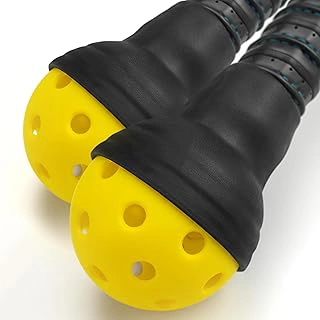
Silicone Pickleball Ball Retriever for Paddles
This dual-pack ball retriever attaches directly to your paddle, eliminating the need to bend down 50-100 times during a typical game session. The silicone suction cup grabs balls off the court surface with a simple press-and-lift motion, keeping you upright and reducing repetitive stress on knees, hips, and lower back.
The 5.0/5 rating reflects its reliability across different paddle face materials. Each retriever weighs negligible ounces and won't affect paddle balance or swing mechanics. The two-pack means you can keep one on your primary paddle and one on your backup, or share with a regular playing partner who faces similar mobility constraints.
At $9.99, this represents preventive care: reducing cumulative joint stress across hundreds of bends per week protects the same knees and hips that often ache after play.
- ✅ Eliminates 50-100 bending motions per game session
- ✅ Dual-pack provides backup or sharing option
- ✅ Negligible weight won't affect paddle performance
- ✅ Perfect 5.0 rating indicates consistent reliability
- ⚠️ Requires learning new ball-pickup motion
- ⚠️ May not adhere to heavily textured paddle faces
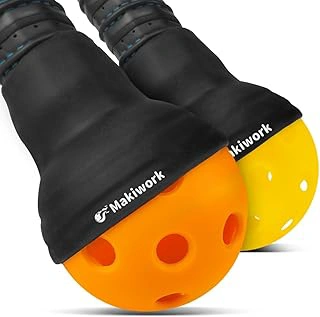
Silicone Pickleball Ball Retriever with Universal Suction Cup
This single-unit retriever features a universal suction cup designed to work across all paddle face types, from smooth polymer to textured carbon fiber. At $7.59, it offers the most economical entry point for seniors testing whether a ball retriever will actually reduce their post-game knee and back discomfort.
The 4.4/5 rating and lower price point make this ideal for players who want to trial the concept before committing to multiple units. The universal suction design means you don't need to verify paddle compatibility before purchase, and the retriever can transfer between different paddles if you're experimenting with equipment.
For seniors on fixed retirement budgets who play 2-3 times weekly, this provides meaningful joint protection at minimal cost, with proven effectiveness across diverse user reviews.
- ✅ Most economical option at $7.59
- ✅ Universal suction cup fits all paddle types
- ✅ Perfect trial option before buying multiple units
- ✅ Solid 4.4/5 rating confirms effectiveness
- ⚠️ Single unit only (no backup included)
- ⚠️ Slightly lower rating than premium options
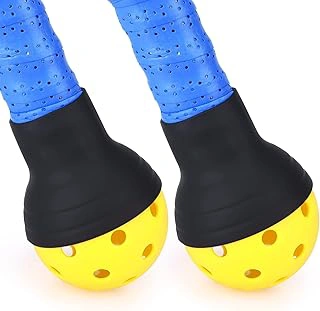
TOBWOLF 2PCS Silicone Pickleball Ball Retriever Suction Cup
The TOBWOLF two-piece set balances cost and coverage at $8.54, offering redundancy and sharing capability while maintaining strong performance indicated by its 4.5/5 rating. The silicone construction provides durable grip across varying court temperatures, from early-morning cold surfaces to midday heat.
This dual-pack configuration works well for seniors who play doubles regularly with a consistent partner facing similar mobility challenges. Both players can reduce bending stress simultaneously, maintaining game pace without compromising joint health. The suction cup mechanism requires minimal hand strength to engage and release, important for players managing arthritis or reduced grip strength.
The mid-range pricing and proven reliability make this an excellent choice for committed players who've moved past the trial phase and want consistent joint protection.
- ✅ Two-piece set at competitive $8.54 price point
- ✅ Strong 4.5/5 rating shows consistent performance
- ✅ Minimal hand strength required for operation
- ✅ Temperature-resistant silicone for year-round use
- ⚠️ Not the highest-rated option available
- ⚠️ Brand may be less familiar to some buyers
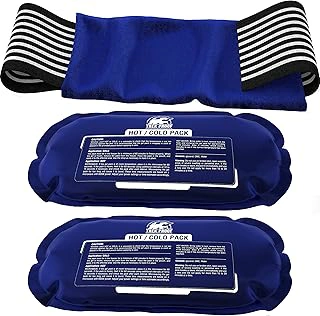
Reusable Hot and Cold Therapy Gel Ice Packs (3-Piece Set) for Injuries
This three-piece gel pack set provides the targeted cold therapy essential for reducing post-pickleball inflammation in knees, shoulders, and elbows. Each pack conforms to joint contours when cold, delivering consistent temperature across the treatment area for 20-30 minutes per session.
The 4.6/5 rating reflects effectiveness across both cold and heat therapy applications, though senior pickleball players will primarily use cold mode immediately post-game. The three-pack configuration means you can treat multiple joints simultaneously (both knees plus one shoulder, for example) or keep backup packs freezing while using one, ensuring treatment availability for back-to-back game days.
At $18.97, this represents the most substantial investment among these four tools, but directly addresses the inflammation driving next-day joint pain and stiffness.
- ✅ Three-pack allows simultaneous multi-joint treatment
- ✅ Conforms to joint contours for complete coverage
- ✅ Strong 4.6/5 rating confirms effectiveness
- ✅ 20-30 minute cold retention per session
- ⚠️ Highest cost at $18.97
- ⚠️ Requires freezer access at playing location or home
How to Create a Simple Post-Game Recovery Routine
Effective recovery doesn't require an hour-long elaborate protocol. Start with this 15-minute sequence immediately after play: First, walk slowly for 3-5 minutes to gradually lower your heart rate while maintaining joint mobility. Second, apply cold therapy packs to your primary pain points (typically knees and shoulders) for 15-20 minutes while seated comfortably.
During cold therapy, perform gentle range-of-motion exercises: slow shoulder rolls, ankle circles, and easy neck rotations. Avoid aggressive stretching when joints are still warm and potentially inflamed. Stay hydrated throughout this period, as water supports the inflammatory waste removal process.
For ball retrievers, the 'recovery' happens during play itself by preventing cumulative joint stress. Use them consistently every game rather than only when experiencing pain, as prevention is far more effective than delayed intervention for senior athletes.
Important Safety Note: When to Consult Your Doctor
While these recovery tools effectively manage normal post-exercise soreness, certain symptoms require medical evaluation before continuing play. Consult your physician if you experience sharp pain during specific movements rather than general achiness, swelling that persists beyond 48 hours despite cold therapy, or joint instability that feels like 'giving way' during normal activities.
Pain that worsens progressively over several game sessions, rather than remaining stable or improving, indicates potential underlying injury requiring professional assessment. Similarly, if pain disrupts sleep or requires over-the-counter medication for more than three consecutive days, medical evaluation is warranted.
These tools support healthy recovery from normal exercise stress. They are not substitutes for diagnosis and treatment of actual injuries, joint damage, or inflammatory conditions requiring medical management.