We may earn a commission when you buy through links on this page, at no extra cost to you. How this works.
Pickleball elbow develops when repetitive forehand drives and quick dinking motions strain the tendons connecting your forearm muscles to the elbow joint. The condition mirrors tennis elbow but often appears faster in players over 60 because tendons lose elasticity with age. A quality compression sleeve addresses this by applying graduated pressure that increases blood flow, reduces inflammation, and stabilizes the joint without limiting your range of motion.
Not all sleeves work the same way. Full-arm compression distributes pressure evenly along the forearm, while targeted braces concentrate support at the lateral epicondyle where pain typically concentrates. For pickleball specifically, you need a design that stays put during quick lateral movements and doesn't bunch up when you bend your arm for a third-shot drop. The right sleeve should feel snug without cutting off circulation, remain breathable during back-to-back games, and fit comfortably under your usual playing shirt.
Quick comparison
| Elbow Brace for Tendonitis and Tennis Elbow, Arm Compression Sleeve (Large) | Check size chart and current price |
| APOYO Compression Elbow Brace for Tendonitis and Tennis Elbow | Verify fit and check availability |
| Gviipk 2026 Adjustable Elbow Brace with Compression Pad for Tendonitis & Tennis Elbow | Compare adjustable features and price |
Fit and safety come first
Use the comparison as a shortlist, but keep fit, comfort, and any health or safety constraints ahead of price.
Our Top 3 Compression Sleeves for Pickleball Players
These three sleeves represent different approaches to elbow support. The first provides all-day comfort for players who wear their sleeve from warm-up through cool-down. The second targets pain relief with focused compression at the trouble spot. The third prioritizes airflow and light weight for players in warm climates or those who overheat easily. Each option scored 4.4 stars or higher and uses materials designed to handle sweat and repeated washing without losing elasticity.
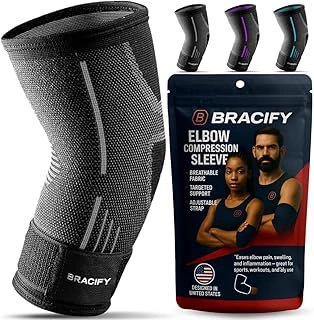
Elbow Brace for Tendonitis and Tennis Elbow, Arm Compression Sleeve (Large)
This full-length arm sleeve extends from wrist to bicep, distributing compression across your entire forearm rather than focusing pressure at a single point. That design works well if your discomfort radiates down the arm or if you're managing both elbow and wrist soreness from repetitive paddle grip. The fabric blend manages moisture effectively during long play sessions, and the seamless construction prevents chafing along the inner elbow where skin folds during bending motions.
Imagine playing three consecutive matches on a humid morning. The sleeve wicks sweat away from your skin and dries quickly between games, so you're not dealing with that clammy feeling that makes you want to rip it off mid-match. The Large size specification matters here because too-tight compression can restrict blood flow in older players, while too-loose fabric bunches and slides. Measure your forearm circumference at the widest point before ordering to ensure proper graduated pressure from wrist to upper arm.
- ✅ Full-arm coverage distributes pressure evenly
- ✅ Moisture-wicking fabric stays dry during multi-game sessions
- ✅ Seamless design prevents irritation at elbow bend
- ⚠️ May feel too long for players who prefer minimal coverage
- ⚠️ Requires accurate forearm measurement for proper compression
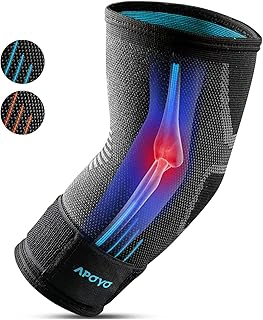
APOYO Compression Elbow Brace for Tendonitis and Tennis Elbow
This sleeve uses a shorter design that focuses compression directly around the elbow joint and upper forearm where pickleball players typically experience the sharpest pain. The targeted approach makes it less intrusive if you already wear wrist supports or prefer your forearm uncovered. The material thickness balances support with flexibility, allowing full extension when you reach for a wide shot without feeling like you're fighting against the fabric.
Consider a scenario where you're drilling your serve for 20 minutes straight. The repetitive overhead motion places significant stress on the lateral epicondyle, and a brace that concentrates pressure at that specific tendon insertion point can reduce strain more effectively than generalized compression. The 4.4-star rating reflects consistent performance across users with varying arm sizes and pain levels. You'll want to position the brace so the thickest compression zone sits about one inch below your elbow crease, directly over the sore spot you can feel when you press the outside of your elbow.
- ✅ Targeted compression concentrates support at pain point
- ✅ Shorter design allows forearm freedom
- ✅ Works well with existing wrist supports
- ⚠️ Less coverage than full-sleeve options
- ⚠️ Requires precise positioning for maximum benefit
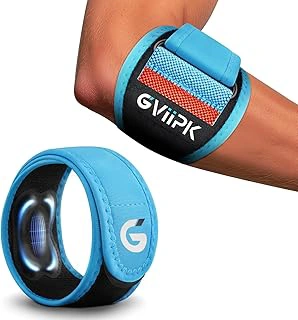
Gviipk 2026 Adjustable Elbow Brace with Compression Pad for Tendonitis & Tennis Elbow
The adjustable strap system on this brace sets it apart from pull-on sleeves. You can dial in exact compression levels throughout the day as swelling fluctuates or as you transition from light warm-up to competitive play. The built-in compression pad adds localized pressure at the tendon attachment site, combining the benefits of a full brace with targeted pain relief. This dual-layer approach earned it a 4.9-star rating, the highest among these three options.
Picture yourself playing an early-morning doubles match when your joints are still stiff, then returning for an afternoon session after you've loosened up. With fixed-compression sleeves, you're stuck with one tension level. The adjustable design lets you tighten the strap during cold starts when you need maximum support, then loosen it slightly as your arm warms and blood flow increases. The breathable mesh panels prevent overheating, addressing a common complaint among senior players who already run warm during physical activity. The $28.99 price point reflects the more complex construction compared to simpler sleeve designs.
- ✅ Adjustable straps customize compression throughout the day
- ✅ Compression pad targets specific pain points
- ✅ Mesh panels enhance breathability during intense play
- ⚠️ Higher price than basic sleeve options
- ⚠️ Straps require occasional readjustment during play
A Senior Player's Guide to Choosing the Right Elbow Sleeve
- Choose full-arm coverage if pain extends down your forearm or you want all-day wear comfort
- Select targeted compression when pain concentrates at the outer elbow and you prefer minimal fabric
- Pick adjustable designs if swelling fluctuates or you play in varying weather conditions
- Verify the sleeve fits your dominant arm circumference using the manufacturer's size chart
- Look for moisture-wicking fabric if you play in humid climates or sweat heavily
- Consider mesh panels or lightweight materials if you overheat easily during exercise
- Check that the sleeve allows full elbow extension without riding up your arm during overhead shots
How to Properly Wear Your Sleeve for Maximum Benefit
Slide the sleeve on before warm-up while your arm is relaxed and not yet swollen from activity. For full-length sleeves, the top edge should sit two finger-widths below your armpit without digging into the bicep. For targeted braces, position the thickest compression zone one inch below your elbow crease, directly over the tender spot on the outer elbow bone.
The sleeve should feel snug like a firm handshake, not tight like a blood pressure cuff. You should be able to slip one finger between the fabric and your skin, but not two fingers. If you see red marks that don't fade within ten minutes of removal, size up. If the sleeve slides down during play or you can easily rotate it around your arm, size down. Wash after every use in cold water to maintain elasticity, and replace when the fabric no longer rebounds to its original shape after stretching.
Final Verdict: The Best Way to Manage Pickleball Elbow
The full-arm compression sleeve offers the most versatile support for players dealing with forearm fatigue and elbow pain simultaneously. The APOYO model works best when your discomfort stays localized to one specific spot and you want minimal coverage. For players who need customizable compression or deal with morning stiffness that improves throughout the day, the adjustable Gviipk brace justifies its higher price with exceptional ratings and adaptable support.
No sleeve alone fixes pickleball elbow. Combine compression support with proper warm-up routines, correct paddle grip pressure, and adequate rest between sessions. If pain persists beyond two weeks despite using a quality sleeve, consult a sports medicine physician or physical therapist who understands repetitive strain injuries in older athletes. The goal is staying on the court for years to come, not pushing through damage that could sideline you permanently.