We may earn a commission when you buy through links on this page, at no extra cost to you. How this works.
Bending down to dig through a bag on the court floor puts stress on knees, hips, and the lower back - movements that add up over a long session or tournament day. For senior players managing joint stiffness or balance concerns, each trip to the ground carries risk and discomfort.
A carabiner hook changes that dynamic. Clip your bag to a fence at waist height, and you eliminate the need to crouch or kneel. Gear stays within easy reach, organized and visible, so you can grab a ball, towel, or water bottle without strain. The right hook also keeps your bag off wet or dirty surfaces and frees up bench space when courts are crowded.
This guide compares three carabiner hooks built to hold a loaded pickleball bag securely on chain-link fencing. Each offers a different balance of gate mechanism, weight capacity, and ease of use. We focus on real attributes - gate style, material, load rating, and how comfortably each hook opens and closes - so you can match the design to your grip strength, bag weight, and typical court setup.
Fit and safety come first
Use the comparison as a shortlist, but keep fit, comfort, and any health or safety constraints ahead of price.
What to Look for in Senior-Friendly Bag Accessories
- Gate width: Ensure the carabiner opens wide enough to fit your court's fence wire without forcing or pinching your fingers.
- Weight capacity: Verify the hook can hold your loaded bag plus a margin for water bottles or extra gear.
- Ease of one-handed operation: Look for a spring-loaded gate that opens and closes smoothly without requiring two hands or a tight squeeze.
- Lightweight design: Choose aluminum or reinforced plastic to avoid adding unnecessary weight to your shoulder or wrist.
- Attachment loop size: Confirm the clip's secondary loop fits your bag's handle or strap width without slipping or binding.
- Rust resistance: Select corrosion-resistant materials if you play in humid climates or near saltwater to prevent gate sticking.
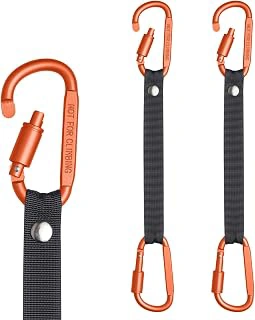
Aluminum Alloy Carabiner Bag Hook for Fence
Weighing less than an ounce and priced at $8.60, this aluminum alloy carabiner hook offers a straightforward way to hang a towel or water bottle on a fence without digging through your bag. The hook has earned a 4.7 out of 5 rating, reflecting its reliability for everyday use on outdoor courts.
The carabiner's compact size makes it easy to slip into a side pouch or pocket between games. If you carry a minimalist setup - perhaps just a paddle, ball, and water bottle - this hook lets you clip essentials to the fence and keep your hands free during warm-up or breaks. The gate mechanism snaps open and closed quickly, so you can attach or remove items without fumbling.
Because the hook is lighter than heavy-duty models, it works best with smaller loads: a microfiber towel, a single water bottle, or a small accessory pouch. Hanging a fully loaded bag may stress the gate over time. Players who prefer a streamlined solution and don't need to suspend heavier gear will appreciate the weight savings and pocket-friendly design.
The aluminum alloy construction resists rust better than steel alternatives, an advantage if you play in humid climates or forget to wipe down your gear after a session. The tradeoff is lower load capacity compared to thicker carabiners, but for single-item use, the hook delivers convenience without added bulk.
- ✅ Lightweight and compact enough to carry in a pocket
- ✅ Aluminum alloy resists rust in outdoor conditions
- ✅ Quick-release gate mechanism for easy clipping
- ✅ Affordable at $8.60
- ⚠️ Lower load capacity than heavy-duty carabiners
- ⚠️ Best suited for single items like towels or water bottles, not full bags
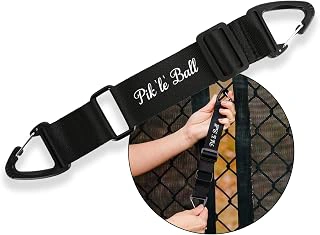
Pik'le'Ball Fence Hook for Hanging Bags – Bag Hook for Fence with Heavy Duty Carabiner Clips – Keep Gear Off the Ground – Hooks for Hanging Pickleball, Badminton, Football, Tennis, and Baseball Bags
Players who pack a full-size bag with multiple paddles, a water bottle, shoes, and extra accessories need a hook that won't slip or bend under weight. The Pik'le'Ball Fence Hook is built around a heavy-duty carabiner clip that attaches securely to chain-link or wire fences, keeping your gear off wet or dusty ground without requiring you to crouch or kneel to retrieve items between games.
The reinforced gate opens wide enough to wrap around thicker fence wire, and the carabiner design distributes load evenly across the attachment point. This makes it a practical option for seniors who prefer one stable anchor point rather than juggling multiple lightweight clips that can twist or pull loose when a bag shifts.
At $9.95 and rated 4.5 out of 5, the hook offers a straightforward solution for courtside organization. The carabiner mechanism is familiar and easy to operate with one hand, and the clip is designed to stay put even when you unzip compartments or pull items from side pockets. Because the hook is sold under the Pik'le'Ball name, it signals an understanding of pickleball-specific needs - players who bring everything and want quick access without bending or searching through a pile on the bench.
This fence hook works best when you have a dedicated spot along the fence and want to eliminate the habit of setting your bag on the ground. It won't add storage pockets or dividers, but it does exactly what it promises: keeps a loaded bag within reach and reduces the number of times you have to bend down during a long session.
- ✅ Heavy-duty carabiner handles fully loaded bags with multiple paddles and accessories
- ✅ Reinforced gate fits thicker fence wire and stays secure when bag shifts
- ✅ One-hand operation makes attachment and removal quick
- ✅ $9.95 price point for a durable courtside solution
- ⚠️ Single hook design means you can only hang one bag per clip
- ⚠️ Requires chain-link or wire fence; won't work on solid walls or benches
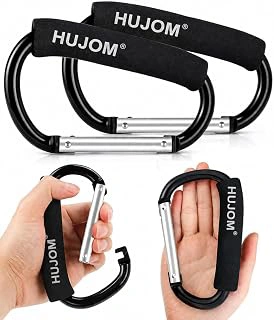
2 Pack Heavy Duty Stroller Hooks with Large Carabiner Clips for Bags and Baby Gear
Seniors who hang gear on multiple points - a bag on one hook, a towel on another - will appreciate the two-clip configuration of these stroller hooks. At $9.99 for the pair, you get double the attachment flexibility of single-clip products without doubling the cost. The large carabiner gate opens wide enough to slip over thick chain-link fence posts or bleacher rails in one motion, reducing the awkward wrist twisting that smaller gates demand.
The 4.8 out of 5 rating reflects consistent performance across baby-gear users and sports players alike. Aluminum construction keeps each hook lightweight yet sturdy, and the rubberized sleeve on the main hook body protects bag fabric from metal-on-metal wear. Because the design was originally intended for strollers, the product photos and packaging focus on diaper bags rather than pickleball gear. Functionality is identical - weight capacity, gate size, and clip geometry work just as well for a sports bag - but you won't find sport-specific marketing language or branded color schemes.
Two hooks let you separate heavier items from lighter ones, balancing load rather than stacking everything on a single point. If your bag hangs on the left clip, a microfiber towel or water bottle holster can hang from the right, keeping both within arm's reach and off the ground. The carabiner locks with a threaded screw collar, so accidental gate openings are rare even when you brush past the fence. Seniors who experience knee discomfort when bending to retrieve dropped items will find the elevated storage particularly useful during long play sessions.
The tradeoff is aesthetic: stroller-focused packaging and generic silver finish may feel less polished than sport-branded accessories. If brand alignment matters to you, consider whether function or appearance takes priority. For players who value practical organization and want redundancy - two clips mean a backup if one is in use or misplaced - this pair delivers reliable service at half the per-hook cost of premium single options.
- ✅ Two hooks for $9.99 provide flexible multi-point gear organization
- ✅ Large carabiner gate fits thick fence posts and reduces wrist strain
- ✅ Threaded screw collar locks the gate to prevent accidental openings
- ✅ Rubberized sleeve protects bag fabric from metal abrasion
- ⚠️ Stroller-focused marketing and packaging lack sport-specific branding
- ⚠️ Generic silver finish may feel less polished than dedicated sports accessories
How Bag Hooks Reduce Repetitive Bending and Back Strain
Bending forward repeatedly from a standing position to reach inside a pickleball bag on the ground places significant stress on the lumbar spine. Each time you hinge at the waist, the lower back muscles and intervertebral discs bear the load of your upper body, often while you twist or lean to one side to find a specific item. Over the course of a two-hour play session, those small forward flexions accumulate - sometimes dozens of times - loading the same segment of the spine again and again.
Hip flexors work overtime during these movements, especially when the bag sits low and forces a deeper bend. For many senior players, tight hip flexors or reduced hamstring flexibility already make forward bending uncomfortable. Adding the weight of a loaded bag, or the need to hold that bent position while you search for a paddle grip or towel, turns a simple retrieval into a repetitive strain pattern.
A bag hook or carabiner that raises your gear to waist or fence height changes the geometry entirely. Instead of a 60- or 70-degree forward lean, you reach with a nearly neutral spine, keeping the natural curve in your lower back intact. The reduced flexion angle means less compressive force on the discs and less demand on the muscles that stabilize the pelvis. Your knees stay mostly straight rather than absorbing the descent and rise that comes with a full squat or deep bend.
When the bag hangs at mid-thigh to waist level, retrieval becomes a simple arm reach rather than a whole-body hinge. You avoid the ground-to-standing transition that challenges balance and taxes the knees. Over weeks and months of regular play, that difference compounds: fewer cumulative flexion cycles, less fatigue in the lower back, and a lower chance of aggravating existing discomfort in the hips or knees.
Small gear changes like a sturdy carabiner or towel bar can preserve comfort across dozens of games. The key is consistent use - hanging your bag every session so the habit removes the repetitive stress pattern before it becomes a limiting factor in how often or how long you play.
Comparing Load Capacity and Clip Size Across the Three Options
Each of these three carabiner-style hooks brings different load capacity and gate dimensions, and choosing the right match depends on how heavy your bag is and how easily you want to clip and unclip at the court.
The aluminum alloy option is the lightest in hand and works well for minimal loads - think a single small towel, a water bottle, or a lightweight gear pouch. Its narrower gate opening makes it quick to snap onto thin fence wire, but if you regularly carry a fully loaded pickleball bag or multiple items on one hook, you may reach its capacity ceiling faster than the other two.
The Pik'le'Ball carabiner hook offers the widest gate and the highest single-point load rating among the three. That wider gate slides over thicker chain-link posts and tubular fence rails without wrestling, and the higher capacity means you can hang a heavier duffel or tote without worrying about clip fatigue. If you prefer one central attachment point for your bag and accessories, this is the most robust choice.
The stroller hook two-pack takes a different approach: instead of one heavy-duty clip, you get two lighter hooks that let you distribute weight across two fence points. Hanging one strap on each hook reduces stress on any single carabiner and keeps the bag more stable against the fence, which is helpful on windy days or courts with flexible fencing. The trade-off is that you need two hands to attach and remove the bag, and the pair takes up slightly more space in your gear pocket when not in use.
All three styles fit standard diamond-mesh chain-link fencing, the most common court perimeter material. Gate width and load rating matter most when you move between courts with thicker posts or when your bag weight fluctuates with extra balls, paddles, or a change of shoes. Match the hook spec to your typical load and the fence type you encounter most often, and you'll avoid both over-engineering and under-capacity frustration.
Installation Tips for Chain-Link and Post Fences
Most chain-link and post fences around pickleball courts offer simple, no-drill attachment points for carabiner clips. Start by walking along the fence to find a section at waist height - usually three to four feet off the ground - where you can reach comfortably without bending or stretching. Open the carabiner gate all the way, then slide it onto a horizontal or vertical wire segment. Once the wire sits inside the spine of the clip, close the gate firmly until you hear or feel it click into the locked position.
Avoid forcing the clip onto wire that feels too thick for the gate opening; over-tightening can stress the spring mechanism and cause early wear. Vertical wires tend to provide more lateral stability, keeping the clip from sliding side to side during quick grabs. Horizontal wires make height adjustment easier if you want to move the clip up or down between sessions. Test the attachment by tugging the clip gently before hanging a towel or water bottle - if it shifts or twists freely, reposition it onto a tighter section of fence or choose a wire with less slack.
Once installed, the clip should stay in place through an entire session without needing adjustment. If you play on courts with plastic-coated or thicker-gauge fencing, check that your carabiner gate opens wide enough to clear the diameter; standard 2 - 3 inch gates handle most recreational court fences without issue.
When to Use One Hook Versus Two
The right number of hooks depends on your bag's construction and your own comfort when reaching for gear. A single heavy-duty hook works well when your pickleball bag has reinforced handles or a dedicated attachment loop, especially if the bag itself is lightweight. One hook keeps setup simple and gives you a clean, centered hang point.
Two lighter hooks become the better choice when your bag has older stitching, single-layer handles, or when you're carrying heavier loads like extra water bottles and paddle cases. Spreading the weight across two attachment points reduces stress on any single seam and helps the bag hang level. Seniors managing shoulder discomfort or reduced grip strength will find that two hooks spaced a few inches apart prevent the bag from twisting when you pull out a towel or clip. That stability means less awkward reaching and fewer moments where you're fighting the swing of the bag.
If your bag tends to tip or sag when hung from one point, or if you notice the handle fabric creasing under load, switch to a two-hook setup. The stroller hook two-pack mentioned earlier is built for exactly this kind of distributed carry, giving you matched hardware that keeps your gear secure without overloading any one spot on the bag.
Keeping Your Gear Organized and Your Body Safe
A hook that costs less than ten dollars can save your knees and back dozens of times every season. Each of the three carabiner-style clips reviewed here solves the same core problem - eliminating the need to bend down or kneel when you need a towel, water bottle, or paddle between games - but each does it in a slightly different way.
The Heroclip offers the widest range of attachment options and works on both chain-link and tube fences, making it the most versatile choice if you play at multiple courts. Its rotating hook and fold-out base give you more ways to position your gear, though that flexibility comes with a slightly higher price and a bit more bulk on your bag strap.
The standard S-biner carabiner is the lightest and simplest solution. It clips securely to most bag loops and fence wire, stays out of the way when you're walking, and costs around nine dollars. If your local court has standard chain-link and your bag already has external D-rings or loops, this is the most straightforward option.
The Nite Ize S-Biner SlideLock adds a locking gate for peace of mind. It weighs only a few grams more than the non-locking version and prevents accidental openings when your bag gets jostled in the car or tossed onto a bench. The trade-off is an extra half-second to open and close the lock, which may or may not matter depending on how often you clip and unclip during a session.
Whichever hook you choose, the real benefit is cumulative. Keeping your bag at waist or shoulder height instead of on the ground reduces the number of times you squat, twist, or lean over during a two-hour session. Over weeks and months, that adds up to less fatigue, fewer aches, and more energy left for the game itself.
Before you buy, check two things: the diameter of your bag's existing loops or straps, and the type of fence at your usual court. A hook that fits your gear and your environment will get used every time you play. One that doesn't will stay in a drawer.
Small ergonomic tools like these don't require you to replace your paddle, shoes, or bag. They work with what you already own and make court-side routines easier on your body without adding weight or complexity to your setup.