We may earn a commission when you buy through links on this page, at no extra cost to you. How this works.
Not every bag advertised for pickleball works for bodies managing arthritis, rotator cuff sensitivity, or chronic shoulder discomfort. A standard bag loaded with two paddles, balls, shoes, water, and towels can easily exceed six pounds. When that weight hangs from one shoulder or pulls against your neck, it stresses already vulnerable joints.
The problem intensifies when straps dig into soft tissue or when you need to repeatedly lift the bag on and off. Many conventional designs prioritize storage capacity over weight distribution, forcing your shoulder to compensate. For seniors playing three or four times weekly, that repetitive strain accumulates quickly.
The solution involves three constraints: total bag weight under two pounds empty, strap systems that distribute load across larger muscle groups, and opening mechanisms you can operate without twisting your torso. The bags below meet those criteria while still holding the essentials you need courtside.
Fit and safety come first
Use the comparison as a shortlist, but keep fit, comfort, and any health or safety constraints ahead of price.
Key Features to Look for in a Senior-Friendly Bag
Weight matters first. An empty bag should feel negligible in your hand - under two pounds is ideal. Heavier bags compound every item you add, turning a simple load into a shoulder burden before you even leave home.
Strap design separates comfortable bags from painful ones. Look for padded straps at least two inches wide that won't cut into your shoulder. Adjustable length lets you position the bag at hip level rather than swinging at your side, which reduces torque on your rotator cuff. Crossbody options distribute weight across your back instead of concentrating it on one joint.
Accessibility determines whether you'll actually use all those pockets. Top-loading designs with wide openings let you grab paddles or balls without contorting your arm behind you. External pockets for water bottles and keys mean you won't dig through layers of gear. If you need reading glasses to see zippers, consider bags with color-contrasted pulls or magnetic closures you can operate by feel.
How to Properly Adjust and Wear Your Bag to Prevent Strain
Strap length determines whether your bag helps or hurts. Adjust straps so the bag's bottom sits at your hip rather than mid-thigh. When a bag hangs too low, it swings with each step, creating momentum that pulls your shoulder downward repeatedly. Hip-level positioning minimizes that swing and keeps weight closer to your center of gravity.
For crossbody bags, position the strap diagonally across your chest with the bag resting against your opposite hip. Tighten until the bag feels secure but doesn't restrict breathing. The strap should lie flat against your torso without twisting, which can create pressure points.
Backpack wearers should adjust both straps to equal length and tighten until the pack sits high on your back - the bottom should rest at your lower back, not your buttocks. Chest straps, if included, help stabilize the load and prevent straps from sliding off your shoulders during movement.
Before leaving home, load your bag and walk around for two minutes. Your shoulder shouldn't ache, and the strap shouldn't dig into your neck or collarbone. If discomfort appears immediately, readjust rather than hoping you'll adapt during the drive to the court.
The Right Bag for More Pain-Free Pickleball
Your pickleball bag shouldn't be something you tolerate - it should disappear from your awareness between the car and the court. The five bags above prioritize that invisibility through light weight, ergonomic straps, and accessible storage. Whether you need the hands-free security of a crossbody sling or the organizational clarity of a structured tote depends on your specific shoulder condition and playing routine.
Test your chosen bag with your typical load before game day. Pack paddles, balls, shoes, water, and any medications or snacks you normally carry. Wear the bag around your house for five minutes. Your shoulder should feel supported, not strained. Zippers should open without requiring you to twist your torso. If something feels wrong during this test, it will feel worse after you've played two hours of doubles.
The right bag extends your playing career by removing one more source of daily strain. It's not dramatic, but that's exactly the point - the best equipment for aging bodies works quietly in the background, letting you focus on the game instead of managing pain.
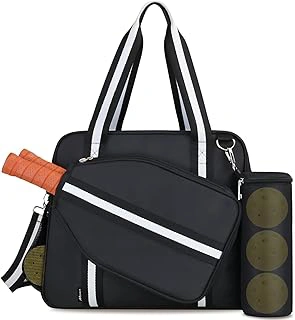
Movker Pickleball Tote Bag with Paddle Cover, External Ball Bag, Adjustable Strap & Fence Hook
This tote combines the open-top accessibility of a shopping bag with organizational features that prevent gear from becoming a jumbled mess. The adjustable shoulder strap lets you customize length so the bag rides at your natural arm swing rather than pulling downward. A dedicated paddle cover protects your equipment while keeping it instantly accessible.
The external ball bag attaches to the outside, which means you can grab fresh balls without opening the main compartment - useful when your hands are full or you're between games. A built-in fence hook lets you hang the bag at eye level courtside rather than bending repeatedly to floor level. Imagine playing a morning doubles match: you hang the tote on the fence, pull out your paddle in one motion, and your water bottle stays visible in the side pocket throughout the game.
The trade-off is structure. Totes excel at easy access but lack the rigid frames that keep paddles separated. If you carry expensive graphite paddles, you'll want to verify they fit in the included cover without touching.
- ✅ Wide top opening for easy access without shoulder rotation
- ✅ Fence hook eliminates repeated bending
- ✅ External ball bag for quick retrieval
- ✅ Adjustable strap fits various torso lengths
- ⚠️ Less structural paddle protection than hard-case designs
- ⚠️ Tote style may tip over when set down
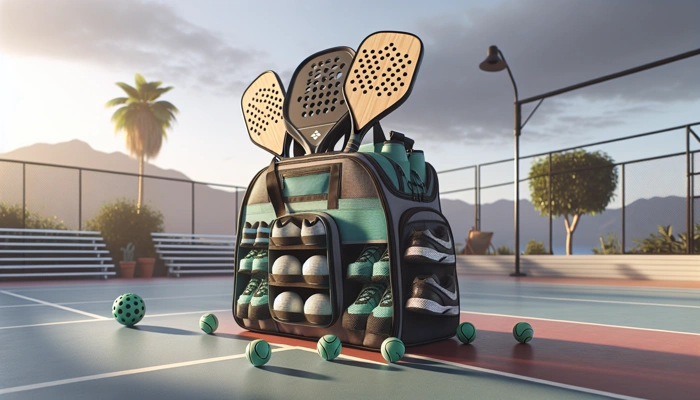
Pickleball Bag for 2 Paddles with Ventilated Shoe & Wet-Dry Pockets, 4 Ball Capacity
Ventilation separates this bag from budget options that trap moisture and odor. The dedicated shoe compartment uses mesh panels that allow air circulation, which matters when you're storing sneakers after a sweaty game. A wet-dry pocket keeps damp towels or clothing away from your phone and wallet.
The bag holds two paddles in separate sleeves and four balls in an interior pocket. This capacity works for players who bring a backup paddle or share equipment with a spouse. The compartmentalized design means your paddle won't bang against your water bottle during transport, reducing noise and potential ding damage.
Consider this scenario: you finish an outdoor session in humid weather, your shoes are damp, and your shirt is soaked. You slide wet items into the designated pocket, store dry gear separately, and everything stays organized without cross-contamination. The bag's structured shape maintains these divisions better than soft totes.
The downside is weight distribution. This style typically uses a single shoulder strap rather than crossbody configuration, so verify the strap padding before committing.
- ✅ Ventilated shoe compartment prevents odor buildup
- ✅ Wet-dry separation protects electronics
- ✅ Structured design keeps paddles protected
- ✅ Sufficient capacity for two-player households
- ⚠️ Single-shoulder carry may not suit severe shoulder issues
- ⚠️ More compartments mean more zippers to manipulate
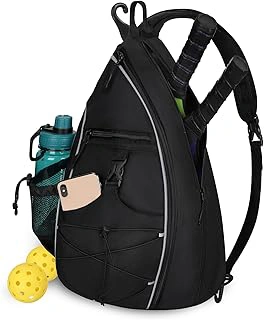
Goloni Lightweight Pickleball Sling Bag with Fence Hook and Safety Pocket
A sling bag shifts weight across your torso rather than hanging from one shoulder, making it the most ergonomic choice for rotator cuff sensitivity. You wear it diagonally across your back, which engages core muscles instead of isolating deltoid stress. The lightweight construction means even when fully loaded, you're carrying distributed weight rather than a shoulder-specific burden.
The safety pocket - typically a zippered compartment against the back panel - keeps valuables secure and close to your body. This positioning also balances the load; heavy items like keys and phones sit against your back rather than swinging at your hip. A fence hook provides courtside storage without floor placement.
Picture yourself walking from the parking lot: the sling bag rests against your back, your hands are free to carry a water jug, and nothing pulls your shoulder forward or downward. When you arrive, you hang the bag at waist height and access your paddle through the main opening without removing the bag entirely.
The limitation is capacity. Sling bags prioritize lightweight comfort over multi-day tournament storage.
- ✅ Crossbody design distributes weight away from shoulders
- ✅ Lightweight construction reduces total load
- ✅ Security pocket for valuables
- ✅ Fence hook for convenient courtside access
- ⚠️ Limited capacity compared to full backpacks
- ⚠️ May not accommodate bulky shoes
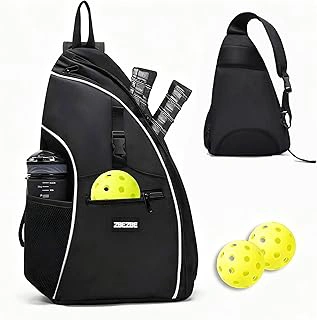
Pickleball Bag, Pickleball Backpack with Water Bottle Holder for Men and Women
Backpack-style bags distribute weight across both shoulders, making them suitable for players who can't tolerate any single-shoulder load. The dual-strap system engages your upper back muscles symmetrically, which reduces rotator cuff strain compared to one-sided carrying. A water bottle holder keeps hydration accessible on the bag's exterior.
The backpack format works particularly well if you walk or bike to courts. Both hands stay free for balance, and the load rides high on your back rather than swinging at your side. The structured back panel on many backpack designs also prevents items from poking into your spine - important when you're carrying paddles with rigid handles.
Think about a scenario where you play at a park without nearby parking: you walk ten minutes carrying your gear. A backpack lets you maintain normal arm swing and posture throughout that walk, arriving at the court without pre-game shoulder fatigue. Once there, you set it down and access compartments from the top.
The trade-off involves putting on and removing the bag. If overhead arm movement hurts, threading straps over your shoulders may prove difficult.
- ✅ Dual-shoulder design balances weight evenly
- ✅ Hands-free carrying for walking or biking
- ✅ External water bottle holder
- ✅ Budget-friendly price point
- ⚠️ Requires overhead arm movement to put on
- ⚠️ May retain heat against your back in summer
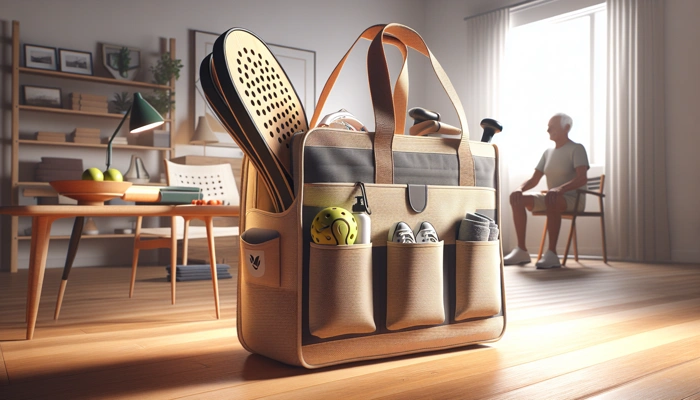
ESTARER Pickleball Tote Bag with Shoe Compartment and Paddle Storage
This tote adds a dedicated shoe compartment to the open-access tote format, solving the common problem of dirty sneakers contaminating clean gear. The separated shoe section typically sits at the bottom or side of the bag, using a barrier that prevents sole dirt from transferring to paddle handles or clothing.
Paddle storage in this design usually involves interior sleeves or elastic loops that secure equipment vertically. This vertical orientation makes paddles easy to spot and grab without digging, which matters when you're managing arthritis in your fingers or hands. The tote's wide mouth lets you see everything at once rather than fishing through a narrow backpack opening.
Imagine arriving at an indoor facility where you need to change from street shoes to court shoes: you set the tote on a bench, remove your court shoes from the isolated compartment, and change without touching anything else in the bag. After playing, you reverse the process, keeping sweaty shoes away from your phone and keys.
The bag works best for players who primarily drive to courts and don't need extensive carrying comfort for long distances.
- ✅ Separate shoe compartment prevents cross-contamination
- ✅ Wide tote opening for easy visibility
- ✅ Vertical paddle storage for quick access
- ✅ Structured design maintains shape when set down
- ⚠️ Single-shoulder carry may not suit all conditions
- ⚠️ Larger footprint than minimalist slings