We may earn a commission when you buy through links on this page, at no extra cost to you. How this works.
Copper Compression Socks for Women and Men (6 Pairs)
Find compression socks that help reduce leg swelling and fatigue so you can play pickleball comfortably for years to come.
Fit and safety come first
Use the comparison as a shortlist, but keep fit, comfort, and any health or safety constraints ahead of price.
Not all compression socks are appropriate for seniors with circulation concerns, and choosing the wrong pressure level can actually restrict blood flow rather than improve it. The best pickleball compression socks for seniors balance graduated compression with comfort features designed for older athletes who play regularly.
Pickleball requires rapid lateral movements and periods of standing that challenge circulation in your lower legs. After an hour or two on the court, many senior players notice ankle swelling, calf tightness, or that heavy feeling in their legs. These symptoms often stem from fluid pooling in the extremities-a natural consequence of aging circulation combined with athletic activity.
Compression socks for pickleball work by applying graduated pressure that's tightest at the ankle and gradually decreases up the calf. This pressure differential encourages blood and lymphatic fluid to move upward against gravity, reducing swelling and delivering oxygen-rich blood to working muscles. For senior players, the right pair can mean the difference between playing comfortably three times a week or needing a day off between every session.
How Compression Socks Help Senior Players Stay on the Court
Graduated compression technology provides several benefits specifically relevant to older pickleball players. The consistent pressure supports venous return-the process by which blood travels back to your heart from your legs. Improved circulation means reduced leg fatigue during play and faster recovery between games.
Supportive socks for older athletes also help stabilize the ankle and calf muscles through gentle compression. This proprioceptive feedback-the awareness of where your body is in space-can enhance balance and reduce the risk of rolled ankles during quick directional changes. Additionally, compression helps minimize the micro-vibrations in muscle tissue that contribute to fatigue and soreness.
For preventing swelling after pickleball, wearing compression socks during and immediately after play is most effective. Many senior players also wear them on travel days or during long periods of standing to maintain circulation benefits throughout their daily routine.
The 5 Best Compression Socks for Pickleball Comfort and Recovery
The following compression socks represent different approaches to senior-friendly support. Some emphasize medical-grade compression for maximum circulation benefits, while others prioritize ease of use and accommodation for swollen feet or wider calves. Each option is currently available and has been rated highly by users with similar needs.
Buyer's Guide: What Seniors Should Look for in a Compression Sock
Before purchasing compression socks for pickleball, measure your ankle circumference at its narrowest point and your calf circumference at its widest point. Most manufacturers provide sizing charts based on these measurements plus shoe size. Proper fit is critical-socks that are too tight can restrict circulation, while loose socks won't provide effective compression.
Consider the sock height based on where you experience swelling or fatigue. Knee-high socks provide the most comprehensive coverage for lower-leg circulation, while crew-length options work for players who primarily need ankle and lower-calf support. The material composition matters for comfort during play; look for moisture-wicking synthetics blended with spandex or elastane for stretch and compression retention.
Ease of donning becomes increasingly important with age. If you have reduced hand strength or flexibility, consider socks with lower compression levels or wider openings, or investigate donning aids like sock assist devices that help pull compression garments into place without excessive bending.
Understanding Compression Levels (mmHg) for Safe and Effective Support
Compression sock pressure is measured in millimeters of mercury (mmHg), the same unit used for blood pressure readings. For seniors without diagnosed venous conditions, 15-20 mmHg provides moderate support appropriate for athletic activity and mild swelling prevention. This level is safe for most people without medical consultation.
The 20-30 mmHg range represents medical-grade compression typically recommended by physicians for more significant circulatory concerns. While effective, this pressure level can be challenging to put on and may cause discomfort if you're not accustomed to compression wear. Seniors considering this level should ideally consult their healthcare provider, especially if they have diabetes, peripheral artery disease, or neuropathy.
Graduated compression-where pressure decreases from ankle to calf-is essential for proper function. Uniform compression or socks that are tighter at the calf than the ankle can impede circulation rather than improve it. Always verify that socks specify graduated compression design.
Frequently Asked Questions
Should I wear compression socks during pickleball or only after?
Both approaches work. Wearing compression socks during play helps prevent fluid accumulation and supports circulation throughout your session. Putting them on immediately after play can reduce post-activity swelling. Many senior players do both-wearing one pair during play and switching to a fresh pair for recovery.
Can compression socks be too tight for seniors?
Yes. Excessively tight compression can restrict arterial blood flow, particularly in seniors with peripheral artery disease. If socks cause numbness, tingling, increased pain, or skin discoloration, they're too tight. Remove them immediately and consider a lower compression level or larger size.
How long should I wear compression socks each day?
For athletic use, wearing compression socks during and for 2-3 hours after activity is typical. Some seniors wear them throughout waking hours for ongoing circulation support. Avoid sleeping in compression socks unless specifically directed by a physician, as lying flat changes your circulation needs.
Will compression socks prevent all leg swelling from pickleball?
Compression socks significantly reduce swelling but may not eliminate it entirely, especially if you have underlying circulation issues. They work best as part of a comprehensive approach that includes proper hydration, appropriate rest between games, and post-play leg elevation.
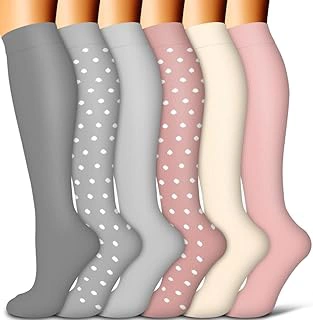
Copper Compression Socks for Women and Men (6 Pairs)
This six-pair set delivers moderate compression with copper-infused fabric at an economical price point. The multi-pack format means you can rotate pairs between washes, maintaining fresh socks for every pickleball session without constant laundry.
The copper threading is marketed for odor control and fabric durability, though the primary benefit remains the graduated compression design. At a moderate pressure level, these socks work well for seniors new to compression wear or those who find higher mmHg ratings uncomfortable. The variety pack typically includes multiple colors, making it easy to coordinate with different athletic outfits.
With a 4.5/5 rating, users appreciate the value proposition and the fact that the socks maintain their compression after multiple washes. The knee-high design provides coverage from arch to calf, addressing the full range of circulation needs during pickleball play.
- ✅ Six-pair value pack for easy rotation
- ✅ Copper-infused fabric for durability
- ✅ Moderate compression comfortable for new users
- ⚠️ Compression level not specified in mmHg
- ⚠️ May be less firm than medical-grade options
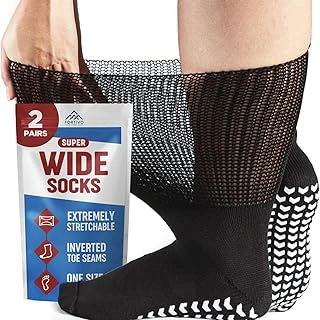
2 Pairs Extra Wide Non-Slip Hospital and Diabetic Socks for Swollen Feet
Designed specifically for swollen feet and wider calves, these extra-wide socks prioritize comfort and accommodation over firm compression. The non-binding top won't create constriction marks, making them ideal for seniors with circulation sensitivities or diabetes-related concerns.
The non-slip grip sole adds valuable traction on smooth court surfaces or when moving around the house post-game. This safety feature addresses a common concern for older players who want stable footing both during and after athletic activity. The hospital-grade design means these socks emphasize gentle support rather than aggressive compression.
At $19.99 for two pairs and a 4.5/5 rating, these socks serve seniors who need comfortable, accommodating options more than maximum compression. They're particularly useful for players who experience significant swelling or have been advised to avoid tight garments around their legs.
- ✅ Extra-wide design for swollen feet and calves
- ✅ Non-slip sole for improved traction
- ✅ Non-binding top prevents constriction
- ⚠️ Lower compression than athletic-specific options
- ⚠️ Only two pairs in package
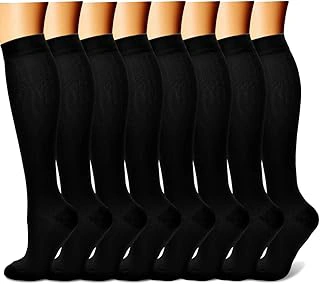
CHARMKING 15-20 mmHg Graduated Copper Compression Knee High Socks for Wide Calves
The CHARMKING socks specify 15-20 mmHg graduated compression-a moderate therapeutic level recommended for active individuals without severe venous conditions. This defined pressure range provides predictable support for reduce leg fatigue pickleball players experience during multi-hour sessions.
The wide-calf design accommodates larger leg circumferences without creating painful constriction at the calf band. Graduated compression ensures the tightest pressure remains at the ankle, promoting proper upward fluid movement. The copper-infused yarn adds antimicrobial properties that help manage foot odor during intense play.
At $19.99 with a 4.5/5 rating, these socks hit the sweet spot between medical-grade compression and athletic comfort. The knee-high length provides full lower-leg coverage, and the clearly defined 15-20 mmHg rating gives seniors confidence they're using an appropriate pressure level for regular athletic use without medical supervision.
- ✅ Clearly specified 15-20 mmHg compression level
- ✅ Wide-calf design prevents binding
- ✅ Graduated compression with copper yarn
- ⚠️ May be too firm for first-time compression users
- ⚠️ Single pair per purchase
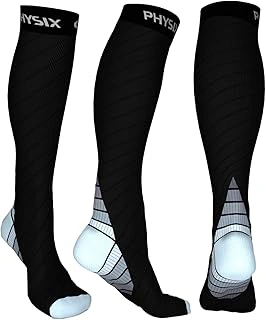
Physix Gear Graduated Athletic Fit Compression Socks 20-30 mmHg for Men & Women
The Physix Gear socks deliver 20-30 mmHg compression-the firmest option in this selection and a medical-grade pressure level. This higher compression provides maximum circulatory support but requires proper sizing and may take adjustment time for seniors unused to firm compression garments.
The athletic fit design balances medical-grade compression with performance features relevant to pickleball: moisture-wicking fabric, arch support, and reinforced heel and toe construction. These socks are engineered for both during-play support and post-activity recovery, making them versatile for seniors who want one solution for multiple scenarios.
At $28.82 with a 4.4/5 rating, these represent the premium end of compression sock pricing. The higher cost reflects the medical-grade compression specification and durability features. Seniors with physician recommendations for 20-30 mmHg compression or those with more significant circulation challenges will find these most beneficial.
- ✅ Medical-grade 20-30 mmHg compression
- ✅ Athletic design with moisture-wicking fabric
- ✅ Reinforced construction for durability
- ⚠️ Higher compression may be excessive for some seniors
- ⚠️ Premium pricing compared to moderate options
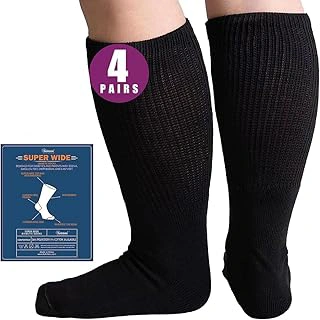
Bulinlulu Extra Wide Diabetic Hospital Socks for Swollen Feet
The Bulinlulu extra-wide socks prioritize accessibility and comfort for seniors with significant swelling or circulation restrictions. These hospital-style socks feature a very loose, non-binding design that provides gentle compression without the difficulty of pulling on tight athletic socks.
The diabetic-friendly construction means no irritating seams, extra padding in pressure-prone areas, and a non-constrictive fit that won't interfere with circulation. While these offer less aggressive compression than athletic-specific models, they serve seniors who need easier-to-don options or have medical conditions requiring gentler support.
At $17.49 with a 4.4/5 rating, these are the most affordable option and the easiest to put on independently-a significant consideration for seniors with reduced hand strength or flexibility. They work well for post-pickleball recovery wear or for players whose physicians have advised against firm compression.
- ✅ Extra-wide design easiest to put on
- ✅ Diabetic-friendly seamless construction
- ✅ Most affordable option at $17.49
- ⚠️ Less compression than athletic-specific socks
- ⚠️ May not provide enough support during active play
Tips for Putting On and Caring for Your Compression Gear
- Put compression socks on first thing in the morning before swelling develops; legs are smallest after a night of elevation
- Turn socks inside-out to the heel, insert foot, then roll the sock up the leg rather than pulling from the top
- Use rubber dishwashing gloves for better grip when positioning stubborn compression fabric
- Wash socks after each use in cool water with mild detergent; heat and harsh chemicals break down elastic fibers
- Air-dry compression socks flat or hanging; dryer heat degrades compression over time
- Replace compression socks every 3-6 months with regular use as elastic loses effectiveness
- If you have difficulty bending, consider a sock aid device designed for compression garments