We may earn a commission when you buy through links on this page, at no extra cost to you. How this works.
Not every court shoe is built to keep you stable during the split-second pivots and lateral slides that define pickleball. If you've noticed yourself hesitating before lunging for a low shot or felt your ankle wobble during a quick direction change, your shoes may lack the wide base and lateral support systems that prevent these moments. Shoes marketed for running or general fitness often prioritize forward motion over the multi-directional stability court sports demand.
Your choice matters more as you play regularly. A shoe with a narrow profile might feel light and fast initially, but it won't provide the platform you need when you plant your foot to change direction. The difference between a stable shoe and an unstable one becomes clear after the second or third game of the day, when fatigue sets in and your proprioception—your body's sense of position—starts to fade. Before comparing specific models, you need to understand what actually creates stability in a court shoe.
Fit and safety come first
Use the comparison as a shortlist, but keep fit, comfort, and any health or safety constraints ahead of price.
Skechers Women's Viper Court Pro Pickleball Sneaker
This model features a pickleball-specific outsole pattern and a stability chassis designed to control lateral motion. The Viper Court Pro includes Skechers' Goodyear rubber compound on high-wear zones, which extends traction life on abrasive court surfaces. The midsole sits relatively low to the ground, and the wider forefoot platform gives you a stable base when you plant for a cross-court dink.
Imagine you're moving quickly to cover the kitchen line and need to stop on a dime—the wider base here helps you brake without your foot sliding inside the shoe. The upper wraps snugly around the midfoot, and the padded collar reduces pressure points near the Achilles tendon. At this price point, you're getting a shoe purpose-built for pickleball rather than adapted from a general tennis design. Check the sizing carefully, as some users report this model runs slightly narrow in the toe box.
- ✅ Wide forefoot platform for stable planting
- ✅ Low-profile midsole keeps foot close to court
- ✅ Goodyear rubber outsole resists abrasion
- ⚠️ May run narrow in the toe box for some feet
- ⚠️ Less cushioning than running-focused shoes
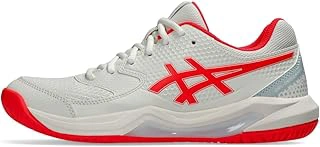
ASICS Women's Gel-Dedicate 8 Pickleball Shoes
The Gel-Dedicate 8 in its pickleball-specific version includes a durable outsole pattern optimized for court traction and a gel cushioning insert in the heel to absorb impact. ASICS uses a Trusstic system in the midfoot—a molded component that reduces weight while maintaining structural integrity during lateral movements. The upper features synthetic overlays that wrap the midfoot, providing support without adding excessive bulk.
Picture yourself stretching wide for a third-shot drop: the Trusstic system resists twisting, so your foot stays aligned even when you're off-balance. The gel insert in the heel helps if you tend to land hard on your heels during rapid direction changes. This model balances cushioning and stability better than many budget options. It's a versatile choice for players who want reliable support without paying premium prices. Be aware that the fit can feel snug initially, so try them on with the socks you plan to wear during play.
- ✅ Trusstic midfoot system resists torsional twisting
- ✅ Heel gel cushioning absorbs landing impact
- ✅ Budget-friendly for a court-specific design
- ⚠️ Initial fit may feel snug through the midfoot
- ⚠️ Less forefoot cushioning than premium models
ASICS Women's Gel-Dedicate 8 Tennis Shoes
This tennis-focused variant of the Gel-Dedicate 8 shares the same Trusstic system and gel cushioning technology as the pickleball version, but features an outsole pattern tuned for traditional tennis courts. The synthetic leather overlays provide durable support around the toe box and midfoot, and the padded tongue reduces pressure across the top of your foot during extended play. The outsole rubber compound is formulated for hard court surfaces, which translates well to indoor pickleball courts.
Consider a scenario where you're playing on a gym floor with less grip than a dedicated pickleball surface: the tennis outsole pattern here offers reliable traction without being overly aggressive. The wider platform near the heel gives you confidence when backpedaling to retrieve a lob. This version typically costs slightly more than the pickleball-branded model but offers similar stability features. The main difference lies in the tread pattern, so choose based on the surface you play on most frequently.
- ✅ Trusstic system prevents midfoot collapse during lateral moves
- ✅ Heel gel absorbs impact from hard landings
- ✅ Durable synthetic overlays for long-term support
- ⚠️ Tread pattern optimized for tennis, not all pickleball surfaces
- ⚠️ Slightly higher price point than pickleball version
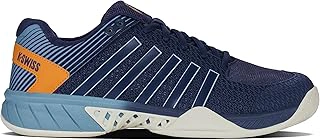
K-Swiss Men's Express Light Pickleball Shoe
K-Swiss builds the Express Light with a Surgelite midsole that balances lightweight construction with responsive cushioning. The Durawrap Flex upper—a tough, flexible material around the toe—protects against abrasion during toe drags, a common wear point in pickleball. The Aosta 7.0 rubber outsole features a modified herringbone pattern designed specifically for court sports, providing multidirectional traction without excessive weight.
Imagine you're moving diagonally to cut off a sharp angle shot: the herringbone pattern grips in multiple directions, and the midsole's responsiveness helps you push off quickly for the next shot. The upper's flexible construction doesn't compromise support—internal reinforcements keep your foot centered over the midsole platform. This is a premium option with features that justify the higher price if you play frequently. Check whether your foot shape suits the Express Light's slightly narrower heel, as some players with wider heels find they need to size up or choose a different model.
- ✅ Durawrap Flex protects toe during drag movements
- ✅ Modified herringbone outsole grips in multiple directions
- ✅ Surgelite midsole provides responsive cushioning
- ⚠️ Premium pricing compared to other options
- ⚠️ Narrower heel may not suit all foot shapes
What Makes a Shoe Stable? Key Features to Look For
Stability starts with the outsole width. A wider base—especially at the heel and forefoot—gives you a larger contact patch with the court surface, reducing the likelihood of rolling your ankle when you land off-center. The midsole height also plays a role: shoes with lower midsole profiles keep your foot closer to the ground, which improves your sense of balance and reduces the lever arm that can tip you sideways.
Lateral support structures matter just as much. Many court shoes include TPU shanks, medial posts, or reinforced sidewalls that resist the inward or outward collapse of your foot during side-to-side movements. Look for visible overlays or frame elements wrapping around the midfoot. Finally, the heel counter—the stiff cup that wraps your heel—should be firm enough to lock your heel in place. A loose or soft heel counter allows your foot to slide inside the shoe, which undermines every other stability feature.
How to Choose the Right Fit for Maximum Stability
Stability begins with proper fit. A shoe that's too long allows your foot to slide forward during hard stops, which undermines every stability feature. Measure your foot length while standing—not sitting—because your arch flattens under load and adds up to a half-size. Leave roughly a thumb's width between your longest toe and the shoe's end, but make sure the midfoot and heel fit snugly without pinching.
Width matters as much as length. If the shoe feels tight across the ball of your foot, you'll instinctively shift your weight to the outside edge, which increases ankle roll risk. Many brands offer wide widths, and it's worth trying both standard and wide if you're between sizes. The heel counter should grip your heel firmly—if your heel lifts more than a quarter-inch when you walk, the shoe is too loose or the wrong shape for your heel. Lace tension can compensate for minor fit issues, but it can't fix a fundamentally wrong size.
A Quick Guide to Trying On Court Shoes
- Wear the socks you'll use during play when trying on shoes
- Stand up and shift your weight side to side—your foot shouldn't slide inside the shoe
- Check that the widest part of your foot aligns with the widest part of the shoe
- Walk in the shoes and make sure your heel doesn't lift more than slightly
- Try a few lateral shuffle steps to simulate court movement
- Press on the toe box to confirm you have adequate space without excess room
- Verify that the laces tighten evenly without creating pressure points