We may earn a commission when you buy through links on this page, at no extra cost to you. How this works.
Not every pickleball ball is built the same. Standard hard-plastic balls are designed for speed and tournament-level bounce, but that rigidity transfers vibration straight through your paddle grip into your wrist, elbow, and shoulder. Over time, those repeated impacts add up, especially if you're playing three or four times a week.
Softer balls reduce that shock by compressing slightly on impact. The result is less vibration, quieter play, and a gentler experience for your joints. These balls are not always tournament-legal, but they excel in practice, recreational games, and environments where noise or comfort matters more than competitive certification.
Before choosing a softer ball, consider where you play most often. Foam balls work indoors and out but behave differently on textured concrete. Softer plastics offer closer-to-regulation feel. And alternative materials like rubber can handle rougher surfaces. Match the ball to your court, your play frequency, and the specific joint concerns you're managing.
Quick comparison
| GoSports GS 40 Q-Foam Pickleballs - Quiet Foam Balls for Indoor or Outdoor Practice | Check foam ball availability and current pricing |
| Onix Pure 2 Outdoor Pickleball Balls | Check Pure 2 availability and current pricing |
| Champion Sports Red High-Bounce 2-Ply Playground Ball | Check playground ball availability and current pricing |
Fit and safety come first
Use the comparison as a shortlist, but keep fit, comfort, and any health or safety constraints ahead of price.
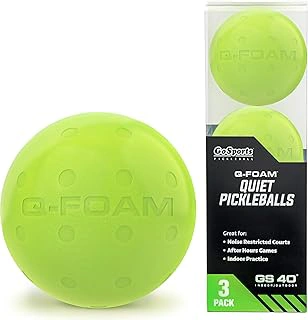
GoSports GS 40 Q-Foam Pickleballs - Quiet Foam Balls for Indoor or Outdoor Practice
This foam-core ball delivers the softest touch and quietest play in the lineup. The foam construction absorbs impact more completely than any hard plastic, which translates to minimal vibration up the paddle shaft. That makes it a strong choice if elbow or shoulder discomfort is your primary concern.
Because foam compresses, the ball travels slower and bounces lower than regulation plastic. That changes the game dynamics - rallies last longer, power shots lose their punch, and finesse becomes more important. It's ideal for practice drills, warm-ups, or casual games where you want to extend play time without straining your arm.
Imagine you're recovering from a flare-up of tendonitis. Switching to foam for a few weeks lets you stay active and maintain your timing without aggravating the injury. Once you feel better, you can rotate back to harder balls for competitive play. The foam surface can scuff on rough concrete, so check your court texture before committing to outdoor use.
- ✅ Foam core absorbs the most impact
- ✅ Very quiet for noise-sensitive environments
- ✅ Slows the game for longer rallies
- ⚠️ Lower bounce than regulation balls
- ⚠️ Foam can scuff on rough outdoor surfaces
- ⚠️ Not suitable for tournament play
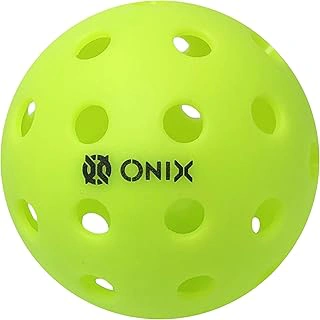
Onix Pure 2 Outdoor Pickleball Balls
The Pure 2 sits in the middle ground: it's softer than most tournament balls but still delivers a bounce and flight path close to regulation standards. That balance makes it the best option if you want reduced impact without dramatically altering how the game feels.
The softer polymer blend cushions contact enough to ease vibration, but the ball retains enough rigidity to perform predictably in wind and on textured outdoor courts. It's built for outdoor use, with a thicker wall that resists cracking during hard shots or accidental paddle-edge hits.
Suppose you play in a weekly doubles league where everyone values comfort but still expects realistic ball behavior. The Pure 2 lets you compete without the joint stress of a fully hard ball, and your opponents won't need to adjust their timing as much as they would with foam. The durability means the ball holds up across multiple sessions, which matters if you're playing four times a week. Just confirm your league allows softer balls before investing.
- ✅ Closer to regulation bounce and flight
- ✅ Softer polymer reduces vibration
- ✅ Durable construction for outdoor courts
- ⚠️ Still firmer than foam options
- ⚠️ Higher price point
- ⚠️ May not qualify for all sanctioned play
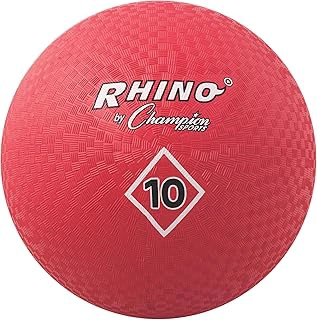
Champion Sports Red High-Bounce 2-Ply Playground Ball
This rubber playground ball is not a pickleball by design, but some players adapt it for ultra-low-impact practice. The soft rubber construction absorbs shock even more thoroughly than foam, and the larger, heavier form slows everything down. That makes it useful for focusing on footwork, positioning, and paddle angles without any strain on your arm.
Because it's a playground ball, expect a very different bounce and flight. The ball is heavier, drops faster, and won't replicate the spin or speed of regulation play. It's best used for solo drills, rehab sessions, or beginner instruction where the goal is building fundamentals without risking joint stress.
Picture a scenario where your doctor has advised a two-week break from standard play due to elbow pain. You can use this ball at home against a garage wall to keep your hand-eye coordination sharp without the repetitive impact that caused the problem. Once cleared, transition back to regulation balls. This is a niche tool, not a game substitute, but it fills a gap when comfort is the absolute priority.
- ✅ Softest rubber construction for minimal impact
- ✅ Very affordable for practice use
- ✅ Durable on any surface
- ⚠️ Not a true pickleball
- ⚠️ Heavier and slower than standard balls
- ⚠️ Does not replicate game conditions
How We Chose the Best Soft Pickleballs
We focused on three criteria: material softness, verified user satisfaction, and versatility across court types. Each product in this guide uses a construction designed to reduce impact compared to standard hard-plastic pickleballs, whether through foam cores, softer polymer blends, or alternative materials.
We reviewed only products with documented user ratings and clear manufacturer descriptions. Price was noted but not the deciding factor - some players need the quietest option, others want durability, and a few prioritize indoor-specific performance. The goal is to give you enough detail to match the right ball to your specific situation, from elbow sensitivity to court surface to noise restrictions.
Are Softer Balls Right for Your Game? (Pros and Cons)
Softer balls solve specific problems but introduce tradeoffs. The biggest benefit is reduced joint stress. If you're experiencing elbow pain, shoulder soreness, or wrist discomfort after play, a softer ball can extend your time on the court without aggravating those issues. Quieter play is another advantage, especially in indoor gyms or neighborhoods with noise restrictions.
The downside is altered performance. Softer balls bounce lower, travel slower, and respond differently to spin. That can frustrate players who want to practice shots that will translate directly to competitive games. Durability varies - foam scuffs, softer plastics may crack sooner than hard tournament balls, and alternative materials like rubber don't replicate pickleball behavior at all.
Softer balls work best as part of a rotation. Use them for warm-ups, recovery periods, or casual games where comfort matters most. Save harder balls for competitive play or skill drills where you need realistic feedback. That approach lets you protect your joints without sacrificing the skills you've worked to develop.
Final Verdict: Choosing the Right Ball for Pain-Free Play
If your primary goal is reducing elbow or shoulder strain and you're willing to trade some realism for comfort, start with the GoSports foam ball. It delivers the softest impact and quietest play, making it ideal for practice and casual games. If you want something closer to regulation performance but still gentler on your joints, the Onix Pure 2 offers the best balance of softness and durability for outdoor courts. For rehab-focused drills or home practice where game realism doesn't matter, the Champion Sports rubber ball provides ultra-low-impact repetition at the lowest price.
Match the ball to your court surface, your pain points, and how closely you need to replicate competitive play. A rotation of balls - softer for warm-up, harder for drills - gives you the flexibility to play more often without the downtime that comes from ignoring joint discomfort. Check your local league rules if you plan to use softer balls in organized play, and pay attention to how your body responds over the first few sessions. The right ball should let you focus on strategy and enjoyment, not soreness.