We may earn a commission when you buy through links on this page, at no extra cost to you. How this works.
2 Grams Per Inch Golf Lead Tape, 1/2''x 60'' Adhesive
Learn when to use lead tape or edge guard tape to adjust your paddle's weight distribution and protect the frame.
Fit and safety come first
Use the comparison as a shortlist, but keep fit, comfort, and any health or safety constraints ahead of price.
Senior pickleball players often notice changes in grip strength, joint comfort, and reaction time that make paddle feel more important than raw power. A paddle that felt balanced last season may now twist in your hand on off-center hits, or a lighter model might offer less stability when blocking hard drives at the net. These shifts can increase strain on the wrist and elbow, making customization a practical tool rather than a luxury.
Lead tape and edge guard tape serve entirely different purposes. Lead tape adds weight to specific areas of the paddle, letting you adjust the balance point to improve stability, control where the paddle head sits during your swing, and reduce vibration on contact. Edge guard tape, by contrast, protects the paddle frame from chips and cracks caused by contact with the court surface or net post. It adds negligible weight and does not change how the paddle swings.
Understanding which tape addresses your actual need is the first step. If your paddle feels head-light or unstable during volleys, lead tape may help. If you frequently scrape the paddle on the ground during dinking or have noticed edge damage, edge guard tape prevents further wear. The two tapes are compatible and many players use both, but their functions do not overlap.
Material compatibility matters. Composite and graphite paddles accept lead tape and edge guard tape without issue, while some thin-edged or foam-core designs may not bond well with adhesive. Before applying either tape, verify your paddle surface is clean, dry, and free of texture that could prevent secure adhesion. Choosing the wrong tape - or applying it without a clear goal - can make your paddle feel worse rather than better.
What Is Lead Tape? Understanding Its Purpose and Impact
Lead tape is a thin, weighted adhesive strip designed to add targeted mass to your pickleball paddle. Senior players use it to fine-tune balance, adjust swing weight, and customize the feel of their paddle without buying a new one. Each inch of standard lead tape typically adds 2 - 3 grams, and placement determines how the extra weight affects your game.
Most players apply lead tape in one of three zones. Adding it to the paddle head - just above the sweet spot or along the top edge - increases power and stability on drives, but it raises swing weight and can add stress to the wrist and shoulder. Placing tape along the sides near the three and nine o'clock positions boosts stability on off-center hits and improves control during volleys, with less impact on overall swing speed. Wrapping tape around the handle or just inside the grip makes the paddle more head-light, which can reduce strain during extended play and speed up hand speed at the net.
Small changes matter. Adding just 4 - 6 grams to the head can transform a whippy paddle into a more solid, forgiving tool, but it also makes each swing slightly heavier. If you're managing joint discomfort or fatigue, starting with a single strip and testing for a few sessions helps you judge whether the added weight improves your game or increases strain. The adjustability of lead tape gives senior players a low-cost way to experiment with weight distribution and find a setup that matches their strength and playing style.
What Is Edge Guard Tape? More Than Just Protection
Edge guard tape is a thin polyurethane or vinyl strip that wraps the paddle rim to prevent chips, cracks, and dings when the paddle hits the court surface. Most players install it as insurance against accidental ground contact during low volleys or scrambles, where paddle frames are most vulnerable to damage.
Unlike lead tape, edge guard tape adds almost no weight - typically under 1 gram for a full perimeter application. Because the added mass is so small and distributed evenly around the rim, it does not shift the paddle's balance point or change swing weight in any noticeable way. The purpose is durability, not customization of feel.
Some players report a subtle reduction in frame vibration after installing edge guard tape, especially on paddles with exposed composite edges. The cushioning effect is minor but can make contact feel slightly softer on off-center hits near the rim. This is a side benefit rather than the tape's primary function.
If your goal is to protect your paddle investment and extend its lifespan, edge guard tape delivers without altering your established swing mechanics or paddle balance.
Key Comparison: Lead Tape vs. Edge Guard Tape for Senior Needs
Lead tape and edge guard tape serve completely different purposes on your paddle. Lead tape exists to shift weight distribution - you add small strips to the top, sides, or handle to fine-tune balance and reduce stress on your wrist and elbow. Edge guard tape wraps around the rim to protect the paddle from chips and cracks when you scrape the court during low dinks or resets.
For senior players managing joint sensitivity, lead tape offers a direct path to comfort. A few grams added to the sides or handle can counterbalance a head-heavy paddle, making it easier to control without straining your forearm. The tradeoff is precision: too much tape or poor placement can make the paddle feel sluggish or add unwanted swing weight. Start with small amounts - half-inch strips - and test before adding more.
Edge guard tape adds a layer of polymer or vinyl around the entire rim, which increases durability but also changes how the paddle edge feels during soft shots. The added bulk may dampen touch slightly, and some players notice a different sound or vibration on off-center hits. If you play on outdoor courts with rough surfaces or tend to scrape the ground during kitchen exchanges, the protection often outweighs the minor feel change.
Senior players prioritizing comfort and control typically benefit most from strategic lead tape placement - small amounts on the sides to stabilize the paddle or at the handle to shift the balance point closer to your hand. Those who frequently damage paddles or play in high-wear environments will find edge guard tape extends the life of their investment without requiring the trial-and-error of weight adjustments. You can use both: edge guard for protection and minimal lead tape for balance, as long as you stay within tournament weight limits if you compete.
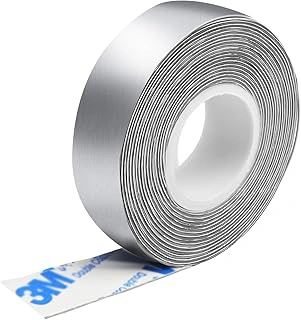
2 Grams Per Inch Golf Lead Tape, 1/2''x 60'' Adhesive
Adding weight to your paddle changes how it feels in your hand and how stable it remains through contact. The 2 Grams Per Inch Golf Lead Tape offers a simple way to experiment with small weight adjustments without committing to a permanent change. Priced at $9.99 and rated 4.7 out of 5, this tape delivers the listed size of half-inch-wide material, enough for several rounds of testing different placements.
The narrow width works well for senior players who want precision. You can run strips along the paddle edge to increase swing weight, or place them near the handle to shift the balance point closer to your grip. Because each inch adds only 2 grams, you control how much weight you introduce. Starting with one- or two-inch strips on each side of the paddle head lets you feel the effect on stability before adding more.
The adhesive holds firmly during play but allows repositioning if your first attempt doesn't deliver the feel you expected. This flexibility matters when you're learning how weight distribution affects your swing. If you have shoulder sensitivity or fatigue easily during longer sessions, test small amounts first. A few grams can change how much effort each swing requires, and removing or moving the tape is straightforward if the adjustment feels too heavy.
Sixty inches provides multiple opportunities to try different configurations. You might add weight to the top edge for more power on drives, then remove it and try a lower placement for better touch at the net. The tape works on composite, graphite, and polymer paddle surfaces, and the thin profile won't interfere with edge guards or grip wraps. For seniors prioritizing control and comfort over maximum power, incremental weight changes often prove more useful than large additions.
- ✅ 60 inches of tape allows multiple rounds of experimentation
- ✅ Half-inch width enables precise placement along edges or handle
- ✅ 2 grams per inch provides gradual, controlled weight adjustments
- ✅ Adhesive stays secure during play but can be repositioned
- ✅ Cost-effective at $9.99 for extended testing
- ⚠️ Narrow width requires careful alignment for even weight distribution
- ⚠️ May need several strips to achieve noticeable balance change
- ⚠️ Excess adhesive residue possible if repositioned multiple times
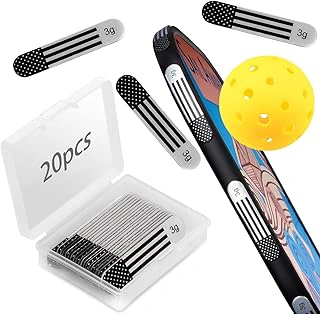
3M 20pcs Pickleball Lead Tape, 3g Weighted Adhesive
When repeatability matters more than trial and error, the 3M 20pcs Pickleball Lead Tape offers a structured approach to paddle customization. Priced at $9.99 and rated 4.6 out of 5, this pack includes twenty individual 3-gram strips - each pre-cut to deliver identical weight every time you apply one. For senior players testing different balance points across multiple sessions, the uniformity removes guesswork: if you place one strip on the left edge and one on the right, you know both sides receive the same 3 grams, maintaining symmetry without a scale.
The 3M adhesive backing holds securely during play yet lifts cleanly when you decide to reposition or remove a strip, leaving minimal residue on graphite or composite faces. This reliability is especially useful if you're experimenting with head-heavy versus handle-weighted configurations and want the freedom to change your mind without damaging the paddle surface. Because each strip is individually packaged, you can add weight incrementally - start with two strips at the top of the frame, play a few games, then add two more if you need additional mass - rather than committing to a large piece all at once.
The twenty-piece count also stretches further than smaller kits: you can customize two or three paddles, share strips with a doubles partner, or reserve extras for future adjustments as your swing evolves. Seniors who value consistency and prefer a methodical tuning process will appreciate knowing that every strip behaves the same way, session after session. If you're planning to test placements over weeks rather than hours, this pack provides enough material to explore thoroughly without reordering mid-experiment.
- ✅ Each 3-gram strip adds identical weight for symmetrical balance
- ✅ 3M adhesive holds securely yet removes cleanly with minimal residue
- ✅ Twenty pieces allow customization across multiple paddles or extended testing
- ⚠️ Fixed 3-gram increments offer less granular control than cuttable rolls
- ⚠️ Individual packaging can be slightly more time-consuming to open
How to Apply Tape for Improved Balance and Reduced Strain
Proper tape application prevents peeling, keeps your paddle balanced, and avoids unnecessary strain during play. Clean the paddle surface thoroughly with isopropyl alcohol and let it dry completely - any oils or dust will compromise adhesion and cause the tape to lift during a match.
For lead tape, work in small increments rather than applying all your planned weight at once. Start with 1-inch strips placed on each side of the paddle head if you want added stability on off-center hits, or position strips near the handle if you prefer a lighter, faster swing. Add one or two strips, then take the paddle to the court and hit for fifteen minutes to assess how the change affects your comfort and control. This test-and-adjust method prevents overweighting and helps you find the exact balance point that reduces wrist and shoulder strain.
When applying edge guard tape, begin at the handle end of the rim where the frame meets the grip. Press the tape firmly as you wrap it smoothly around the edge, overlapping each pass by about half the tape width to ensure full coverage. Trim any excess cleanly at the join point to avoid a bulky seam that could catch during play. If the tape lifts or bunches, peel it back, smooth the surface again, and reapply.
Both lead and edge guard tape need time to bond. Press all applied tape firmly with your thumb to eliminate air pockets, then let the paddle rest for at least a few hours before playing. This curing period ensures the adhesive sets properly, so the tape stays in place through hard volleys and repetitive impact without shifting or peeling mid-game.
Quick Decision Checklist: Which Tape Do You Need?
- Choose lead tape if your paddle feels too light or head-heavy and causes wrist or shoulder discomfort
- Choose edge guard tape if you frequently scrape the court or notice chips forming on the paddle rim
- Use lead tape on the sides of the paddle head to increase stability during volleys
- Use lead tape near the handle to reduce swing weight and ease shoulder strain
- Apply edge guard tape if your paddle lacks a factory-applied rim protector
- Start with small amounts of lead tape - one or two inches per side - and test before adding more
Choosing the Right Tape for Your Playing Style
Lead tape and edge guard tape serve different purposes, and understanding the tradeoff helps you avoid wasting time or money on the wrong fix. Lead tape changes how your paddle behaves during play - adding small amounts of weight in specific locations shifts the balance point, alters swing weight, and can reduce the strain on your wrist, elbow, and shoulder when you make contact. Edge guard tape protects the paddle frame from chips and cracks when it scrapes the court surface or fence, extending the life of your investment without changing how it swings.
For senior players managing joint discomfort or looking to improve control, modest lead tape adjustments offer the most direct benefit. A few grams near the top of the paddle face can stabilize off-center hits and add momentum to your volleys, while weight near the handle lightens the feel and speeds up hand transitions at the net. The key is to add weight incrementally - start with one or two small strips, play several sessions, and notice whether your arm feels less fatigued or your placement improves before adding more.
Edge guard tape becomes essential if you play outdoors frequently or tend to drag your paddle during low shots. The tape itself adds negligible weight, usually under two grams for a full perimeter application, so it won't disrupt the balance you've carefully tuned with lead tape. Think of it as low-cost insurance: a $10 roll of edge guard tape can prevent a $100 paddle replacement when a ground scrape would otherwise crack the composite frame.
Test one change at a time and give your body a few sessions to adapt. If you apply both lead tape and edge guard tape in the same afternoon, you won't know which adjustment made the difference - or caused a new problem. Track how each change feels during play, pay attention to any increase or decrease in joint discomfort, and resist the urge to keep adding weight just because a little helped. Most senior players find their sweet spot within five grams of added lead tape and a single application of edge guard tape, creating a paddle that feels stable, controllable, and durable enough to last multiple seasons.