We may earn a commission when you buy through links on this page, at no extra cost to you. How this works.
Your physical conditioning, paddle choice, and court shoes all matter for injury prevention. But there's a constraint most senior players overlook: your eyes are permanently vulnerable to high-speed impact, and unlike a strained muscle or sore joint, eye injuries don't heal with rest and ice. A pickleball traveling at 40 mph covers the 22-foot distance from baseline to kitchen line in less than half a second, leaving virtually no time to react when a ball ricochets off the court or deflects unexpectedly off a paddle edge.
The compatibility issue is straightforward. Most prescription glasses and standard sunglasses weren't engineered for impact resistance, and they can shatter on contact, creating sharp fragments that cause more damage than the original impact. This guide examines the specifications that define proper protective eyewear, the features that keep glasses functional during intense rallies, and the practical options available when you need both vision correction and impact protection on the court.
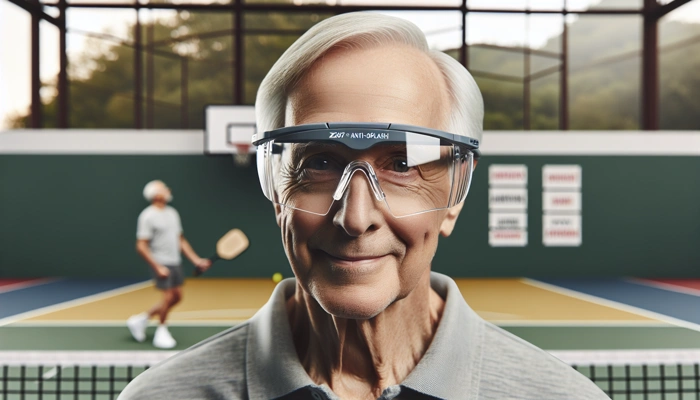
Z87 Anti-Fog Anti-Scratch Clear Lens Safety Glasses for Shooting & Pickleball
These Z87-rated safety glasses offer certified impact protection at an accessible price point for players new to protective eyewear. The clear polycarbonate lenses include both anti-fog and anti-scratch coatings, addressing two of the most common complaints about safety glasses during active play. The wraparound frame design provides side protection while maintaining a relatively lightweight profile.
The universal fit works for many face shapes, though players with particularly narrow or wide faces may find the temples less secure during quick lateral movements. Clear lenses make these suitable for both indoor and outdoor play without adaptation time, and the coating holds up reasonably well through regular cleaning. At this price range, they represent a low-risk entry point for players skeptical about wearing protective eyewear but concerned enough to try it.
- ✅ Z87.1 certified impact protection
- ✅ Dual coating for fog and scratch resistance
- ✅ Clear lens versatility for any lighting
- ✅ Accessible price for first-time users
- ⚠️ Universal fit may not suit all face widths
- ⚠️ Basic adjustment options
- ⚠️ Not sport-specific ASTM F803 rated
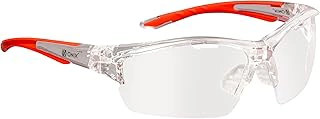
ONIX Pickleball Owl Protective Eyewear
Designed specifically for pickleball by an established brand in the sport, these glasses feature a wraparound polycarbonate lens that provides uninterrupted peripheral vision and impact protection. The frameless design reduces visual obstruction while maintaining structural integrity, and the lightweight construction minimizes fatigue during extended play sessions.
The adjustable nose piece and temple tips allow customization for different face shapes, addressing the fit challenges that cause many players to abandon protective eyewear. The clear lens works across lighting conditions, and the scratch-resistant coating stands up to regular use and cleaning. These represent purpose-built equipment rather than adapted industrial safety wear, which shows in the attention to sight lines and comfort details relevant to court sports. The higher price reflects sport-specific engineering, making these appropriate for committed players who've moved past experimenting with basic options.
- ✅ Pickleball-specific design considerations
- ✅ Frameless lens for maximum visibility
- ✅ Adjustable fit components
- ✅ Lightweight for extended wear
- ⚠️ Higher price than general safety glasses
- ⚠️ Limited color options
- ⚠️ May require break-in period
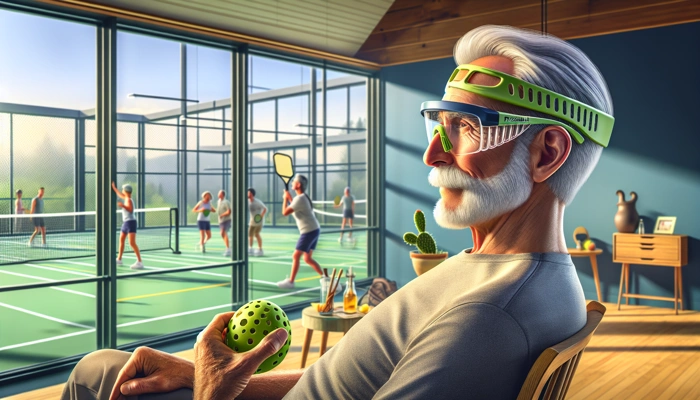
Pickleball Safety Glasses with Anti-Fog, UV & Impact Resistance
These glasses combine three essential protective functions in a single design: impact resistance for ball strikes, UV blocking for outdoor play, and anti-fog treatment for maintaining visibility during physical activity. The polycarbonate lens material provides the impact protection while remaining optically clear, and the wraparound frame extends protection to peripheral areas vulnerable to deflected shots.
The integrated design means you're not compromising one feature to gain another - the UV protection doesn't reduce impact resistance, and the anti-fog coating doesn't interfere with optical clarity. The temple design includes rubberized grips that maintain position during head movement without excessive pressure, and the nose bridge distributes weight to prevent the sliding that often occurs when players sweat. For outdoor players concerned about sun exposure alongside impact protection, these address multiple risk factors simultaneously. The balanced feature set makes them practical for players who want comprehensive protection without managing multiple pieces of eyewear.
- ✅ Tri-function protection system
- ✅ UV blocking for outdoor play
- ✅ Rubberized grips prevent slipping
- ✅ Good balance of features and price
- ⚠️ Slightly heavier than minimal designs
- ⚠️ Anti-fog effectiveness varies with humidity
- ⚠️ Temple width may not suit smaller faces
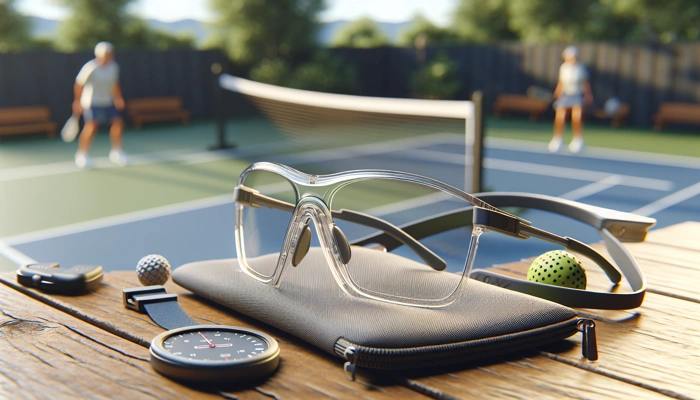
V.W.E. Bifocal Sport Protective Safety Glasses Clear Lens Reader
These bifocal safety glasses solve the prescription challenge for players who need reading correction but don't want to invest in custom prescription sports eyewear. The protective frame incorporates bifocal reader segments in the lower portion of the lens, allowing you to see the ball clearly at distance while still being able to read the score or check your phone between games. The polycarbonate construction provides impact resistance while the wraparound design extends protection beyond what standard bifocals offer.
Available in multiple magnification strengths, these work for players whose distance vision is acceptable but need help with near tasks. The bifocal line is positioned to minimize interference with court vision while remaining accessible when you glance down. This represents a practical compromise for players who don't require full prescription lenses but struggle with standard non-corrective safety glasses. The trade-off is that players needing distance correction or complex prescriptions will need to explore custom options.
- ✅ Combines impact protection with reading correction
- ✅ Multiple magnification options
- ✅ More affordable than custom prescription
- ✅ Wraparound safety design
- ⚠️ Bifocal line visible in field of view
- ⚠️ Only corrects near vision
- ⚠️ Not suitable for distance vision needs
- ⚠️ Limited to standard reader powers
The Real Risks: Why Eye Injuries Are a Serious Concern for Senior Players
Emergency room data from racquet sports shows that eye injuries occur most frequently in players over 45, and the consequences are disproportionately severe. As we age, the vitreous gel inside the eye becomes more liquid and the retina more susceptible to detachment from sudden impact. A direct hit from a pickleball can cause corneal abrasion, hyphema (bleeding inside the eye), traumatic cataract, or retinal damage that leads to permanent vision loss.
The risk isn't theoretical. The compact court size means you're playing closer to your opponents than in tennis, and the hard plastic ball doesn't compress on impact the way a tennis ball does. Senior players face additional risk factors: slower reaction times mean less ability to dodge errant shots, and the social nature of the game often means mixed-skill doubles where unpredictable shots are more common. Once an eye injury occurs, recovery is complicated by age-related healing factors and existing conditions like diabetes or high blood pressure that affect ocular health.
What to Look For: Decoding Safety Ratings (ASTM F803)
The ASTM F803 standard defines impact resistance requirements specifically for racquet sport eyewear. This certification means the lens and frame assembly survived high-velocity impact testing without the lens dislodging, shattering into dangerous fragments, or allowing the test projectile to contact the eye. Products certified to this standard can withstand a ball traveling at speeds typical of competitive racquet sports.
The ANSI Z87.1 standard, commonly seen on industrial safety glasses, provides basic impact protection but wasn't designed for sports-specific hazards. Z87.1 certification is better than nothing and significantly safer than regular eyewear, but ASTM F803 remains the gold standard for racquet sports. When evaluating protective eyewear, look for explicit mention of these certifications in product specifications. Frames must wrap around sufficiently to protect against side impacts, and lenses should be polycarbonate or Trivex material, both of which offer superior impact resistance compared to standard plastic or glass.
Beyond Impact Resistance: Key Features for Comfort and Clarity
Impact protection becomes irrelevant if you remove your eyewear because it fogs up or causes discomfort. Anti-fog coating or ventilation systems maintain clear vision during temperature changes and physical exertion. Outdoor players need UV protection to prevent long-term damage from sun exposure, particularly important since seniors have increased risk of cataracts and macular degeneration.
Weight distribution affects whether you'll tolerate wearing protective eyewear for multiple games. Frames should distribute pressure across the bridge and temples without creating hot spots. Rubberized contact points prevent slipping when you sweat, and adjustable nose pieces allow customization for different face shapes. Lens tint is personal preference, but clear or light amber lenses work well for indoor courts while maintaining color accuracy for tracking the yellow ball. Wraparound designs provide peripheral protection without creating blind spots that could affect your court awareness.
Solving the Prescription Problem: Your Options for Clear Vision on the Court
Players who wear prescription glasses face a more complex decision. Standard prescription glasses lack impact protection and can break into dangerous fragments, while contact lenses paired with non-prescription protective eyewear work well for some but cause discomfort or dry eye issues for others, particularly in seniors.
Custom prescription protective eyewear from sports vision specialists offers the most comprehensive solution but typically costs several hundred dollars. Many optometrists can fit prescription inserts that mount behind protective frames, creating a two-layer system that maintains safety certification. For players with mild prescriptions, bifocal safety glasses with reader segments handle near-vision needs while leaving distance vision uncorrected. Each approach involves trade-offs between cost, convenience, and optical precision. The key is ensuring that whatever solution you choose maintains impact protection - playing with insufficient eye protection because your prescription complicates the solution puts you at unnecessary risk.
Finding the Perfect Fit: How to Choose Eyewear That Stays Put
Even properly rated protective eyewear becomes ineffective if it slides down your nose during play or creates pressure points that cause you to remove it between games. Frame width should match your face width - temples that are too wide create gaps that reduce side protection, while frames too narrow cause uncomfortable pressure. The nose bridge should rest comfortably without pinching, and adjustable nose pieces let you fine-tune the fit.
Temple length matters for stability during quick movements. The temples should extend far enough behind your ears to anchor the glasses without relying solely on nose pressure, but not so long that they dig into the area behind your ears. Rubberized or textured contact points on the nose and temples prevent slipping when you sweat. Test fit by moving your head quickly side to side and up and down - the glasses should stay centered on your face without manual adjustment. If you wear a visor or hat, verify that the temple design is compatible. Comfort and stability determine whether you'll actually wear the protective eyewear consistently, making fit assessment as important as safety certification.
Play with Confidence for Years to Come
Eye protection ranks among the simplest and most effective injury prevention measures available to senior pickleball players. Unlike technique modifications that take months to internalize or strength training that requires consistent effort, protective eyewear provides immediate risk reduction the moment you put it on. The initial adjustment period - getting used to wearing glasses during play - typically lasts only a few sessions before the eyewear becomes as automatic as your court shoes.
The investment is modest compared to the potential cost of eye injury, both financially and in quality of life. Vision loss or impairment affects your ability to drive, read, maintain independence, and of course, continue playing pickleball. By prioritizing proper eye protection now, you're making a decision that supports your goal of playing comfortably and safely for another decade. Start with certified protective eyewear that fits your face and vision needs, wear it consistently during play, and you've eliminated one of the most serious injury risks that senior players face on the court.