We may earn a commission when you buy through links on this page, at no extra cost to you. How this works.
Your knees absorb the brunt of every pivot, stop, and lunge on the pickleball court. When the cushioning under your feet doesn't match your joint needs, that impact travels straight up your leg and compounds over a two-hour session. The challenge isn't simply finding the softest shoe - it's identifying the balance between shock absorption and stability that keeps your knees comfortable without compromising your ability to move quickly and confidently.
Court shoes designed for pickleball address forces that everyday sneakers don't handle well: rapid side-to-side cuts, frequent toe pushes, and sudden deceleration. If you're dealing with knee discomfort, those movements require cushioning that absorbs repetitive impact while maintaining enough structure to prevent your foot from rolling inward or wobbling during lateral slides. This guide breaks down the construction details, material choices, and fit considerations that separate joint-friendly court shoes from models that look supportive but leave your knees aching by game three.
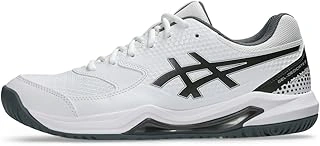
ASICS Men's Gel-Dedicate 8 Pickleball Shoes
This model centers its design around gel cushioning in the heel, which absorbs sharp impacts from split-steps and backward shuffles. The midsole uses a straightforward EVA base that delivers a firmer feel than plush running shoes, preserving court contact and feedback during quick exchanges at the net. That combination works well if you prefer a responsive underfoot sensation but still want a noticeable buffer between your heel strike and the hard court surface.
The upper features synthetic overlays at the midfoot and a padded collar that holds your heel in place without the weight or stiffness of high-top designs. Imagine you're resetting after a deep dink rally - you need to push off and reach the kitchen line before your opponent's next drop. The heel gel absorbs the landing, the EVA keeps you planted, and the overlays prevent lateral slippage as you accelerate. If you prioritize heel protection and don't mind a slightly firmer forefoot, this shoe offers a proven gel platform at a mid-range price.
- ✅ Gel heel cushioning for impact absorption
- ✅ Secure midfoot overlays reduce slippage
- ✅ Responsive EVA midsole maintains court feel
- ⚠️ Forefoot cushioning is firmer than heel
- ⚠️ EVA may compress with heavy use over time
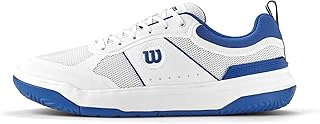
Wilson Men's Pickle Pro Men's Pickleball Shoes
Wilson built this shoe with a focus on durability and multi-surface traction, making it a versatile choice if you play on both indoor and outdoor courts. The outsole uses a dense rubber compound with a pivot-friendly tread pattern that grips without catching, and the midsole delivers consistent cushioning across the full length of the foot. That even distribution helps if your knee discomfort isn't isolated to the heel - it spreads impact absorption from forefoot push-offs to rearfoot landings.
The upper uses a reinforced toe cap and a breathable mesh panel at the midfoot, balancing protection with ventilation. Picture a long doubles match on a warm day: you're moving side to side along the baseline, and your feet stay cool while the toe cap shrugs off scrapes from drag steps. The cushioning doesn't prioritize maximum softness, but it holds up well over months of play, maintaining its structure when lighter foams would have flattened. If you want a shoe that performs consistently across different court types and offers balanced cushioning, this is a practical option.
- ✅ Full-length cushioning balances heel and forefoot protection
- ✅ Durable outsole works on indoor and outdoor courts
- ✅ Reinforced toe cap extends shoe lifespan
- ⚠️ Cushioning is firmer than gel-based models
- ⚠️ Breathable mesh may wear faster with outdoor abrasion
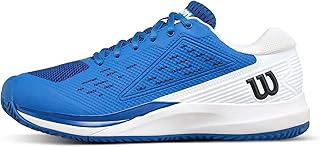
WILSON Rush Pro Ace Pickler Men's Pickleball Shoes
This design leans toward players who value quick court movement and a locked-in feel. The midsole uses a low-profile cushioning setup that keeps your foot closer to the ground, improving lateral stability during rapid direction changes. You sacrifice some plush underfoot comfort, but in return you gain better proprioception - the ability to sense exactly where your weight is centered as you pivot or slide.
The upper features a snug-fitting bootie construction with a lace-up closure that pulls the sides tightly around your midfoot, minimizing internal movement. Imagine you're defending a fast drive at the net and need to shuffle three steps left without hesitation. The low-to-ground profile lets you feel the court surface and react instantly, while the bootie keeps your foot from shifting inside the shoe. If your knee pain worsens with ankle instability or if you prefer a more connected, agile feel over maximum cushioning, this shoe offers that trade-off clearly.
- ✅ Low-profile cushioning improves court feel and stability
- ✅ Bootie construction locks foot securely in place
- ✅ Responsive design suits quick lateral movement
- ⚠️ Less cushioning than gel or thick foam models
- ⚠️ Snug fit may feel restrictive for wider feet
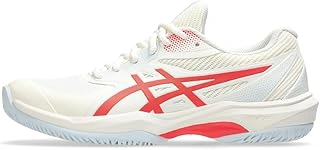
ASICS Women's Game FlyteFoam Pickleball Shoes
FlyteFoam technology uses a lighter, more resilient foam blend that maintains its cushioning structure longer than standard EVA. The midsole compresses on impact but rebounds quickly, so each step feels consistent even late in a match when fatigue sets in. This shoe pairs that responsive foam with a women's-specific fit, offering a narrower heel and a roomier forefoot to accommodate typical foot shape differences.
The outsole uses a flexible tread that bends naturally with your foot's roll, reducing stiffness that can transfer force into your knee during toe-off. Imagine you're moving forward to poach a volley - you push off hard with your toes, and the flexible forefoot lets your foot bend without fighting the shoe. The lighter foam also reduces the overall weight, so your legs don't tire as quickly from lifting the shoe through repetitive steps. If you want cushioning that stays effective over many months and a fit designed around a woman's foot shape, this model delivers both at a competitive price.
- ✅ FlyteFoam maintains cushioning over extended use
- ✅ Women's-specific fit with narrower heel and roomier forefoot
- ✅ Flexible outsole reduces stiffness during toe-off
- ⚠️ Less heel-focused cushioning than gel models
- ⚠️ Lighter foam may feel less plush on initial wear
Why Pickleball Puts Stress on Your Knees
Pickleball combines tennis-style lateral movement with the quick reaction demands of table tennis, and that combination loads your knees in ways that walking or jogging don't replicate. Every time you change direction, your knee joint handles rotational force and compression simultaneously. Unlike running, where most impact is vertical and predictable, pickleball asks your knees to stabilize while your body weight shifts sideways at varying speeds.
The kitchen line creates a unique stress pattern: you're constantly decelerating from a short sprint, planting hard to reset, then exploding forward again. That stop-and-start cycle doesn't give your muscles and tendons the rhythmic loading that builds endurance. Instead, it tests your joint's ability to absorb sudden force spikes. If your shoes lack adequate cushioning or allow your foot to slide inside the footbed, those spikes travel directly into your knee cartilage and surrounding tissue, accelerating fatigue and discomfort.
The Role of Cushioning in Shock Absorption
Cushioning acts as the first buffer between court impact and your skeletal system. When your heel strikes the court surface or you land from a short hop, the midsole material compresses and converts kinetic energy into heat, reducing the peak force that reaches your knee. Thicker cushioning generally absorbs more impact, but too much softness can reduce court feel and make it harder to sense when your weight is centered over your foot.
The placement of cushioning matters as much as the amount. Heel cushioning addresses the shock from backward pedaling and split-step landings, while forefoot cushioning protects during toe pushes and forward lunges. Some designs concentrate padding at the heel and keep the forefoot firmer for better responsiveness. For players with knee concerns, a slight bias toward heel cushioning often delivers more joint relief, since that's where impact peaks during defensive positioning and resets after volleys.
Key Shoe Features That Provide Stability and Support
Cushioning alone won't protect your knees if your foot moves unpredictably inside the shoe. Stability comes from a combination of heel counters, midfoot shanks, and upper materials that lock your foot in place without pinching. A rigid heel counter - the curved plastic or composite cup at the back of the shoe - prevents your heel from tilting inward or outward during lateral slides, keeping your ankle and knee aligned through the kinetic chain.
Midfoot support typically takes the form of overlays, internal straps, or a TPU (thermoplastic polyurethane) saddle that wraps the arch. These features reduce side-to-side slippage and help your foot work as a single unit with the midsole. When your midfoot stays planted, your knee doesn't have to compensate for micro-adjustments with every step. Look for shoes with a snug, wrap-around feel at the arch and a secure lockdown through the lace eyelets, especially if you've noticed your foot sliding forward during hard stops.
Comparing Midsole Materials: EVA, Gel, and Foam
EVA (ethylene-vinyl acetate) foam is the most common midsole material in court shoes. It's lightweight, inexpensive to produce, and offers predictable cushioning that doesn't feel mushy. Standard EVA compresses quickly under repeated impact, which means shoes lose some of their shock absorption after six months of regular play. Compression-molded EVA holds up longer and rebounds more consistently, but it's slightly firmer on first wear.
Gel inserts, often placed in the heel or forefoot, add localized cushioning without increasing overall midsole thickness. Gel disperses impact force radially, spreading the load across a wider area of your foot. This can reduce pressure hotspots but doesn't replace the need for a well-cushioned foam base. Newer foam blends - sometimes marketed under proprietary names like FlyteFoam - use lighter, more resilient compounds that maintain cushioning over more play sessions. These foams typically cost more upfront but hold their structure longer, making them a better value if you play three or four times per week and want consistent knee protection over the shoe's lifespan.
How Outsole Traction and Heel Support Impact Joint Comfort
Traction directly affects how much rotational force your knee absorbs. Too little grip and your foot skids, forcing your knee to stabilize your body mid-slide. Too much grip - especially on sticky indoor courts - and your shoe can catch abruptly, transferring torque straight into your knee joint. A herringbone or modified herringbone tread offers a middle ground: enough bite for confident lateral cuts, with small gaps that allow controlled release when you pivot.
Heel support extends beyond the counter into the midsole geometry. A slightly beveled or flared heel base widens your contact patch with the court, distributing landing forces over a larger area and reducing the likelihood of an ankle roll that pulls your knee out of alignment. Some designs use a medial post - a denser section of foam on the inner edge of the midsole - to counteract overpronation, the inward rolling motion that can stress the inside of your knee. If you've noticed wear patterns on the inner edge of your old shoes or experience knee pain on the inside of the joint, a shoe with mild pronation control may offer noticeable relief.
A Step-by-Step Guide to Finding the Right Fit
Start by measuring your foot at the end of the day, when it's slightly swollen from normal activity. Wear the socks you plan to use on court - thicker athletic socks will require a slightly larger shoe than thin dress socks. Trace your foot on paper and measure from heel to longest toe, then compare that length to the brand's size chart. Sizing varies between manufacturers, so don't assume your everyday shoe size translates directly to court shoes.
When you try on a shoe, check for a thumb's width of space between your longest toe and the front of the shoe. Your heel should sit snugly in the cup without lifting when you walk. Lace the shoe fully and walk in a figure-eight pattern to test lateral stability - your foot shouldn't slide side to side inside the shoe. If possible, perform a few quick direction changes or short hops to assess cushioning under dynamic load. Pay attention to pressure points at the midfoot or any spots where the upper digs into your skin; minor discomfort during a five-minute trial will become significant pain after an hour of play.
Other Factors to Consider for On-Court Comfort
Break in new shoes gradually. Wear them around the house for short periods before committing to a full game, giving the materials time to conform to your foot shape without causing blisters. Replace shoes every six months if you play multiple times per week - compressed midsoles lose their ability to protect your knees even when the outsole and upper still look intact.
Consider aftermarket insoles if the factory footbed feels flat or lacks arch support. A contoured insole can improve weight distribution and reduce stress on the inside of your knee, especially if you have a higher arch or a tendency toward overpronation. Finally, match your shoe choice to your court surface: indoor courts typically require less aggressive tread, while outdoor courts demand durable rubber that resists abrasion. Choosing the wrong outsole for your primary playing surface accelerates wear and reduces the effective cushioning lifespan, leaving your knees vulnerable sooner than expected.