We may earn a commission when you buy through links on this page, at no extra cost to you. How this works.
Summer pickleball matches expose you to direct sun and high temperatures for hours at a time, often in locations where drinking fountains are far from the courts or unavailable. When you're playing tournament rounds or back-to-back recreational games, your body loses fluid quickly, and dehydration can dull your reaction time, reduce stamina, and make the second half of your match harder than it needs to be.
An insulated water jug solves two practical problems: it keeps your water cold when ambient temperatures climb above ninety degrees, and it holds enough volume that you won't run out mid-session. Standard bottles often warm within an hour in direct heat, and small capacities mean frequent refill trips that interrupt your rhythm between games.
Choosing the right jug comes down to three factors that directly affect your playing experience. First, insulation performance determines how long your water stays cold under summer sun. Second, capacity dictates whether you'll have enough for a two-hour session or need to leave the court to refill. Third, portability - weight when full, handle design, and size - affects whether you'll actually carry it courtside or leave it in your bag.
This guide compares insulation technology, capacity tradeoffs, and portability features across three jugs designed for extended outdoor use. The goal is to help you match jug specs to your typical match length, court access, and tolerance for carrying weight, so you stay hydrated without guessing or over-buying.
Fit and safety come first
Use the comparison as a shortlist, but keep fit, comfort, and any health or safety constraints ahead of price.
What to Look For in an Insulated Water Jug for Pickleball
Choosing the right insulated water jug starts with understanding how long you typically play and how much water you need within easy reach. For pickleball sessions that stretch beyond two hours in warm weather, look for jugs in the 52 to 64 ounce range - enough to stay hydrated through several games without needing constant refills, yet still manageable to carry from car to court.
Insulation performance separates a cold drink at game five from lukewarm water by game three. Triple-wall vacuum insulation holds temperature longer than double-wall construction, often keeping ice solid for 24 hours or more compared to 12 to 18 hours with double-wall designs. If you play morning through early afternoon or leave your jug in a hot car between matches, that extra insulation layer makes a noticeable difference.
Carry options matter more than many players realize until they're juggling a paddle bag, keys, and a water jug. Integrated side handles work well for short walks, while a shoulder strap or top carry loop frees up your hands when you're also managing gear. Some jugs include both, which adds flexibility depending on how much you're carrying that day.
Lid design affects how quickly you can drink between points. Spout lids let you sip without unscrewing anything, but they can be harder to clean thoroughly. Straw lids offer quick access and work well when you don't want to tilt a heavy jug, though straws add another component to wash. Wide-mouth screw tops make adding ice easy and simplify cleaning, but require two hands and a few extra seconds to open. Think about whether you typically drink during quick changeovers or prefer longer breaks between games.
Weight when full is easy to overlook until you're carrying four pounds of water and stainless steel across a parking lot. A 64-ounce jug filled to capacity weighs around five pounds, which feels fine for a short distance but can be cumbersome if you walk far or carry other equipment. Courtside stability also deserves attention - a jug with a wide base is less likely to tip over when you set it down quickly between rallies, especially on uneven grass or gravel surfaces near the court.
Capacity vs. Portability: Finding Your Match Length Sweet Spot
The choice between a 52 oz and 64 oz insulated water jug comes down to how long you play, how often you can refill, and whether you prioritize hydration capacity or easier handling between games.
A 64 oz jug holds roughly eight cups of water, enough for most players to stay hydrated through three to four hours of continuous play in warm conditions without needing a refill. This larger capacity works well when you're playing at courts without nearby water fountains, participating in round-robin tournaments with back-to-back matches, or dealing with temperatures above 85°F where fluid needs climb quickly. The tradeoff is weight: a full 64 oz jug weighs just over four pounds, which some players find cumbersome to carry from the parking lot or between courts, especially when also managing paddle bags and gear.
A 52 oz jug holds about six and a half cups and typically weighs around three and a quarter pounds when full. This size fits more easily in most pickleball bag side pockets and feels less bulky during transport. For recreational sessions lasting two hours or less, or when playing at facilities with accessible refill stations, the smaller footprint and reduced carry weight often outweigh the capacity difference. The 12 oz gap translates to roughly one and a half fewer cups of water, which matters less if you can top off between matches.
Consider your typical play pattern: if you usually arrive for open play and stay for multiple games across several hours with limited breaks, the 64 oz option reduces the need to leave the court. If you play shorter sessions or prefer lighter gear that's easier to maneuver, the 52 oz jug delivers adequate hydration without the bulk. Both sizes maintain temperature performance equally well when insulation quality is comparable.
Insulation Performance: What Triple-Wall and Double-Wall Really Mean
Insulation construction determines how long your water stays cold during back-to-back matches on sunny courts. Double-wall vacuum insulation uses two layers of stainless steel with a vacuum seal between them, blocking heat transfer and keeping ice intact for 12 to 24 hours depending on jug size and ambient temperature. Triple-wall designs add a third barrier, often an additional vacuum chamber or insulating foam layer, which can extend cold retention in extreme heat but also adds weight and bulk to the jug.
Most pickleball players find double-wall stainless steel vacuum insulation sufficient for tournament days that run four to six hours in summer conditions. The vacuum seal stops conduction and convection, so external heat cannot easily reach the liquid inside. Triple-wall jugs offer marginal gains in retention time - sometimes an extra two to four hours - but the tradeoff is a heavier carry and higher cost. If you refill between matches or play in shaded venues, double-wall construction delivers reliable cold without the extra heft.
Pay attention to the seal quality and lid design as well, since a poorly fitted cap undermines even the best wall construction. Insulation performance matters most when you need consistent hydration across long outdoor sessions, and understanding the wall structure helps you match the jug to your typical play duration and temperature exposure.
Lid and Drinking Options: Spout, Straw, or Wide-Mouth?
Lid design determines how quickly you can drink between points and how much effort cleaning will take after each session. Straw lids let you sip without tipping the jug, which reduces spills when you're sitting courtside between games. The tradeoff is a narrow opening that makes adding ice cubes awkward and requires a bottle brush to reach the straw mechanism. Spout lids offer faster flow when you want a bigger drink, and most flip open with one hand while you hold your paddle in the other. Wide-mouth lids provide the easiest access for ice, fruit, or a quick rinse at the sink, but you need to tilt the jug higher to drink, and some designs can splash if you're in a hurry.
Leak-proof seals matter more than marketing promises. Look for thick silicone gaskets and lids that lock or screw completely closed, especially if the jug will ride in a gear bag with towels or electronics. One-handed operation becomes useful when you're holding a paddle or stabilizing yourself on a bench. Flip spouts and push-button releases work well for this, while screw-on wide-mouth lids usually require two hands to open safely. Cleaning frequency depends on what you put inside: plain water tolerates a weekly scrub, but electrolyte drinks and anything with sugar or pulp should be rinsed the same day to prevent residue buildup in valve crevices or straw channels.
Match the lid to how you drink during play. If you take small sips frequently and want minimal interruption, a straw lid keeps your eyes on the court. If you prefer larger gulps during changeovers and want the option to add ice mid-session, a wide-mouth design will feel less restrictive. Spout lids split the difference for those who want faster flow without the maintenance complexity of a straw.
Carry and Courtside Stability: Handles, Straps, and Base Design
Carrying a full water jug from the parking lot to the court and keeping it stable during play matters as much as insulation. A 64-ounce jug filled with ice and water weighs over five pounds, and poor handle design or a narrow base can turn hydration into a hassle.
Handle width and padding make the difference between a comfortable grip and a hand that goes numb halfway across the lot. Wide, cushioned handles distribute weight across your palm, reducing pressure points when you're making one trip with your paddle bag in the other hand. Thin or hard plastic handles dig into fingers, especially for players managing arthritis or reduced grip strength.
Weight distribution affects how the jug feels when you lift it. A handle positioned at the center of gravity keeps the jug balanced; one placed too high causes the base to swing. Some models add a second side handle lower on the body, giving you the option to cradle the jug against your hip for longer walks.
Adjustable shoulder straps take weight off your hands entirely, which helps when you're also carrying balls, towels, or a cooler. Look for padded straps that won't dig into your shoulder and clips that stay secure without constant adjustment.
Base width determines whether your jug tips over on a bench or courtside table. A wide, flat base stays put even when someone bumps the bench or the wind picks up. Narrow bases work fine on flat gym floors but become a liability on outdoor courts with uneven concrete or wood slat benches.
For older players or anyone managing joint discomfort, these details aren't minor - they decide whether hydration is convenient or a chore. Choose a jug you can carry comfortably in one hand, set down without worry, and lift repeatedly throughout a match without strain.
Maintenance and Cleaning for Long-Term Use
Wide-mouth openings make daily cleaning easier, letting you reach the bottom with a bottle brush or sponge without frustration. Many insulated jugs feature removable lids, straws, and gaskets that should be taken apart after each use to prevent mold or odor from building up in hidden crevices. Hand-washing with warm soapy water is the safest method for preserving vacuum insulation and exterior finishes, though some models specify dishwasher-safe lids on the top rack.
Stainless steel interiors resist staining and taste transfer better than plastic liners, but they still benefit from a weekly deep clean using baking soda or a diluted vinegar rinse to remove mineral deposits from hard water. Silicone gaskets and straw components should be inspected regularly for wear or discoloration and replaced when they lose flexibility. Leaving the lid off between uses allows the interior to dry completely and reduces the chance of musty smells developing during storage.
Avoiding abrasive scrubbers protects the interior walls and any powder-coated exterior from scratching. If your jug includes a flip spout or button mechanism, rinse those areas thoroughly after sugary or electrolyte drinks to prevent sticky residue from jamming the parts. Consistent upkeep extends the lifespan of seals and keeps insulation performance reliable across seasons of use.
Making Your Final Decision: Which Jug Fits Your Play Style?
Choosing the right insulated water jug comes down to matching container features to how you actually play. If your sessions run three hours or longer in high heat, a larger-capacity jug minimizes refill interruptions and keeps you focused on the game. Smaller jugs work well for rec play or when you have courtside access to coolers or water stations.
Insulation performance matters most when ambient temperatures push past 85°F and you need cold water from the first sip to the last. All three jugs reviewed above use vacuum-sealed double-wall construction, so your decision hinges on how much liquid you need and how often you want to carry weight between courts. A 64-ounce jug filled to capacity weighs over four pounds; a half-gallon option adds another pound.
Lid design affects your drinking rhythm during quick breaks. Screw tops with flip spouts let you drink without unscrewing, while wide-mouth openings make it easier to add ice but require two hands to sip safely. If you tend to set your jug down between games, a leak-proof screw cap offers more security than a straw or push-button lid.
Portability becomes the tiebreaker when you walk from your car to distant courts or move between multiple venues in a day. Integrated handles or shoulder straps distribute weight better than gripping a bare cylinder. If you already carry a gear bag with external loops or bottle pockets, check jug diameter and height before committing.
All three options keep water cold for the duration of summer play, so you can revisit the product comparisons above with your session length, climate, and carry preferences in mind. The right jug is the one that disappears into your routine rather than adding friction to your game day.
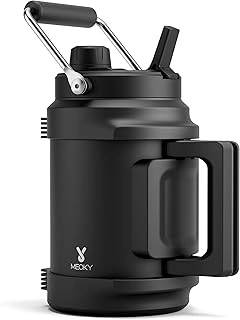
Meoky 64 oz Triple Wall Insulated Stainless Steel Half Gallon Water Jug
Players who spend three or four hours on outdoor courts need volume, and the Meoky 64 oz jug delivers half a gallon in a triple-wall stainless steel design that keeps water cold through back-to-back matches. The triple-wall construction uses vacuum insulation between layers to slow temperature transfer, so ice water at morning warm-up stays cold when you finish your last game after lunch.
At the listed size, this jug holds enough for longer sessions without refill trips, but that capacity comes with weight - a full half-gallon adds nearly four pounds to your gear bag. The integrated carry handle makes short walks from car to court manageable, though the size and heft mean this jug works best when you have a dedicated bench spot or courtside chair rather than carrying it between games.
The $26.98 price point sits below many premium insulated bottles of similar size, and the 4.4 out of 5 rating reflects solid everyday performance for recreational players who prioritize capacity over ultra-light portability. If your typical pickleball outing runs two hours or less, a smaller larger option may feel less cumbersome, but for tournament days, league play, or hot-weather marathons where hydration becomes critical, the Meoky's volume and insulation deliver steady cold drinks when you need them most.
The tradeoff is straightforward: maximum capacity means maximum weight when full, so this jug suits players who value fewer refills and longer cold retention over minimal carry weight between courts.
- ✅ Half-gallon capacity reduces refill frequency during long matches
- ✅ Triple-wall vacuum insulation maintains cold temperature for hours
- ✅ Affordable at $26.98 compared to similar-capacity insulated bottles
- ✅ Carry handle simplifies transport from vehicle to court
- ⚠️ Full weight near four pounds can feel heavy in a gear bag
- ⚠️ Large size less practical for players moving between multiple courts
- ⚠️ Best suited for stationary use rather than carrying during play
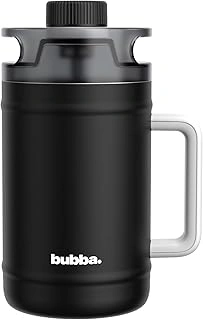
bubba 52 oz Reusable Insulated Stainless Steel Water Keg
The bubba 52 oz water keg occupies a middle ground between portability and capacity, offering just over half a gallon for players who want serious hydration without carrying a full jug. At $31.99 and rated 4.7 out of 5, this stainless steel option fits comfortably for most two- to three-hour sessions without the bulk of larger models.
The 52-ounce size changes the carry equation. Where gallon jugs demand two-handed effort or a shoulder strap, this keg works with one hand for most adults, making it easier to grab between games or toss into a gear bag without rearranging everything else. The integrated handle sits at the top, keeping your grip stable when the bottle is full and letting you hook it onto a fence or cart without extra hardware.
Insulation performance scales with size - smaller volumes lose temperature slower in absolute terms, but you'll also refill more often on long tournament days. The double-wall stainless steel construction keeps water cold through a typical morning or afternoon session, though players spending six-plus hours on sun-exposed courts may need a midday top-up. If you rotate between pickleball and other activities, the more compact footprint fits car cup holders and gym lockers that reject full-gallon bottles.
The tradeoff centers on how you play. Casual players or those with frequent access to refill stations benefit from the lighter load and easier one-handed use. Competitive players in multi-match formats or remote courts with no water source may find themselves rationing or making extra trips. The keg's profile also suits players who bike or walk to courts, where every ounce and inch of bag space matters.
Before committing, confirm the lid design matches your preference - some bubba models use flip spouts, others use screw caps - and test the handle angle if possible, since grip comfort varies with hand size. The 52-ounce sweet spot works best when portability ranks higher than all-day capacity.
- ✅ One-handed carry for easier transport between games
- ✅ Compact 52 oz size fits most cup holders and bags
- ✅ Stainless steel insulation suitable for typical session lengths
- ✅ Lighter weight reduces strain during long tournament days
- ⚠️ Requires refills for extended multi-match play
- ⚠️ Smaller capacity may not last full day in remote locations
- ⚠️ Handle and lid design varies by model - verify before purchase
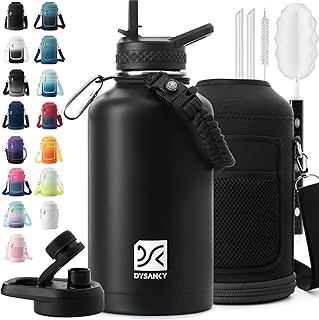
DYSANKY 64 oz Insulated Stainless Steel Half Gallon Water Bottle with Straw
The DYSANKY 64 oz water bottle addresses a common frustration during long pickleball matches: drinking without breaking your posture or setting down your paddle. The integrated straw lid lets you hydrate quickly between points without tilting the bottle, which matters when you're holding court position or transitioning between games.
At $26.99, this half-gallon stainless steel bottle sits in the same capacity range as larger alternatives but prioritizes convenience through its straw mechanism. The 4.6 out of 5 rating reflects user satisfaction with both insulation performance and the no-tilt drinking feature. For players who prefer sipping throughout a match rather than taking larger gulps during breaks, the straw design offers a meaningful advantage in speed and ease.
The straw system does introduce a maintenance consideration. Unlike wide-mouth bottles that you can wipe clean quickly, straw components require regular flushing or brush cleaning to helps reduce the chance of buildup, especially if you add electrolyte mixes or flavored drinks. The tradeoff is straightforward: faster access during play in exchange for a bit more attention after your session.
This bottle works best for players who value continuous hydration without interrupting their rhythm. If you tend to drink frequently in smaller amounts rather than draining a cup between games, the straw access removes one small friction point from your routine. The 64 oz capacity supports multi-hour outdoor sessions without refills, assuming you start with a full bottle and moderate temperatures.
One practical note: verify that the straw lid seals properly when closed, particularly if you transport the bottle in a gear bag. Straw designs can be more prone to leaks than screw-top lids if the silicone gasket doesn't seat correctly. A quick check before tossing it in your bag helps reduce the chance of unwanted spills on towels or spare grips.
- ✅ Straw lid allows drinking without tilting the bottle or interrupting posture
- ✅ 64 oz capacity supports long matches and hot-weather play
- ✅ Priced at $26.99 with strong user ratings
- ⚠️ Straw components require more thorough cleaning than simple wide-mouth designs
- ⚠️ Straw lids may be more prone to leaks if gasket doesn't seal properly
Summer Pickleball Hydration Checklist
- Jug holds at least 52 oz for two-hour sessions without refills
- Insulation keeps water cold for 12+ hours in direct sun
- Carry handle or strap fits comfortably in one hand
- Lid opens easily with one hand and seals leak-proof
- Wide mouth or straw allows quick drinking between points
- Base is stable enough to sit courtside without tipping