We may earn a commission when you buy through links on this page, at no extra cost to you. How this works.
Choosing a pickleball paddle that reduces shoulder and arm shock starts with understanding how construction details affect vibration transfer. Every time the ball strikes the face, energy travels through the paddle into your hand, wrist, and shoulder. Players with sensitive joints or a history of discomfort quickly learn that not all paddles feel the same - even at identical price points or similar advertised performance levels.
Four physical characteristics drive how much shock reaches your arm: core thickness, face material, total weight, and grip design. Thicker cores compress more on impact, absorbing energy before it reaches your hand. Face materials vary in stiffness, with some composites flexing to dampen vibration while others transfer it cleanly for control. Weight distribution shifts whether force concentrates at the point of contact or spreads across the paddle and your forearm. Grip circumference and surface texture determine how tightly you must squeeze, which directly influences muscle fatigue and joint strain during extended play.
This guide walks through each of these variables in plain terms, explaining the tradeoffs you will encounter when prioritizing shock reduction. You will learn to compare paddles using verifiable dimensions and material facts rather than vague comfort marketing. The goal is to match paddle construction to your specific arm tolerance and play style, so you can make hours on the court more sustainable without sacrificing the control or power you need to compete.
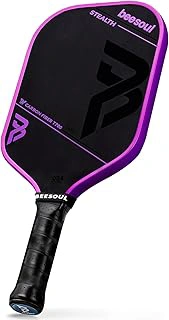
Beesoul T700 Thermoformed Carbon Fiber Pickleball Paddle, 16mm Honeycomb Core, USAPA Approved
The Beesoul T700 combines a 16mm honeycomb core with thermoformed carbon fiber construction to create a paddle designed for shock absorption. The thicker core provides more cushioning on impact compared to standard multiple or multiple options, which helps reduce vibration transfer to the arm and shoulder during extended play.
Thermoformed paddles use a one-piece molding process that bonds the face, core, and edge guard together under heat and pressure. This construction method reduces the gaps and glue joints found in traditional paddles, creating a more stable hitting surface that dampens vibration more consistently across the paddle face. The T700 carbon fiber face adds structural rigidity while maintaining a responsive feel, though players seeking maximum spin generation may find the smoother carbon surface less aggressive than textured alternatives.
At $56.99, this paddle sits in the budget-friendly range while delivering features typically found in higher-priced models. The combination of 16mm thickness and thermoformed build makes it particularly suitable for players who experience discomfort with thinner, lighter paddles or those recovering from shoulder or elbow strain. USAPA approval ensures tournament legality for competitive use.
The tradeoff for increased shock absorption is slightly reduced power compared to thinner, stiffer paddles. Players who prioritize ball speed and aggressive baseline drives may notice the softer feel, while those focused on control and joint comfort will appreciate the cushioned response. The paddle works best for players who value consistency and comfort over maximum spin or pop, making it a practical choice for recreational and intermediate players building endurance without compromising joint health.
Check current price and availability
- ✅ 16mm honeycomb core provides enhanced shock absorption
- ✅ Thermoformed construction eliminates gaps for consistent vibration damping
- ✅ Budget-friendly price point at $56.99
- ✅ USAPA approved for tournament play
- ⚠️ Softer feel may reduce power for aggressive hitters
- ⚠️ Carbon fiber face offers less spin texture than rougher alternatives
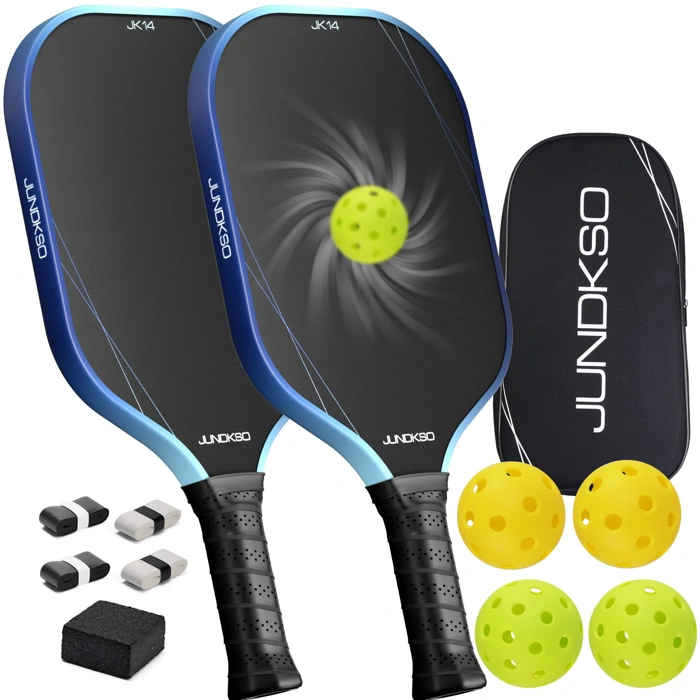
Pickleball Paddles Set of 2 - Graphite Carbon Fiber, USAPA Approved, 14mm Honeycomb Core
A 14mm honeycomb core sits between the thinner, firmer paddles and the thicker shock-absorbing options, making this graphite carbon fiber set a middle-ground choice for players who want responsiveness without harsh vibration. The 14mm thickness provides moderate damping - more feedback than a multiple paddle, but noticeably softer than an multiple or multiple face. If you have mild sensitivity in your shoulder or elbow but still want to feel the ball contact clearly, this core depth balances those priorities.
The graphite carbon fiber face works with the 14mm core to distribute impact across a wider surface area than a thinner paddle. You'll notice the difference most on off-center hits and volleys: the paddle absorbs enough shock to reduce sting, yet returns enough energy to keep your placement accurate. Players who found multiple paddles too muted often appreciate the livelier response here, while those stepping down from a thin paddle notice less jarring feedback on mishits.
USAPA approval confirms the paddle meets tournament weight, dimension, and surface standards, so you can use it in sanctioned play without concern. The set pricing at $36.99 delivers two paddles, making it practical for households, practice partners, or anyone introducing a friend to the game. Because this is a set, you're trading individual customization (grip size options, warranty depth) for upfront value and convenience.
This paddle works best if your shoulder or arm discomfort is occasional rather than persistent. The 14mm core won't eliminate vibration as fully as a multiple model, so if you experience sharp pain during play, a thicker option may serve you better. Conversely, if you prioritize shot precision and only need modest shock reduction, the 14mm depth keeps your hands connected to the ball while still softening the harshest impacts. Check current price and availability to compare the set cost against buying two paddles separately.
- ✅ 14mm core balances feedback and shock absorption
- ✅ Graphite carbon fiber face distributes impact across surface
- ✅ USAPA approved for tournament play
- ✅ Set of two paddles at $36.99 offers strong value
- ⚠️ Less vibration damping than 16mm paddles
- ⚠️ Limited grip size and customization options as a set
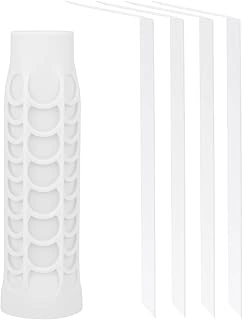
Silicone Pickleball Paddle Grip Cover, Non-Slip, Shock Absorbing, Anti-Twist
If you already own a paddle but want to reduce arm and shoulder vibration, the Silicone Pickleball Paddle Grip Cover offers an affordable upgrade at $8.99. This grip cover slips over your existing handle to add a layer of shock absorption between your hand and the paddle, helping to dampen the impact of each shot without replacing your entire setup.
The silicone construction provides cushioning that absorbs vibration as the ball strikes the paddle face, while the textured surface delivers a non-slip hold even during long rallies or sweaty hands. The anti-twist design keeps the cover secure on the handle, so it won't rotate mid-game and disrupt your grip consistency.
Installation is straightforward: the cover stretches to fit most standard pickleball paddle handles, adding minimal bulk while noticeably increasing comfort. Players who experience hand fatigue or arm soreness can feel the difference immediately, especially on mis-hits or off-center contact where vibration is typically strongest.
With a 4.5/5 rating, this grip cover works well for anyone looking to extend play time without the expense of a new paddle. It's particularly useful if your current paddle has the power and control you want but lacks vibration dampening in the handle. Check current price and availability to add shock absorption to the paddle you already use.
- ✅ Adds shock absorption to any existing paddle for $8.99
- ✅ Non-slip textured silicone surface maintains grip security
- ✅ Anti-twist design stays in place during play
- ✅ Easy installation with no tools required
- ✅ Reduces vibration on mis-hits and off-center contact
- ⚠️ Adds slight bulk to handle circumference
- ⚠️ May require stretching to fit thicker handle shapes
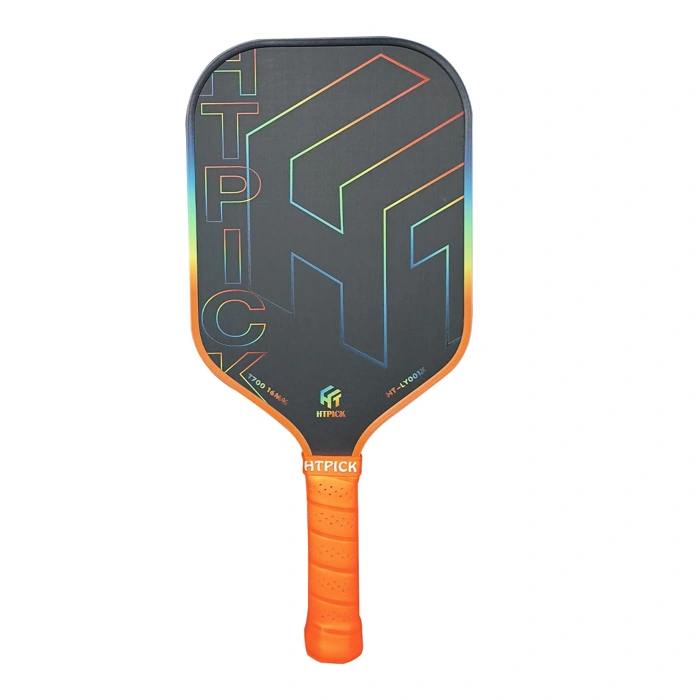
Carbon Fiber Pickleball Paddle, High Grit & Spin, Honeycomb Core, Elongated Shape
Players looking to reduce shoulder and arm shock without spending over multiple may find value in this elongated carbon fiber paddle priced at $29.99. The carbon fiber face and honeycomb polymer core provide a familiar construction type, though the manufacturer does not publish core thickness or specific damping measurements, so shock absorption falls in the moderate range compared to thicker-core models.
The elongated shape extends both the handle and the hitting surface, shifting weight distribution toward the head while offering more grip length. This design can reduce leverage stress on the shoulder when you maintain a relaxed grip and allow the longer handle to distribute torque across your forearm. Players with larger hands or those who prefer two-handed backhands often appreciate the extra handle length for added control and less wrist strain.
Because core and construction details remain less explicit, expect moderate vibration dampening rather than the plush feel of paddles with the listed size cores or foam-injected perimeters. The carbon face delivers a firm response and higher grit for spin, which some players prefer for touch shots, but firm surfaces transmit more impact energy to the arm than softer composite faces.
At this price point, the paddle serves budget-conscious players who want to experiment with elongated grip length and weight balance before investing in premium shock-absorbing designs. If you already know that shoulder comfort is a priority and you play multiple times per week, a thicker-core paddle with published damping specs will offer more reliable protection. For occasional play or as a trial paddle to understand how handle length affects your shoulder mechanics, this carbon fiber option provides a low-risk entry.
The 4.7 out of 5 rating suggests general satisfaction, though user reviews should be checked for feedback on durability and edge guard quality at this price tier. Honeycomb cores are proven for weight efficiency, but without foam fill or perimeter reinforcement, edge impacts can cause delamination over time.
- ✅ Budget-friendly at $29.99
- ✅ Elongated shape offers longer handle for reduced leverage stress
- ✅ Carbon fiber face with high grit for spin and ball control
- ✅ Honeycomb core keeps weight manageable
- ⚠️ Core thickness and damping specs not published; moderate shock absorption expected
- ⚠️ Firm carbon face transmits more impact than softer composite materials
- ⚠️ Construction details sparse; durability at this price point may vary
Who This Guide Is For
This guide is for recreational pickleball players who notice shoulder stiffness, elbow soreness, or forearm fatigue after a few games or practice sessions. If you've dealt with prior joint discomfort - whether from pickleball, tennis, or everyday strain - and want to reduce the shock transmitted up your arm with each shot, the advice here will help you make paddle choices that prioritize comfort and long-term playability.
You don't need to be recovering from an injury to benefit. Many active adults simply want to play more often without the next-day ache that comes from high-impact paddle designs. This guide focuses on fit, vibration dampening, and structural features that soften the load on your shoulder and elbow, rather than chasing maximum power or competitive edge.
If your goal is to enjoy longer sessions, protect your joints during frequent play, and choose equipment that works with your body rather than against it, you're in the right place. The recommendations are grounded in how core thickness, face material, weight distribution, and grip design affect the forces traveling through your arm - not on performance claims or testing we didn't conduct.
Why Paddle Construction Affects Shock Transfer
When the ball strikes your paddle, that impact creates vibration energy that must travel somewhere - either absorbed by the paddle's layers or transmitted directly into your wrist, elbow, and shoulder. Understanding this mechanical pathway helps you evaluate which construction features actually reduce shock and which are marketing noise.
The shock wave begins at the paddle face. Stiffer materials like raw carbon fiber reflect more energy back to the ball and your arm, while softer or textured faces flex slightly on contact, absorbing a small fraction of the impact. That initial damping is subtle but measurable in how the paddle feels on off-center hits.
The core is your primary shock absorber. Thicker cores - 16 mm versus the standard 14 mm or thin 13 mm - provide more material to dissipate vibration before it reaches the handle. Core density matters too: polymer honeycomb cores compress and recover during impact, converting some kinetic energy into heat rather than transmitting it as vibration. Thermoformed paddles, which fuse the face and core under heat and pressure, create a stiffer overall structure that can increase shock transfer compared to traditional layered construction with separate bonded components.
The handle and grip form the final damping zone. A cushioned grip wrap or foam-enhanced handle can filter high-frequency vibration that escaped the face and core, though this effect is smaller than core design. Grip circumference also plays a role: a handle that fits your hand properly distributes impact forces across more surface area, reducing localized pressure points that contribute to discomfort.
In practical terms, a 16 mm polymer core paddle with a softer face material and quality grip cushioning will dampen noticeably more shock than a 13 mm thermoformed carbon paddle with a thin grip. The tradeoff is that better shock absorption often means slightly less power and a softer feel at contact, so your tolerance for arm stress must be weighed against your performance priorities.
Core Thickness: The Primary Shock Absorber
Core thickness is the single most important factor in determining how much shock a paddle absorbs before it reaches your arm and shoulder. A thicker core - typically 16 mm - provides more material to compress on impact, which dampens vibration and reduces the jarring sensation that travels up the handle. In contrast, a 14 mm core offers less cushioning, which many players notice as a sharper, more direct feel with each hit.
The tradeoff is real: thicker cores sacrifice some responsiveness and pop. Players who prefer quick, crisp feedback at the net often choose 14 mm paddles, accepting the added vibration as part of the performance profile. But if you experience discomfort in your elbow, shoulder, or wrist after long sessions, the extra 2 mm of core material can make a measurable difference in comfort without drastically changing your game.
Many current paddle lines offer both 14 mm and 16 mm versions of the same model, allowing you to compare the same face material and shape with only the core thickness as the variable. This makes it easier to test whether the added shock absorption is worth the slight reduction in ball response for your playing style and comfort needs.
Understanding this core-thickness tradeoff helps you make a more informed choice when comparing paddles in the sections that follow, where specific models demonstrate how thickness pairs with other design features to manage arm shock.
Face Material and Thermoformed Construction
Face material influences how energy transfers from ball to handle, affecting both power and vibration. Carbon fiber faces are stiffer and deliver efficient energy transfer, which means more ball speed with less swing effort. That stiffness, however, can transmit more vibration up the handle unless the paddle pairs a thick, shock-absorbing core with the face. Graphite faces offer slightly more flex on impact, which can soften the feel and reduce high-frequency vibration, though the difference is often subtle compared to core thickness.
Thermoformed construction is a manufacturing method that bonds the face and core into a single, seamless unit rather than gluing them together. This process eliminates air gaps and weak spots where vibration can resonate unevenly, creating a more consistent feel across the paddle surface. Thermoformed paddles tend to distribute impact energy more evenly, which can reduce jarring feedback on off-center hits. The Beesoul T700 uses thermoformed carbon fiber construction with a thick polypropylene core, combining the efficiency of carbon with integrated shock absorption. If you prioritize a smooth, controlled feel and want to minimize vibration hot spots, thermoformed designs offer a structural advantage over traditional glued paddles.
When choosing face material, consider your swing style and existing comfort. Players with fast, aggressive swings may feel more vibration with stiff carbon faces unless core thickness compensates. Graphite or thermoformed carbon paired with a 16 mm or thicker core provides a balanced approach: enough stiffness for control, enough damping to protect joints during extended play.
Grip Design and Aftermarket Cushioning
The grip is the final barrier between paddle vibration and your hand, wrist, and forearm. A well-cushioned grip absorbs residual shock that the paddle core and face cannot eliminate, reducing strain on the tendons and soft tissue in your arm. Standard factory grips vary in thickness and padding, but many players benefit from aftermarket upgrades that add cushioning without significantly increasing handle diameter.
Padded replacement grips typically add 1 - 2 mm of cushioning material, often made from foam or gel-infused synthetic layers. These grips wrap directly over the existing handle and provide a softer contact surface. Silicone grip covers slide over the factory grip and add shock-absorbing material while improving traction and moisture control. Both options are low-cost modifications that can noticeably reduce the intensity of vibration transmitted to the hand, especially during off-center hits or extended play sessions.
When evaluating grip upgrades, consider the tradeoff between cushioning and feel. Thicker, softer grips absorb more shock but may reduce tactile feedback and paddle control for players who rely on subtle wrist adjustments. A moderate cushioning layer usually strikes the best balance, providing comfort without sacrificing responsiveness. If you experience soreness in the forearm or tendons near the elbow after play, adding grip cushioning is a practical first step before changing paddles entirely.
Common Mistakes to Avoid When Choosing for Shock Reduction
Many players choose a paddle for power or spin without considering how design choices affect shock transmission. Prioritizing raw performance specs over damping features often leads to discomfort during extended play and can increase stress on the shoulder and elbow over time.
One frequent mistake is ignoring core thickness when comparing paddles. A paddle advertised for power may use a thin, dense core that transmits more vibration than a thicker, softer alternative. Always verify the actual core thickness in millimeters or inches rather than relying on marketing terms like "control" or "power."
Another common error is selecting an ultra-light paddle to reduce strain. While lighter paddles require less effort to hold, they often encourage faster swing speeds, which can increase impact shock when the ball strikes the face. A slightly heavier paddle with better internal damping may reduce vibration more effectively than a featherweight model.
Players also frequently overlook grip cushioning and diameter. A thin, hard grip transmits more shock directly to the hand and forearm, while a cushioned or properly sized grip helps absorb vibration before it reaches the joint. Testing grip feel is as important as evaluating paddle weight and balance.
Finally, assuming all carbon fiber paddles feel the same ignores significant differences in layup, resin type, and core pairing. Two carbon-faced paddles can produce vastly different levels of shock depending on construction method and internal materials. Always check detailed specs and, when possible, compare paddles with similar face materials but different core designs to understand how construction affects comfort.
Final Takeaway: Match Core, Face, and Grip to Your Comfort Needs
Choosing a pickleball paddle to reduce shoulder and arm shock comes down to matching three core attributes - core thickness, face material, and grip design - to your specific comfort needs and playing style. If shock absorption is your primary concern, start with a 16 mm polymer core, which provides the deepest cushioning on impact and disperses vibration more effectively than thinner alternatives. Players who experience shoulder fatigue or discomfort during longer sessions benefit most from this added thickness, even if it means adjusting to slightly less responsive power.
Thermoformed construction offers consistent damping across the paddle face because the core and surface are bonded under heat and pressure, eliminating glue lines and dead spots that can create uneven shock transmission. This construction method is particularly valuable if you're sensitive to off-center hits or play with varied shot placement. For face material, fiberglass delivers softer feedback and better vibration absorption than carbon fiber or graphite, making it a practical choice when joint comfort outweighs the need for maximum spin or stiffness.
Grip comfort deserves equal attention: a cushioned overgrip or padded replacement grip can reduce the shock that travels into your wrist and forearm, especially on mishits or defensive blocks. Verify that the paddle's weight distribution suits your shoulder strength - head-heavy paddles demand more effort to control and can accelerate fatigue, while balanced or handle-weighted designs allow smoother swings with less strain. Before committing to a purchase, test the paddle's grip circumference and overall balance in your hand; a paddle that feels neutral and requires minimal grip pressure will support longer, more comfortable play.
Prioritize long-term playability over short-term performance gains. A paddle that minimizes shock today will help you stay on the court consistently, protect your joints as your play volume increases, and reduce the risk of overuse discomfort that can sideline you for weeks. Make your selection based on real attributes - core depth, construction method, face softness, and grip feel - and you'll build a setup that supports both your game and your body.
Key Specs That Reduce Vibration and Shock
- Core thickness: 16mm cores absorb more shock than 14mm or thinner
- Face material: Carbon fiber and graphite offer different flex and damping characteristics
- Thermoformed construction: Fuses face and core for consistent vibration distribution
- Honeycomb core density: Denser cells reduce shock but may add weight
- Grip cushioning: Silicone or padded grips add a final damping layer
- Weight distribution: Head-light or balanced paddles reduce leverage stress on the shoulder