We may earn a commission when you buy through links on this page, at no extra cost to you. How this works.
Eye safety on the pickleball court becomes more important as we age. Ball speeds can reach 40 mph or more, and reaction time naturally slows with age, which means less time to turn away from an errant shot. A direct hit to the eye from a pickleball can cause serious injury, including retinal damage, corneal abrasion, or bleeding inside the eye.
For senior players, the challenge is finding safety glasses that protect without compromising vision or comfort. Many of us already wear prescription glasses or bifocals, so adding a layer of eye protection means dealing with fit, fogging, peripheral vision, and weight on the nose and ears. The wrong pair can slide during play, fog up between points, or press uncomfortably against your regular glasses.
Choosing the right safety glasses depends on several factors unique to your situation. If you wear bifocals or progressives, you'll need a design that fits over your frames or integrates your prescription directly. Face shape matters - wider faces need broader temples and adjustable nose bridges, while narrower faces benefit from smaller, more contoured frames. How often you play also influences your decision: casual recreational players may prioritize cost and simplicity, while those on the court three or four times a week will benefit from investing in anti-fog coatings, better ventilation, and more durable materials.
This guide walks through the key features that matter most to senior players - impact resistance standards, compatibility with prescription eyewear, fog prevention, fit adjustments, and lens tinting - so you can make a confident choice based on your vision needs and playing style.
Who This Guide Is For
This guide is written for senior pickleball players who step onto the court two to four times each week and want eye protection that works with their vision needs and play style. If you wear bifocals or progressive lenses, need glasses that accommodate your prescription eyewear, or simply want a pair that won't slide, fog, or pinch during a 60- to 90-minute session, this resource is for you.
We focus on compatibility and safety - not performance enhancement. The goal is to help you find glasses that stay in place during quick lateral movements, provide a wide field of view so you can track the ball at the net, and meet recognized impact standards without creating new discomfort. Many seniors find that standard sports eyewear sits too tight on the temples, presses against hearing aids, or distorts vision at the edges when worn over prescription glasses.
This guide addresses those practical fit and comfort challenges. Whether you're concerned about a stray ball hitting your face during a fast kitchen exchange or you've noticed glare from indoor lighting affecting your reaction time, the sections ahead will walk you through lens materials, frame geometry, ventilation features, and foam padding - all the attributes that matter when you're choosing eyewear to wear consistently, game after game.
If you don't wear prescription glasses and simply want affordable, comfortable protection with a secure fit and minimal fogging, you'll find clear comparison points here as well. The advice is grounded in real product attributes and the tradeoffs that come with different designs, weights, and coverage styles.
How to Choose Safety Glasses That Fit Your Face and Vision Needs
Finding safety glasses that work with your vision needs and face shape requires attention to three key measurements: temple length, nose bridge width, and lens-to-eye distance. Temple length - the arm that extends from the lens to your ear - typically ranges from 120 to 150 millimeters; too short and the glasses won't reach your ears securely, too long and they'll slide forward. Nose bridge width determines whether the frame sits comfortably without pinching or leaving gaps; most frames offer adjustable nose pads or come in narrow (14 - 16 mm), standard (16 - 18 mm), or wide (18 - 22 mm) bridge options. Lens-to-eye distance affects both peripheral vision and ventilation; a distance of 10 - 15 millimeters usually balances coverage with airflow to reduce fogging.
If you wear prescription glasses, you'll choose between over-the-glass (OTG) designs and frames that accept prescription inserts. OTG models feature deeper lens cavities and longer temples to accommodate your everyday eyewear underneath, making them convenient because you don't need a separate prescription pair. The tradeoff is added bulk: OTG frames sit farther from your face, which can reduce peripheral protection and may feel heavier during extended play. Prescription insert systems use a clip or magnetic carrier that sits behind the protective lens, keeping the overall profile slimmer and the optics closer to your eyes. This improves field of view and stability, but you'll need to purchase inserts separately and swap them if your prescription changes.
Wraparound styles curve around your temples to shield against balls coming from the side, offering the most comprehensive coverage. However, the curved temples can press against the sides of your head or interfere with the arms of bifocals or progressive lenses worn underneath. If you feel pressure points after ten minutes of wear, the frame is too narrow or the temple curve is too aggressive. Lighter frames - typically those under 30 grams - reduce fatigue on your nose and ears, especially during back-to-back games. The tradeoff is that ultra-light designs sometimes lack the structural rigidity to stay in place during quick lateral movements or overhead shots; a frame that shifts mid-point forces you to adjust between rallies, breaking your focus.
When evaluating fit, put the glasses on and simulate pickleball movements: rotate your head quickly left and right, tilt your chin down as if watching a dink, then look up as though tracking a lob. The frame should stay centered on your nose without sliding down or lifting away from your cheeks. Check that the temples don't dig into the area behind your ears and that you can blink freely without your lashes brushing the inside of the lens. If you wear hearing aids, confirm that the temple arms don't press against the devices or dislodge them when you remove the glasses. For players with wider or narrower faces, look for models that publish frame width - usually 130 to 145 millimeters measured hinge to hinge - so you can compare against your current eyewear or sunglasses that fit well.
Common Mistakes to Avoid When Selecting Safety Glasses
Even experienced players can overlook key details when shopping for safety glasses. Avoiding these common mistakes will help you find eyewear that truly protects your vision and stays comfortable through long matches.
Choosing style over impact rating. Fashion-forward designs may look appealing, but if the lenses and frames lack ANSI Z87+ certification, they won't withstand the force of a pickleball traveling at speed. Always verify the rating marking on the frame or lens before making a purchase, regardless of how attractive the pair appears.
Ignoring anti-fog coatings in humid climates. If you play outdoors in the Southeast or in indoor courts without strong ventilation, standard polycarbonate lenses will fog quickly. Look for permanent anti-fog treatments or dual-pane designs rather than assuming a simple wipe-on spray will solve the problem long-term.
Buying frames that press on hearing aids or interfere with hat brims. Thick, rigid temples can create painful pressure points behind the ear where hearing aids sit. Similarly, wraparound frames with tall top edges may collide with the brim of a visor or cap. Test the fit with your everyday accessories in place - put on your hearing aids and your favorite hat, then assess comfort and stability.
Assuming all over-the-glasses designs fit all prescription frames. OTG safety glasses vary widely in interior dimensions. A pair that accommodates narrow reading glasses may pinch wider progressive frames or sit too far from your face if your prescription lenses are petite. Measure the width and height of your prescription eyewear, then compare those dimensions to the published interior clearance of any OTG model you consider.
Neglecting to test fit during head movement. Standing still in front of a mirror tells you little about on-court performance. Tilt your head down as if watching a low dink, then look up quickly to track a lob. Shake your head side to side to simulate rapid directional changes. The glasses should stay centered on your nose without sliding, bouncing, or requiring constant adjustment. If they shift during these simple movements, they will be a distraction during play.
Simple at-home or in-store tests. Bend forward at the waist and hold the position for ten seconds - glasses that slip down your nose will do the same when you bend to retrieve a ball. Put on the frames, close your eyes, and gently press the bridge and temples to confirm there are no sharp edges or uncomfortable seams. Finally, wear the glasses for five minutes while reading or walking around the store; discomfort that appears within that window will only worsen during a two-hour session on the court.
How to Test Fit and Adjust Your Safety Glasses at Home
Achieving the right fit at home ensures your safety glasses stay comfortable and secure through an entire pickleball session. Start by putting on your glasses and checking the initial contact points: the bridge of your nose, the tops of your ears, and the sides of your head. If you feel immediate pinching or gaps, adjustments are needed.
Most safety glasses feature flexible temple arms that can be gently bent to increase or decrease tension. Hold the frame firmly in one hand and use your other hand to apply slow, even pressure to curve the temple inward for a tighter fit or outward to relieve pressure. Make small adjustments - about one to two millimeters at a time - then test the fit again. Avoid forcing metal or rigid plastic temples, as they may crack.
If your frames include adjustable nose pads, use your thumb and forefinger to gently squeeze the pads closer together to lift the glasses higher on your nose, or spread them apart to lower the frames. This adjustment is especially useful when wearing bifocals or progressive lenses, allowing you to position the safety glasses so your reading segment aligns with the ball at net height.
After making adjustments, wear the glasses for at least ten minutes while sitting and standing. Pay attention to any pressure points on your temples, behind your ears, or across the bridge of your nose. Hot spots that persist beyond a few minutes will become uncomfortable during a 60- to 90-minute match. Walk around, tilt your head forward and back, and simulate reaching motions to ensure the frames don't slide.
Perform the head shake test: look straight ahead and shake your head side to side, then up and down, at a moderate pace. Your glasses should stay in place without bouncing or shifting. If they slide down your nose or lift away from your face, increase temple tension or adjust the nose pads. This test mimics the head movement during quick volleys and overhead shots.
Some safety glasses ship with small adjustment tools, such as a plastic screwdriver for tightening hinge screws or a temple-tip tool for bending wire cores. Use these tools as directed in the manufacturer's instructions, and avoid overtightening screws, which can strip threads or crack the frame. If your glasses lack adjustable components or if you're uncomfortable making modifications, consider visiting an optical shop. Many opticians will adjust safety frames for a nominal fee or at no charge, and they can also verify that your bifocal or progressive prescription aligns correctly with the frame position.
Remember that fit may change slightly after the first few wears as materials settle and conform to your face. Re-check pressure points and stability after your first two or three times on the court, and make minor tweaks as needed. A well-adjusted pair should feel secure but not tight, with even weight distribution and no slipping during play.
Final Takeaway: Match Protection to Your Playing Frequency and Comfort Priorities
Choosing the right pickleball safety glasses comes down to matching verified protection with your real-world playing habits and comfort priorities. If you play casually - once or twice a week on indoor courts - a budget-friendly pair with ANSI Z87+ certification will deliver the impact protection you need without overcomplicating the decision. Look for basic anti-scratch coatings and a secure but lightweight fit that won't feel cumbersome during short sessions.
For frequent players who spend multiple hours per week on outdoor courts, investing in advanced anti-fog performance and adjustable temple or nose features pays off quickly. Persistent fogging and pressure points turn into distractions that affect both safety and enjoyment, so prioritize vented frames, hydrophobic coatings, and customizable fit elements that adapt to your face shape and activity level.
If you wear bifocals or progressive lenses, confirm that any safety frame explicitly states over-the-glasses (OTG) compatibility, with verified clearance dimensions and non-slip grip features to prevent shifting. Alternatively, explore goggle-style frames that accept prescription inserts, which eliminate the dual-layer bulk and often deliver better peripheral coverage and stability during quick lateral movements.
The right choice balances verified impact standards with the comfort constraints unique to senior players - temple pressure around hearing aids, adequate ventilation to manage perspiration, and lens clarity that works with your existing vision correction. No single pair solves every scenario, so revisit the selection checklist as your playing frequency increases, your vision needs change, or you transition between indoor and outdoor play. Prioritize fit and verified protection over marketing claims, and remember that comfort directly influences how consistently you'll wear your glasses on the court.
What Matters Most When Choosing Pickleball Safety Glasses
- ANSI Z87+ impact rating for protection against fast-moving pickleballs
- Anti-fog coating to maintain visibility during warm-weather or indoor play
- Adjustable temple arms and nose bridge for secure fit on different face shapes
- Compatibility with prescription glasses or over-the-glass (OTG) design
- Lightweight frame material to reduce pressure during extended wear
- Wide lens coverage for peripheral vision without blind spots
Your Pre-Purchase Safety Glasses Checklist
- Confirmed ANSI Z87+ impact rating on product label or specifications
- Anti-fog coating verified in product description or customer reviews
- Measured your current eyeglass width and temple length if choosing OTG design
- Checked return policy in case fit is incompatible with your face shape
- Identified your primary play environment (indoor, outdoor, humid) to match lens treatment
- Confirmed lens is clear or appropriately tinted for your typical court lighting
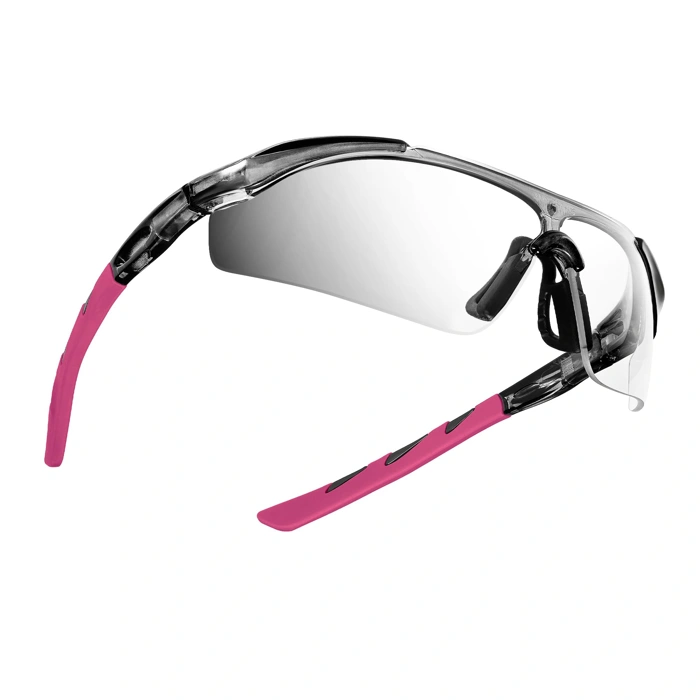
AMANEEST Pickleball Safety Glasses, Clear Lens, Z87+, UV Protection, Anti-Fog
The AMANEEST Pickleball Safety Glasses offer Z87+ impact certification, clear lenses with UV protection, and anti-fog treatment at $9.99 - making them an accessible entry point for seniors exploring safety eyewear or building a backup pair.
The clear lens provides full visibility in indoor and low-light conditions without tint, while the anti-fog treatment helps maintain sightlines during warm-up or extended play. The Z87+ rating meets ANSI impact standards for basic recreational protection. UV protection adds outdoor coverage, though the clear lens won't reduce glare the way tinted or polarized options do.
Fit and adjustability are straightforward: the lightweight frame sits comfortably for shorter sessions, and the basic temple design accommodates typical senior face shapes without deep customization. If you wear bifocals or progressive lenses, test the frame depth and nose bridge clearance - some users with larger prescription frames may find limited space, while others appreciate the minimal bulk.
At this price point, the AMANEEST glasses trade advanced adjustability and premium materials for budget-friendly access to certified eye protection. They're well-suited for players new to safety eyewear, those wanting a spare pair in the gear bag, or anyone prioritizing cost over extensive fit tuning. The 4.4/5 rating reflects solid value for occasional or introductory use.
- ✅ Z87+ impact certification at $9.99
- ✅ Clear lens with anti-fog treatment and UV protection
- ✅ Lightweight frame for basic comfort
- ✅ Affordable entry or backup option
- ⚠️ Basic adjustability limits custom fit
- ⚠️ May not accommodate larger prescription frames
- ⚠️ Clear lens offers no glare reduction
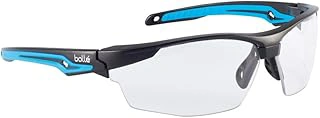
Bolle Safety 40301 Tryon Platinum Safety Glasses
The Bolle Safety 40301 Tryon Platinum Safety Glasses are a mid-tier option priced at $18.50, offering features drawn from professional safety eyewear design. With a 4.5-star rating, these glasses stand out for their Platinum anti-fog coating - a meaningful upgrade for seniors who play frequently in humid conditions or transition from cooler indoor spaces to warm outdoor courts.
The Tryon's adjustable temples allow you to fine-tune the fit behind your ears, which helps balance the glasses on different face shapes and improves compatibility with bifocal frames. The lenses provide wider coverage than many budget models, reducing gaps at the sides where debris can enter. For seniors who wear prescription glasses underneath, the temple adjustments and generous lens width make fit easier to manage without pinching or excessive pressure on the nose.
Optical clarity is consistent across the lens surface, and the Platinum coating resists fogging more reliably than untreated polycarbonate. While the AMANEEST model reviewed earlier offers basic protection at a lower price, the Tryon delivers better fog control and a more customizable fit - particularly useful if you play multiple times per week or need glasses that stay clear during longer matches.
Durability aligns with the professional safety category: the frame feels solid, the hinges are smooth, and the lenses meet impact standards without visible distortion. The Tryon strikes a practical balance between cost and performance for seniors who prioritize reliable vision and comfort over multiple sessions.
- ✅ Platinum anti-fog coating resists fogging in humid conditions
- ✅ Adjustable temples accommodate different face shapes and bifocal frames
- ✅ Wider lens coverage reduces side gaps
- ✅ Clear optics without visible distortion
- ✅ Solid frame and smooth hinges for durability
- ⚠️ Mid-tier price may be higher than budget-conscious seniors need
- ⚠️ Adjustable temples require initial fitting time
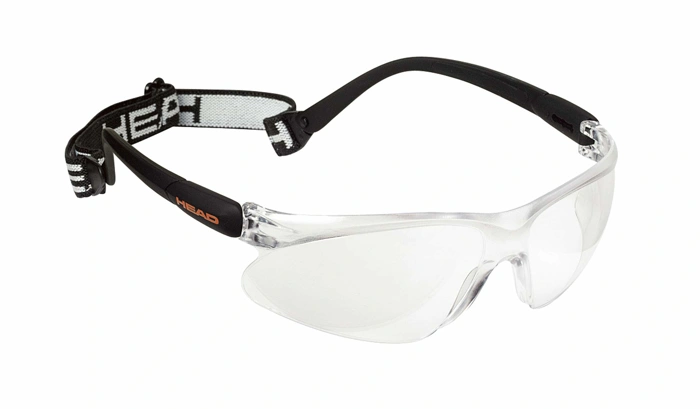
HEAD Impulse Racquetball & Squash Goggles, Anti-Fog, Scratch-Resistant, Adjustable Strap
The HEAD Impulse Racquetball & Squash Goggles offer full-coverage eye protection at $12.67, featuring an anti-fog, scratch-resistant lens and an adjustable elastic strap. Originally designed for racquetball and squash, this goggle-style option delivers comprehensive side and peripheral coverage that some seniors prefer when they want maximum protection during fast-paced pickleball play.
The adjustable strap wraps around the entire head, providing a stable, secure fit that stays in place during aggressive movement, quick direction changes, and low volleys. This strap-based design distributes pressure evenly and won't slide down your nose the way temple-arm glasses sometimes can. The anti-fog coating helps maintain visibility during warm-weather play, while the scratch-resistant lens stands up to regular handling and storage in gear bags.
The primary tradeoff is breathability and comfort. Because the goggle seals more closely against the face than open-frame glasses, some wearers find the fit warmer and less ventilated, especially in humid conditions or during extended matches. Seniors who wear hearing aids may notice the strap creates pressure points behind the ears, and those who prefer wearing hats or visors will need to adjust the strap placement carefully to avoid interference.
This goggle style works well for players concerned about side impacts or peripheral protection - situations where a ball might approach from an angle that typical glasses don't fully shield. It's also a practical choice for seniors who find temple-arm glasses uncomfortable or unstable, or who want a design that won't interfere with bifocals or progressive lenses underneath. However, if you prioritize lightweight comfort, maximum airflow, or seamless integration with other headwear, an open-frame eyewear design may suit your needs better.
At this price point, the HEAD Impulse goggles represent an accessible entry into full-coverage eye protection, though the fit and feel will depend heavily on your face shape, other gear, and personal preference for goggle versus glasses styling.
- ✅ Full side and peripheral coverage for comprehensive eye protection
- ✅ Adjustable strap provides stable, secure fit during movement
- ✅ Anti-fog and scratch-resistant lens for durability and clarity
- ✅ Budget-friendly at $12.67
- ⚠️ Less breathable than open-frame glasses; can feel warm in humid conditions
- ⚠️ Strap may create pressure points for hearing aid wearers
- ⚠️ Requires careful adjustment when wearing hats or visors
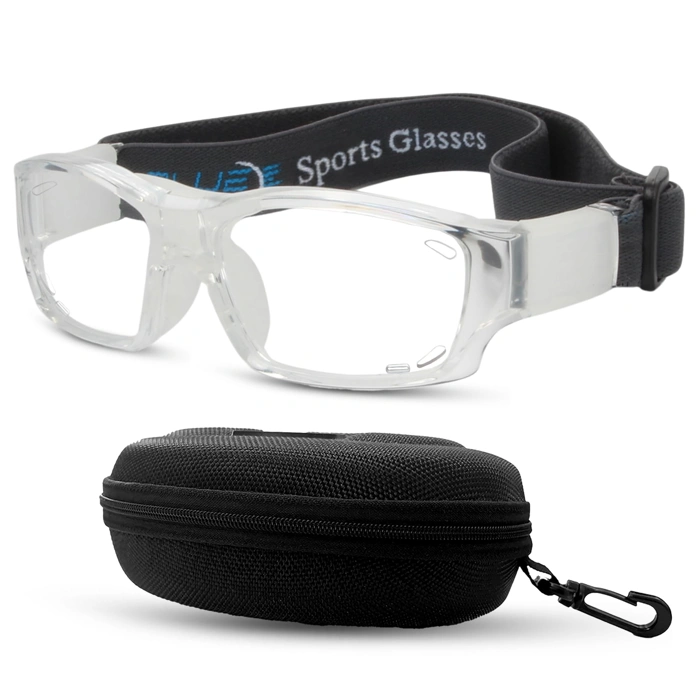
BLUE CUT Sports Protection Goggles and Safety Glasses
The BLUE CUT Sports Protection Goggles and Safety Glasses are priced at $24.97 and carry a 4.4-star rating, positioning them as a premium choice for seniors who play pickleball frequently and need reliable eye protection. At this price point, the goggles represent a step up from budget alternatives, making them worth considering if you're on the court four or more times per week or if you've found that lower-cost eyewear doesn't meet your vision or comfort needs.
The higher cost typically reflects better optical clarity and more refined fit adjustments, which matter when you're tracking a fast-moving ball or playing in varied lighting conditions. For seniors with vision sensitivities - whether from progressive lenses, light sensitivity, or the need for sharp peripheral vision - investing in quality sports eyewear can make a noticeable difference in both performance and safety.
The construction is designed for durability, an important consideration if you play regularly and need eyewear that will hold up to repeated use, storage in a gear bag, and the occasional bump or drop. While the product details available are limited, the strong user rating suggests that players find the balance of protection, fit, and clarity satisfactory over time.
This option makes the most sense for committed players who view protective eyewear as a long-term investment rather than an occasional accessory. If you play less than twice a week or are still experimenting with whether sports goggles work for you, a lower-priced model may be a more practical starting point. But for those who have decided that eye protection is non-negotiable and want a pair that will perform consistently across many matches, the BLUE CUT goggles offer a solid middle ground between budget and high-end specialty eyewear.
Consider your play frequency, your specific vision requirements, and how much value you place on optical quality and durability when deciding whether this premium option fits your needs.
- ✅ Higher optical clarity for tracking the ball
- ✅ Refined fit adjustments for comfort during extended play
- ✅ Durable construction suited to frequent use
- ✅ Strong 4.4-star rating from users
- ⚠️ Higher price point at $24.97 may not suit occasional players
- ⚠️ Limited product detail available for full feature comparison