We may earn a commission when you buy through links on this page, at no extra cost to you. How this works.
Pickleball's appeal lies in its quick rallies, accessible court size, and social energy - but those same qualities also expose knees and shoulders to sudden stress. Unlike walking or swimming, pickleball demands rapid lateral movement, overhead reaches, and rotational shots that can strain cold joints and muscles. For senior players, this combination makes the right warm-up routine essential, not optional.
Many players skip or rush their warm-up, assuming a few arm circles will suffice. The result is predictable: knee discomfort after aggressive side-to-side play, shoulder stiffness following overhead smashes, or worse - injuries that force time off the court. The good news is that joint strain in pickleball is often preventable. A targeted warm-up that prepares your body for the sport's specific movement patterns can significantly reduce the risk of injury while improving comfort and performance during play.
This guide walks you through a practical, step-by-step warm-up routine designed specifically for senior pickleball players. You'll learn which movements to prioritize, how long to spend on each phase, and how to address the unique demands pickleball places on your knees and shoulders. Whether you're concerned about staying in the game long-term or simply want to feel more confident and comfortable on the court, proper movement preparation is the foundational habit that makes sustainable play possible.
Who This Warm-Up Routine Is For
This warm-up routine is designed for recreational pickleball players aged 60 and older who step onto the court three to four times per week and notice stiffness, soreness, or discomfort in their knees or shoulders after play. If you find yourself reaching for ice packs after a match or feeling lingering tightness the next morning, this protocol addresses the underlying reasons why a quick stretch before serve isn't enough.
As we age, the cartilage that cushions knee and shoulder joints becomes thinner and less elastic. Joint fluid - the body's natural lubricant - circulates more slowly at rest, which means cold joints need more time and deliberate movement to reach a ready state. Connective tissue like tendons and ligaments also loses elasticity and requires a longer, gentler ramp-up to handle the quick lateral cuts, overhead reaches, and repetitive swings that pickleball demands.
Standard five-minute stretch routines overlook these physiological realities. Muscles may feel loose, but the deeper structures - cartilage, synovial fluid, and connective tissue - remain unprepared. The result is increased friction inside the joint, slower reaction stability, and a higher likelihood of strain when you lunge for a low ball or reach for an overhead smash.
This routine is not intended for players recovering from acute injury, those with significant joint instability, or individuals experiencing sharp pain during movement. If you have been advised by a healthcare provider to modify activity due to a specific joint condition, consult them before beginning any new warm-up protocol. This guide assumes you are medically cleared for recreational play and looking to reduce the everyday wear that comes with regular pickleball activity.
The movements and timing outlined in the sections that follow account for slower circulation, reduced tissue elasticity, and the need to activate stabilizing muscles around the knee and shoulder before high-intensity play. The goal is to prepare your body in a way that matches how it actually functions at this stage of life, not how it did twenty years ago.
What Matters Most in a Senior-Safe Pickleball Warm-Up
A senior-safe pickleball warm-up rests on three core priorities that directly address the vulnerability of aging knees and shoulders. Understanding these fundamentals helps you build a routine that supports joint health rather than simply going through the motions.
The first priority is increasing synovial fluid circulation within the knee and shoulder joints. Synovial fluid acts as both lubricant and shock absorber, but it thickens when joints are at rest. Gentle, repeated movement through comfortable ranges encourages this fluid to spread across cartilage surfaces, reducing friction during play. Think of it as priming a pump - each controlled rotation or bend helps the joint prepare for the demands ahead.
The second priority is activating the stabilizer muscles that surround and protect vulnerable joints. In the shoulder, the rotator cuff muscles need to engage before you swing a paddle overhead. Around the knee, the vastus medialis and supporting muscles help control lateral movement and deceleration. When these smaller muscle groups wake up before larger power muscles take over, the joint itself experiences less shear force and wobble during quick direction changes.
The third priority is gradually raising core temperature without causing fatigue. Warmer muscle tissue is more elastic and less prone to micro-tears, but seniors often have a narrower margin between under-prepared and over-tired. A proper warm-up elevates heart rate and body temperature just enough to improve tissue pliability, stopping well short of breathlessness or leg heaviness that would compromise performance once play begins.
Dynamic movement consistently outperforms static stretching for seniors before pickleball. Static stretches - holding a single position for 20 or 30 seconds - can temporarily reduce muscle power output and do little to stimulate synovial fluid or activate stabilizers. Dynamic movements, by contrast, rehearse the patterns your body will use on the court: controlled leg swings mimic the stride of a split step, arm circles prepare shoulders for serves and dinks, and walking lunges activate the entire kinetic chain from ankle to hip.
Proper sequencing matters because it prevents the micro-strain that accumulates into chronic pain. Starting with the largest, least vulnerable joints - hips and upper back - and progressing toward knees and shoulders allows blood flow to build gradually. Jumping straight into deep lunges or overhead reaches on cold joints can create tiny tears in connective tissue that feel fine in the moment but announce themselves hours later or after repeated sessions. A logical sequence respects the body's need to adapt in stages, protecting the structures that seniors rely on for long-term play.
The 12-Minute Joint-Safe Warm-Up Sequence
This 12-minute joint-safe warm-up sequence is designed specifically for senior pickleball players who want to prepare their knees and shoulders before stepping onto the court. The protocol is divided into three progressive phases that build circulation, increase joint fluid movement, and activate the muscles that stabilize your most vulnerable areas.
Phase 1: General Mobility (Minutes 1 - 4)
Begin with movements that gently wake up the entire body and encourage blood flow to the lower body and spine. These exercises set the foundation for the targeted work that follows.
Ankle Circles: Stand near the net or fence for balance support. Lift one foot slightly off the ground and rotate your ankle slowly in clockwise circles for 10 repetitions, then counterclockwise for 10 repetitions. Switch feet. Breathe naturally throughout. This movement lubricates the ankle joint and prepares the lower leg for lateral court movements.
Hip Circles: Place your hands on your hips and stand with feet shoulder-width apart. Slowly rotate your hips in a circular motion, as if tracing the edge of a large hula hoop. Complete 8 circles in one direction, then 8 in the opposite direction. Keep your knees soft and avoid locking them. Coordinate your breathing with the movement - inhale for half the circle, exhale for the other half.
Torso Twists: Stand tall with feet hip-width apart and arms extended at shoulder height. Gently rotate your torso to the left, allowing your arms to swing naturally, then rotate to the right. Complete 12 twists on each side at a relaxed tempo - about one twist per second. This warms the muscles around the spine and prepares your core for rotational paddle movements.
Phase 2: Targeted Knee Movements (Minutes 5 - 8)
These exercises activate the muscles that support and stabilize the knee joint. Move slowly and focus on control rather than speed or depth.
Controlled Mini Lunges: Stand with feet together. Step your right foot forward into a small lunge - only descend 4 to 6 inches, keeping your front knee aligned over your ankle and behind your toes. Push through your right heel to return to standing. Complete 8 repetitions on the right leg, then switch to the left. Inhale as you step forward, exhale as you return. These partial lunges build strength in the quadriceps and glutes without stressing the knee.
Lateral Steps: Stand with feet together. Step your right foot directly to the side about 12 inches, then bring your left foot to meet it. Repeat this side-stepping motion 10 times to the right, then 10 times to the left. Keep your knees slightly bent and your weight centered over your feet. This movement mimics the lateral shuffling common in pickleball and prepares the hip stabilizers and inner thigh muscles.
Heel Raises: Stand with feet hip-width apart, using the fence or a paddle for light balance support if needed. Slowly rise onto the balls of your feet, hold for two seconds, then lower back down with control. Complete 12 repetitions. This exercise activates the calf muscles and reinforces ankle stability, which helps absorb impact during play.
Phase 3: Shoulder-Specific Movements (Minutes 9 - 12)
The final phase focuses on the shoulder girdle, rotator cuff, and upper back - areas that drive paddle control and absorb repetitive overhead strain.
Shoulder Rolls: Stand or sit comfortably. Roll both shoulders backward in large, slow circles for 10 repetitions, then forward for 10 repetitions. Keep your neck relaxed and breathe steadily. This movement increases circulation to the shoulder capsule and loosens the muscles around the shoulder blades.
Arm Circles: Extend both arms out to the sides at shoulder height. Make small forward circles (about the size of a dinner plate) for 15 repetitions, then reverse direction for 15 repetitions. Gradually increase the size of the circles during the final 5 repetitions in each direction. Focus on smooth, controlled motion and avoid shrugging your shoulders toward your ears.
Simulated Paddle Swings: Hold an imaginary paddle or a light object in your dominant hand. Perform 10 slow forehand swings, focusing on rotating from your core and letting your shoulder move naturally through its full range. Then complete 10 slow backhand swings. Keep the motion controlled and deliberate - this is not about speed, but about rehearsing the movement pattern your shoulder will repeat during play. Exhale during each swing.
Cross-Body Arm Pulls: Bring your right arm across your chest at shoulder height. Use your left hand to gently pull the right elbow closer to your body until you feel a mild stretch in the back of your right shoulder. Hold for 15 seconds while breathing deeply, then switch arms. Repeat once on each side. This stretch targets the posterior shoulder and upper back, areas that tighten during repetitive paddle strokes.
Complete all three phases in sequence before you begin play. The entire routine should feel comfortable and leave you warm, mobile, and ready - not fatigued. If any movement causes sharp pain or significant discomfort, reduce the range of motion or skip that exercise and consult a movement professional.
Pre-Game Warm-Up Checklist
- Arrive 15 minutes before play to allow full warm-up time
- Wear layers you can remove as core temperature rises
- Complete all three phases in sequence - do not skip joint-specific movements
- Keep movements controlled and pain-free; reduce range if discomfort appears
- Hydrate with 8-12 oz water during warm-up
- Perform 3-5 practice volleys before competitive play begins
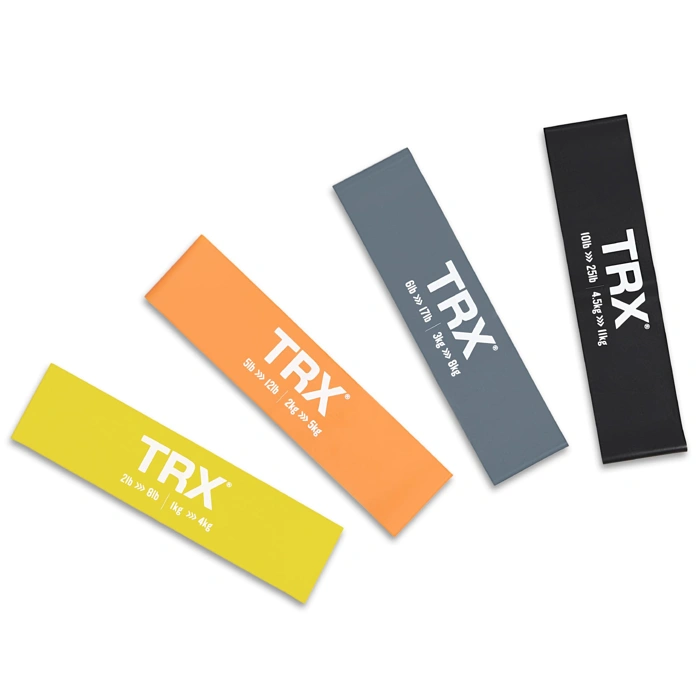
TRX Training Exercise Bands - Set of 4
The TRX Training Exercise Bands (set of 4, $24.95, 4.2/5 rating) fit naturally into Phase multiple of a pickleball warm-up by providing controlled resistance for shoulder activation. The lightest band in this set is appropriate for pre-game movements - just enough tension to engage the rotator cuff and scapular stabilizers without causing fatigue before you step on the court.
Two movements work especially well in a senior-focused warm-up. Banded external rotations target the infraspinatus and teres minor, the rotator cuff muscles that stabilize your shoulder during backhand volleys and overhead smashes. Stand with your elbow bent multiple degrees against your side, grip the lightest band, and rotate your forearm outward slowly, holding tension for two seconds at the end range. Perform eight to ten controlled repetitions on each arm.
Banded pull-aparts prepare the posterior shoulder and mid-back for the repetitive forward reach of dinking and driving. Hold the light band at chest height with arms extended, palms facing each other, and pull the band apart by squeezing your shoulder blades together. The band should stretch smoothly across your chest as your arms move to a T-position. Complete ten smooth repetitions, focusing on the squeeze at the back of your shoulder rather than speed.
The four-band progression in this set means you can use heavier resistance for strengthening sessions on rest days, but during warm-up, always choose the lightest tension. The goal is activation and blood flow, not strength work. This keeps your shoulder joints mobile and prepared without draining energy you need for play.
- ✅ Four resistance levels allow progression from warm-up to strengthening
- ✅ Lightest band provides appropriate tension for pre-game shoulder activation
- ✅ Compact and easy to bring courtside for consistent warm-up routine
- ⚠️ No labeling on bands to distinguish resistance levels quickly
- ⚠️ Requires anchoring or partner assistance for some shoulder movements
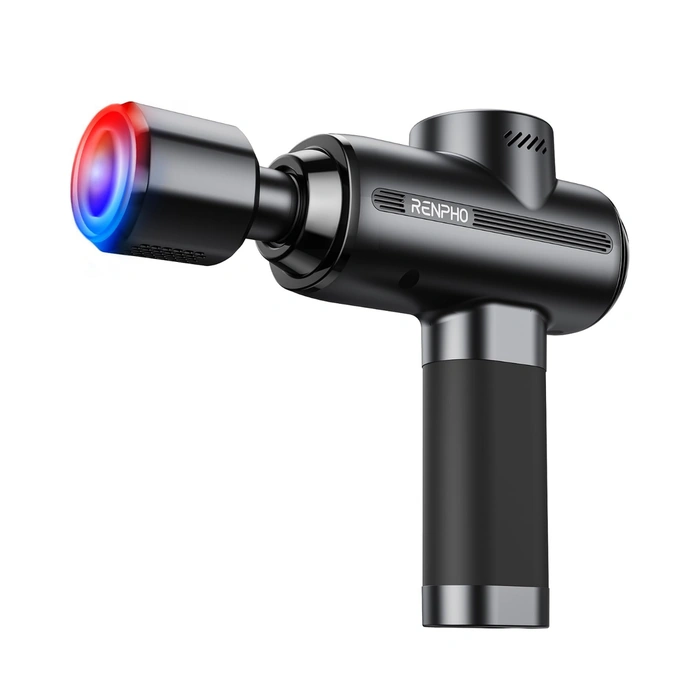
RENPHO Active Thermacool 2 Deep Tissue Massage Gun with Heat & Cold
Muscle soreness in the knees and shoulders after pickleball often signals the need for better recovery tools between sessions. The RENPHO Active Thermacool 2 combines heat and cold therapy in a single massage gun, letting you switch between warming tight tissue before play and cooling inflamed areas afterward.
Heat mode can help loosen stiff joints and improve range of motion when applied to shoulders and quadriceps during your warm-up routine. Cold mode is designed for post-game use, particularly around the knee or rotator cuff when you notice swelling or discomfort. The deep tissue percussion works across multiple speeds, so you can start gently on sensitive areas and increase intensity as muscles relax.
With a 4.6 out of 5 rating across more than 30,000 reviews, users consistently mention the dual-temperature feature and the variety of attachments. The device does add weight to your gear bag, and some users find the coldest setting less intense than a traditional ice pack. Battery life varies depending on whether you use heat or cold, so plan to recharge after several sessions.
If you travel to courts or tournaments, the size and charge requirements may be less convenient than simpler single-function tools. For home use or dedicated warm-up and cooldown routines, the ability to address both preparation and recovery in one device can simplify your process and keep your knees and shoulders ready for consistent play.
- ✅ Heat mode warms stiff shoulders and knees before play
- ✅ Cold mode reduces swelling after matches
- ✅ Multiple speed and attachment options for different muscle groups
- ✅ High user rating across more than 30,000 reviews
- ⚠️ Heavier and bulkier than single-function massage tools
- ⚠️ Cold setting may feel less intense than ice packs
- ⚠️ Battery drains faster when using temperature modes
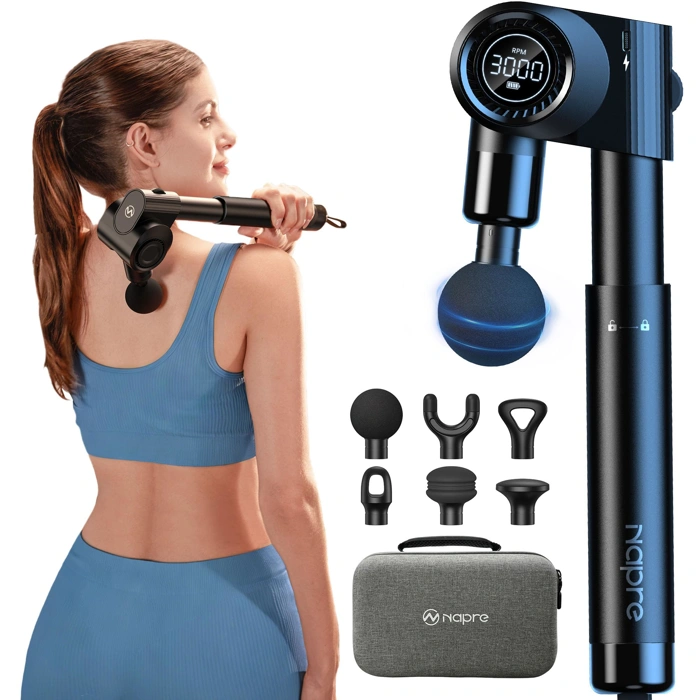
NAPRE Foldable Deep Tissue Massage Gun with Extension Handle, 32 Speeds, 6 Heads
The NAPRE Foldable Deep Tissue Massage Gun offers 32 speed settings, giving experienced players precise control over percussion intensity for different areas. The wide speed range allows for gentler application on sensitive knee tissues and moderate percussion on denser shoulder muscles, making it adaptable to the varied needs of a pre-game routine.
The foldable design and included extension handle address two practical concerns: compact storage in a court bag and the ability to reach shoulder and upper back areas without assistance. For players who've established their warm-up sequence and identified which joints benefit from percussive prep, this tool provides more refinement than single-speed alternatives.
Six interchangeable heads accommodate different tissue depths and sensitivities. The extension handle is particularly useful for applying consistent pressure to the rotator cuff area and upper traps without straining your opposite arm - a common issue with standard handheld massagers.
At $59.99 with a 4.7/5 rating, this model suits players who've moved past general warm-up tools and want targeted control. The speed adjustment lets you start low during initial tissue prep and increase intensity as muscles warm, matching the progression of a thorough pre-game routine. Best for those who play regularly and have learned which speed and attachment combination works for their specific knee and shoulder preparation needs.
- ✅ 32 speed settings for precise intensity control across different joints
- ✅ Foldable design fits easily in court bags
- ✅ Extension handle enables self-application on shoulders and upper back
- ✅ Six interchangeable heads for varied tissue types
- ⚠️ More features than needed for players just starting a warm-up routine
- ⚠️ Requires experimentation to identify optimal speed and head combinations
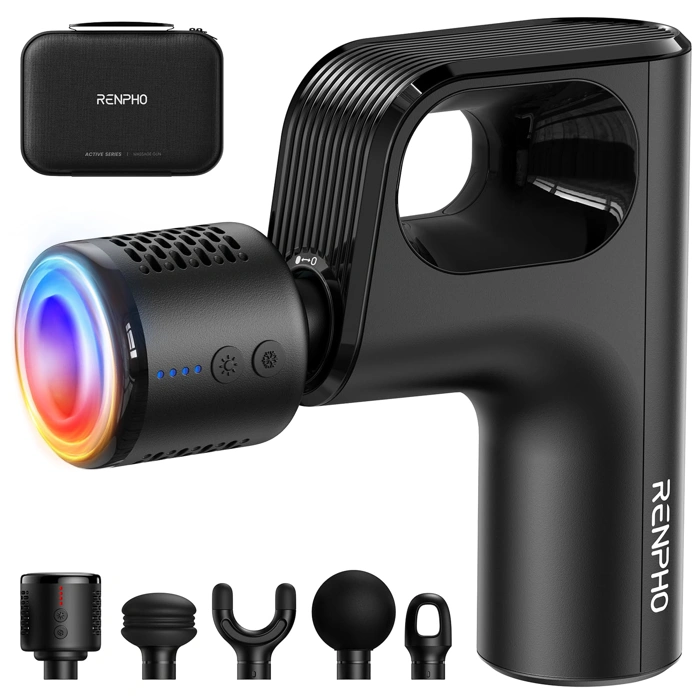
RENPHO Deep Tissue Massage Gun with Heat & Cold and 5 Speeds
The RENPHO Deep Tissue Massage Gun with Heat & Cold ($79.99, rated 4.6/5) offers a dual-purpose approach for players managing both preparation and recovery in the same session. Unlike single-function devices, this model integrates heat and cold therapy with percussion massage, letting you support circulation before play and address inflammation afterward without switching tools.
The heat mode is designed to support pre-game preparation for shoulders and knees that feel chronically stiff. Applying warmth to these areas before your dynamic warm-up may help improve mobility and comfort as you begin movement. The cold mode addresses the opposite need: immediate post-game use when joints feel warm or swollen after extended rallies.
RENPHO simplifies the experience with five speed settings instead of the multiple- or multiple-speed arrays found on premium models. For many senior players, this reduction in choice makes the device easier to use consistently - you select low, medium, or high intensity based on how sensitive the area feels that day, rather than navigating a complex dial.
This consolidation works best for frequent players who face recurring joint discomfort and want to streamline their gear. If you play three or more times per week and currently juggle separate heating pads, ice packs, and massage tools, the RENPHO reduces prep and cleanup time. The tradeoff is that dedicated heating pads may maintain temperature longer, and standalone percussion guns often deliver deeper pressure. But for players prioritizing convenience and consistent routines, having one device that handles both pre- and post-game needs reduces the friction that leads to skipped recovery sessions.
Consider your play frequency and storage constraints. Occasional players may find a simple foam roller and ice pack sufficient. But if joint management is part of your regular pickleball routine and you value having fewer items to track, the RENPHO's versatility justifies the investment.
- ✅ Combines heat, cold, and percussion in one device
- ✅ Five speeds reduce decision fatigue compared to complex models
- ✅ Supports both pre-game preparation and post-game recovery
- ✅ Streamlines gear for frequent players managing recurring joint discomfort
- ⚠️ Dedicated heating pads may maintain temperature longer
- ⚠️ Standalone percussion guns may offer deeper tissue pressure
- ⚠️ Best value emerges with frequent use; occasional players may not need the versatility
Common Warm-Up Mistakes Senior Players Make
Even experienced senior players fall into warm-up habits that quietly increase stress on knees and shoulders. Understanding these four common mistakes - and how to correct them - can make the difference between stepping onto the court ready or setting up for discomfort later in the day.
Mistake 1: Static Stretching Before Muscles Are Warm
Many players begin by sitting or standing in place, holding long stretches - touching toes, pulling arms across the chest, or holding a deep quad stretch. When muscles are cold, static stretching can reduce power output and does little to prepare joints for the quick directional changes pickleball demands. Senior knees and shoulders, which already have less synovial fluid circulation at rest, need movement to warm tissue and increase joint lubrication.
The corrective approach: save static stretching for after play. Begin instead with 3 - 5 minutes of gentle walking or marching in place to raise your core temperature, then move into dynamic movements - arm circles, leg swings, and controlled lunges - that take joints through their working range while muscles are warming up.
Mistake 2: Skipping the Sequence When Feeling 'Loose Enough'
On days when shoulders feel mobile or knees seem fine, it's tempting to shorten or skip the warm-up entirely. But joint readiness isn't just about how you feel when you arrive - it's about preparing cartilage, tendons, and stabilizing muscles for repetitive loading. Shoulders performing dozens of serves and knees absorbing hundreds of split-steps need consistent preparation, regardless of how loose you feel at the start.
The corrective approach: treat your warm-up as non-negotiable structure, not a flexibility test. A shorter 6 - 8 minute routine done every session protects better than a longer one done only when stiffness is obvious.
Mistake 3: Rushing Through Movements to Start Play Sooner
When courts are busy or doubles partners are waiting, players often speed through warm-up movements - quick arm swings, fast lunges, or hurried side shuffles. Rushing reduces the neuromuscular benefit: your brain needs time to re-establish coordination and balance patterns, and your joints need gradual load increases to adapt. For senior players, this is especially true in the shoulders, where rotator cuff muscles require controlled activation before handling the speed of overhead shots.
The corrective approach: move deliberately. Perform each dynamic movement - whether it's a leg swing, torso rotation, or arm circle - at a controlled tempo. Quality repetitions in a calm rhythm prepare your body better than twice as many done in a hurry.
Mistake 4: Using the Same Routine Year-Round
A warm-up that worked well two years ago may not match your current joint needs. Shoulders that have developed mild stiffness, knees that feel less stable in lateral movement, or balance that has shifted all require adjustments. Many senior players continue the same five-minute sequence without adapting as their bodies change, missing opportunities to address new limitations before they interfere with play.
The corrective approach: reassess your warm-up every few months. If you notice one knee tracking differently during lunges, add single-leg balance holds. If one shoulder feels tighter, spend an extra 30 seconds on controlled circles and band pull-aparts in that range. Small adjustments keep your warm-up aligned with what your body actually needs today, not what worked last season.
Correcting these mistakes doesn't require extra time - it requires awareness. By starting with movement instead of static holds, honoring the sequence on every session, moving with intention rather than speed, and evolving your routine as your body changes, you give senior knees and shoulders the preparation they need to perform well and recover smoothly.
Adjusting Your Warm-Up for Weather and Time of Day
Joint viscosity - the internal lubrication that allows smooth movement - responds directly to temperature. When cartilage and synovial fluid are cold, they become thicker and less pliable, increasing friction and stiffness in knees and shoulders. This is why a warm-up that works perfectly at 1 p.m. in July may leave you feeling unprepared at 7 a.m. in November.
The 12-minute protocol outlined earlier serves as a baseline, but adapting it to weather and time of day protects your joints more effectively and reduces the risk of moving stiffly into your first rally.
Cold Morning Play (Below 60°F or Early Hours)
When temperatures drop or you're playing before your body has fully awakened, joints need extra time to reach working range. Add 3 - 4 minutes to Phase 1 by extending the duration of marching in place, arm circles, and gentle torso twists. Instead of 15 repetitions of each dynamic stretch, increase to 20. Keep your outer layer on during the first half of your warm-up - removing it too early lets muscles cool back down and negates the work you've done.
Pay particular attention to your shoulders in cold conditions. The rotator cuff muscles tighten overnight and respond slowly to movement when ambient temperature is low. Spend an extra 30 seconds on slow, controlled arm circles in both directions, and ensure you feel a noticeable increase in range before moving to overhead motions.
If you feel any lingering tightness in your knees after the standard leg swings and lunges, add a second set of 10 partial squats. The goal is not to fatigue the muscles but to increase circulation enough that your first lateral movement on court feels fluid rather than guarded.
Hot Afternoon Sessions (Above 80°F or Peak Sun)
In warm or hot conditions, your muscles and joints reach working temperature faster, but dehydration and heat stress become the limiting factors. Begin hydrating 30 minutes before you start your warm-up - not during it - so fluids have time to distribute. Prioritize shade during your warm-up if available; direct sun raises core temperature without improving joint readiness and can lead to early fatigue.
You can safely reduce the total warm-up time by 1 - 2 minutes in hot weather, but do not skip phases. Instead, move through the dynamic stretches at a slightly brisker pace and reduce repetitions from 15 to 12. The emphasis shifts from generating heat to maintaining controlled movement and preventing overheating before play begins.
Shoulders still require full attention. Even in heat, the rotator cuff benefits from deliberate circles and controlled internal and external rotation. Rushing this portion increases the chance of a sharp movement catching the joint unprepared.
Humidity and Joint Response
High humidity does not improve joint lubrication, but it does slow evaporative cooling, making you feel warmer faster. This can create a false sense of readiness. Stick to the full range-of-motion checks in Phase 2 even if you feel warm - your cardiovascular system may be ready, but your cartilage and ligaments may not be.
Time-of-Day Adjustments Beyond Temperature
Morning stiffness is not solely about temperature. After hours of inactivity, intervertebral discs are more hydrated and less flexible, and your neuromuscular system is slower to activate. Even in warm weather, morning players benefit from the extended Phase 1 repetitions. Conversely, if you're playing in the evening after a full day of activity, your joints are already warm and your nervous system is alert. You can move through Phase 1 more briskly, but do not eliminate it - transition from daily activity to sport-specific movement still matters.
Seasonal Consistency
Track how your body responds across seasons. If you notice that your knees feel less stable on cold mornings despite the extended warm-up, consider adding a single-leg balance drill (30 seconds per side) before starting Phase 3. If hot afternoons leave you feeling drained by the third game, move your warm-up 10 minutes earlier and spend the final 2 - 3 minutes in shade with a slow walk and deep breathing.
Adjusting your warm-up for conditions is not about perfection - it's about giving your knees and shoulders the specific preparation they need when temperature, time, and your own physiology intersect. Rigid routines ignore reality; thoughtful adaptation reduces injury risk and keeps you playing comfortably across the calendar.
When to Modify or Skip Play
Knowing when to adjust your play - or step off the court - is one of the most important skills for protecting your knees and shoulders over the long term. Many senior players push through discomfort that signals genuine risk, mistaking it for normal warm-up stiffness.
Normal warm-up stiffness typically feels dull, diffuse, and located across a joint or muscle group. It improves steadily within 8 to 10 minutes of light movement. You might feel tightness in your shoulder or mild aching in your knee when you first begin moving, but it softens as circulation increases and tissue temperature rises. This kind of stiffness is a common part of warming up, especially on cooler mornings or after a day of rest.
Warning pain behaves differently. It tends to be sharp, localized to a specific point in the joint, or worsening as you continue moving. If your knee pain intensifies during lunges or dynamic stretches, or if your shoulder develops a pinching sensation that doesn't ease after several minutes, these are signals to pause. Pain that causes you to favor one side, limp, or alter your movement pattern is not something to work through.
If you notice warning pain during your warm-up, stop the aggravating movement and assess. Can you perform a gentler version - shorter range, slower tempo, or modified posture? If the pain persists or worsens with the modification, it's time to consider sitting out that session. Playing through sharp or escalating joint pain often leads to compensatory movement patterns that can injure other areas or deepen the original issue.
Swelling, heat, or a sensation of instability in the knee or shoulder are also clear stop signals. These signs suggest inflammation or structural stress that won't improve with more movement. Taking a day off to rest, ice, and evaluate is far better than risking weeks of recovery from a preventable aggravation.
Keep in mind that modifying play doesn't always mean sitting out entirely. You might choose to play doubles instead of singles, limit your court coverage, avoid overhead smashes, or shorten your session. The goal is to stay active within a range that doesn't provoke warning pain, preserving your ability to play consistently over months and years rather than maximizing intensity in a single game.
Building the habit of listening to your body during the warm-up - and acting on what you hear - protects your long-term capacity to enjoy pickleball. Skipping one session when your knee or shoulder signals trouble is a small trade for the ability to play hundreds more in the future.
Building a Sustainable Play Schedule
A proper warm-up routine does more than prepare you for a single session - it makes consistent play possible over months and years. For players like Richard who want to play three to four times per week, the warm-up becomes the foundation that allows that frequency without accumulating joint stress faster than the body can recover.
When you warm up correctly before each session, you reduce the micro-trauma to cartilage, tendons, and ligaments that would otherwise compound over multiple sessions in a single week. This consistency allows the body to adapt gradually rather than break down under repetitive stress. Without warm-up, even a sustainable schedule can become unsustainable within a few weeks as cumulative strain builds in the knees and shoulders.
For most senior players, three to four sessions per week with at least one full rest day between sessions provides the recovery window joints need. On days between play, gentle movement - walking, light stretching, or pool exercises - keeps blood flowing to support tissue repair without imposing new stress. Active rest days are not about complete inactivity; they're about maintaining mobility while allowing recovery.
Watch for signs that your current frequency needs adjustment: persistent stiffness that doesn't resolve with warm-up, soreness that lasts more than 48 hours after play, or reduced range of motion. These signals indicate the balance between stress and recovery has tipped. Reducing to two or three sessions per week temporarily, while maintaining your warm-up discipline, often restores that balance within seven to ten days.
Think of warm-up as the practice that earns you permission to play often. It's not about maximizing short-term performance - it's about protecting the capacity to keep playing next month, next season, and next year. Players who skip warm-up to save ten minutes often lose weeks or months to preventable strain. Those who invest the time consistently build the resilience that makes regular play sustainable well into their seventies and eighties.
The rhythm matters as much as the routine: play, recover, warm up, play again. This cycle, repeated week after week, creates the durable enjoyment pickleball offers when approached with care and consistency.
Final Takeaway
The 12-minute warm-up sequence outlined in this guide is the single most effective injury prevention practice available to senior pickleball players. It requires no special equipment, costs nothing, and directly prepares the joints, muscles, and connective tissues that bear the greatest load during play.
Starting a match cold - especially when knees and shoulders carry years of use - dramatically increases the risk of strain, stiffness, and acute injury. The movements in this routine are designed specifically to address the biomechanical demands pickleball places on senior players: lateral lunges, quick direction changes, overhead reaches, and sustained grip effort.
It takes discipline to step aside and warm up when others are already rallying at the net. But this small time investment protects the years of play ahead. A torn rotator cuff or strained patellar tendon can sideline a player for months; twelve minutes of intentional preparation can prevent that outcome.
Treat your warm-up as non-negotiable as bringing your paddle to the court. It is essential equipment for senior joints. The routine becomes faster and more automatic with repetition, and the payoff - confident movement, reduced soreness, and longer playing careers - is worth every minute.
Warm up consistently, play with confidence, and protect the mobility that makes pickleball enjoyable well into your senior years.