We may earn a commission when you buy through links on this page, at no extra cost to you. How this works.
The serve in pickleball sets the tone for every rally, and unlike tennis or badminton, the rules here are strict and specific. Understanding what makes a serve legal protects you from fault calls that can shift momentum and frustrate your rhythm. The official serving rules cover paddle position, contact point, motion, and foot placement - each element designed to keep the serve fair and accessible.
New players often lose points not because they lack skill, but because they unknowingly violate one of the technical requirements. The good news: once you understand the constraints, both approved serve types are straightforward and repeatable. This guide breaks down the volley serve and the drop serve, explains the key differences, identifies the faults that catch beginners, and offers drills to build the consistency that lets you start every point with confidence.
Understanding the Official Pickleball Serving Rules
All legal serves in pickleball must follow the baseline constraints: you must strike the ball below your waist, use an underhand motion with an upward arc, and keep both feet behind the baseline until after contact. The server's paddle head must remain below the wrist at the moment of contact when using the volley serve. The serve must clear the non-volley zone and land diagonally in the opponent's service court.
You are allowed one serve attempt per point, with no second serves like in tennis. If your serve touches the net and lands in the correct service box, it's a let and you re-serve without penalty. Foot faults, illegal paddle position, and service motion violations all result in a side out or point for the opposing team. These rules apply equally in recreational and tournament play, so building the right habits from the start saves confusion later.
The Volley Serve: A Step-by-Step Breakdown
The volley serve is the traditional technique most players learn first. Start by standing behind the baseline with your feet positioned so neither touches the line. Hold the ball in your non-paddle hand and the paddle in your dominant hand, keeping the paddle head below your wrist. Drop or release the ball without imparting spin or upward force, then strike it below waist level using an upward arc motion.
The paddle must move in an upward direction at contact - no side-arm or downward swings are allowed. Your arm should swing smoothly from low to high, and your wrist must remain above the paddle head throughout the stroke. Contact the ball cleanly and aim diagonally across the net into the opponent's service box. Imagine you're serving from the right side: you need to land the ball in the opponent's left service court, clearing the kitchen and avoiding the sideline or baseline.
The volley serve offers control and precision once you master the wrist and waist constraints. It's ideal when you want to place the ball consistently in a specific zone, setting up your next shot without giving your opponent an easy return.
The Drop Serve: A Simple and Effective Alternative
The drop serve was introduced in recent years to simplify the serving motion and reduce fault calls. With this method, you drop the ball from any height and let it bounce naturally before striking it. The key rule: you may not impart force, spin, or upward throw when releasing the ball - it must fall solely under gravity.
Stand behind the baseline, hold the ball at any height, and release it cleanly. Once it bounces, you can strike it with your paddle using any motion you choose. There are no restrictions on paddle head position, wrist angle, or upward arc with the drop serve. This removes the technical constraints that trip up many beginners with the volley serve.
The drop serve is forgiving and easier to repeat under pressure. If you struggle with coordinating the volley serve's timing and paddle position, the drop serve lets you focus entirely on placement and consistency. It's especially helpful when you want to reduce unforced errors and build confidence at the baseline without worrying about wrist or waist violations.
Key Differences: Volley Serve vs. Drop Serve
The volley serve and drop serve share the same baseline and landing requirements, but they diverge sharply in execution. The volley serve demands strict paddle and wrist position at contact, requires an upward arc, and limits you to striking the ball below your waist. The drop serve eliminates those constraints entirely, allowing any paddle motion and contact height once the ball has bounced.
Choose the volley serve when you want maximum control and are confident coordinating the technical requirements. It's a repeatable motion that rewards precision and muscle memory. Switch to the drop serve if you find yourself called for faults on wrist position or waist level, or if you prefer a simpler, more forgiving motion that reduces mental load during play. Both serves are legal and effective - your choice depends on comfort, consistency, and the level of control you need for your game strategy.
Common Serving Faults and How to Avoid Them
Foot faults are the most frequent mistake: stepping on or over the baseline before making contact will cost you the serve. Always check your starting position and keep both feet behind the line until the paddle meets the ball. Another common error is striking the ball above waist level during a volley serve. Your waist is defined as the navel, so keep contact clearly below that point.
Paddle head position violations happen when the paddle head rises above your wrist at the moment of contact on a volley serve. Keep your wrist higher than the paddle throughout the swing to stay legal. Side-arm or downward motions also draw faults - the serve must follow an upward arc from low to high. On the drop serve, the only real risk is imparting force or spin when releasing the ball. Let gravity do the work and drop it cleanly.
Service court errors occur when the ball lands in the wrong diagonal box, touches the kitchen line, or sails out of bounds. Aim for the center of the target zone until your placement is consistent, then adjust for tactical advantage. Practicing with a target or training net helps you identify and correct these patterns before they become habits.
Drills to Practice and Perfect Your Serve
Repetition builds the muscle memory that turns a legal serve into a reliable weapon. Start with a simple baseline drill: serve ten balls in a row to the same diagonal service box, focusing only on clearing the net and landing in bounds. Once you achieve consistent contact, add a target - a cone, towel, or chalk mark - in the back third of the service court and aim for it.
Practice both serve types in separate sessions so you can isolate the techniques. For the volley serve, record yourself or ask a partner to watch your wrist and waist position at contact. For the drop serve, experiment with different release heights to find the bounce that feels most natural. Alternate between deep serves near the baseline and short serves just past the kitchen line to develop range and placement control.
Quiet foam balls let you practice indoors or in noise-sensitive environments without disturbing neighbors. Training nets with target zones give you instant visual feedback on accuracy. Set a goal of landing eight out of ten serves in your target zone before moving to live play, and revisit these drills whenever you notice faults creeping back into your motion.
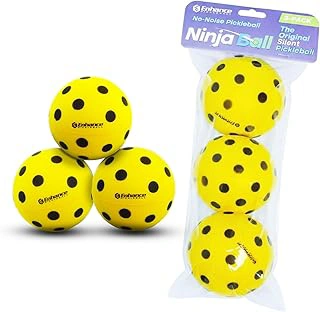
Enhance Pickleball Ninja Ball Silent Foam Pickleballs for Quiet Practice
Foam balls designed for quiet practice let you work on serve mechanics indoors or in shared spaces without the sharp crack of standard pickleballs. This option is well-suited for repetition drills when you want to isolate footwork, paddle position, and contact timing without worrying about noise complaints.
Imagine you're refining your volley serve in a driveway or basement - silent foam balls give you the freedom to practice fifty serves in a session without disturbing housemates or neighbors. The softer material won't damage walls or windows, and the reduced bounce makes retrieval easier between rounds. Because the flight characteristics differ slightly from regulation balls, use these for motion drills and target placement rather than match simulation.
Check that the foam density provides enough feedback on contact to reinforce good habits. These balls are best for focused serve practice in controlled environments, not for full-court play or spin development.
- ✅ Silent operation for indoor or shared-space practice
- ✅ Reduced risk of damage to walls or windows
- ✅ Easy retrieval with softer bounce
- ⚠️ Flight characteristics differ from regulation balls
- ⚠️ Not suitable for match simulation or spin work
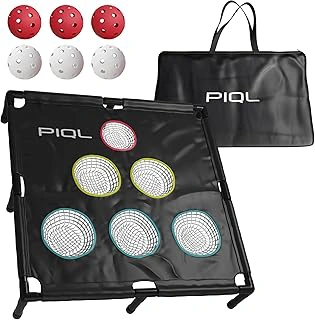
PIQL Pro Pickleball Training Target Net
A training net with built-in target zones helps you measure serve accuracy and build placement consistency. This net is designed to provide visual feedback on where your serves land, turning solo practice into a structured drill session with clear goals.
Imagine you're working on drop serves and want to land the ball deep in the opponent's service court - target zones let you see immediately whether you're hitting the mark or drifting wide. The net setup eliminates the need for a partner or open court, so you can train on your schedule in a driveway, backyard, or gym. Repeated targeting builds the precision that translates directly to match play.
Make sure the net height and tension replicate standard court conditions so your serves transfer accurately. This tool is ideal for solo drills focused on placement and fault elimination, though it won't replace live play for timing and opponent response.
- ✅ Visual feedback on serve placement and accuracy
- ✅ Enables solo practice without partner or court access
- ✅ Structured drills with clear target goals
- ⚠️ Does not replicate live opponent response
- ⚠️ Requires setup space and assembly
Gamma Librarian Foam Quiet Pickleball Balls
Quiet foam balls reduce noise during practice while maintaining enough weight and bounce to reinforce proper serve mechanics. This option is designed for environments where sound is a concern, such as apartment complexes, gyms with thin walls, or early-morning drills.
Imagine you're practicing drop serves before sunrise in your garage - foam balls let you repeat the motion dozens of times without waking the household. The softer construction also means less wear on indoor surfaces and lower risk of injury if you're working in tight quarters. While the flight path won't perfectly match regulation balls, the contact feel is close enough to build reliable muscle memory for legal serve motions.
Check the bounce consistency to ensure it supports both volley and drop serve practice. These balls are best for high-repetition drills in noise-sensitive or space-limited settings, not for competitive play or advanced spin techniques.
- ✅ Minimal noise for noise-sensitive environments
- ✅ Safe for indoor surfaces and tight spaces
- ✅ Good contact feel for serve mechanics
- ⚠️ Flight path differs from regulation balls
- ⚠️ Not designed for competitive play or spin work
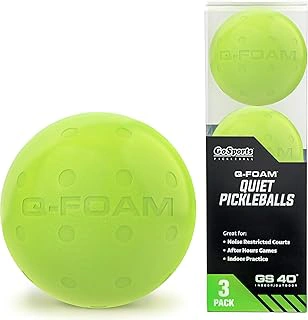
GoSports GS 40 Q-Foam Pickleballs - Quiet Foam Balls for Indoor or Outdoor Practice
Foam balls designed for both indoor and outdoor use offer flexibility when you want to practice serves in varied settings without the noise of regulation pickleballs. This option suits players who drill in gyms, driveways, or backyards and need a single ball type that adapts to changing conditions.
Imagine you're alternating between basement practice and patio drills - these foam balls let you maintain the same contact feel and motion across environments without switching equipment. The quiet construction keeps practice sessions discreet, and the durability supports repeated use on concrete or wood surfaces. While they won't replicate wind resistance or outdoor ball behavior exactly, they provide enough consistency for serve repetition and fault correction.
Confirm that the foam density holds up to frequent contact and varied surfaces. These balls are ideal for routine serve drills when access to regulation courts is limited, but plan to transition to standard balls before competitive play to fine-tune placement under match conditions.
- ✅ Versatile for indoor and outdoor practice
- ✅ Quiet operation in residential settings
- ✅ Durable across varied surfaces
- ⚠️ Does not fully replicate regulation ball behavior
- ⚠️ Requires transition to standard balls for match prep
Start Every Point with Confidence
Mastering the legal serve in pickleball gives you control over the pace and direction of every rally. The volley serve rewards precision and technical discipline, while the drop serve offers simplicity and fault tolerance. Both are effective when practiced consistently and adapted to your strengths.
Focus on eliminating the common faults - foot position, paddle angle, waist level, and service court placement - through targeted drills and deliberate repetition. Use quiet foam balls and training nets to build muscle memory in any environment, then transition to regulation balls and live play to refine timing and placement under pressure. A reliable, legal serve removes unforced errors from your game and lets you compete with confidence from the very first point.