We may earn a commission when you buy through links on this page, at no extra cost to you. How this works.
Uteeqe Graphite Thermoformed Semi-Textured Pickleball Paddles Set of 2
Compare paddle materials to protect your joints and extend your playing years.
Fit and safety come first
Use the comparison as a shortlist, but keep fit, comfort, and any health or safety constraints ahead of price.
If you've ever finished a pickleball session with a sore elbow or achy wrist, the material of your paddle face may be part of the problem. Graphite and composite paddles respond differently when the ball strikes the surface, and that difference travels straight through the paddle into your arm.
Graphite faces are lighter and stiffer, delivering quick response and precise control - but they also transfer more vibration on off-center hits. Composite faces, typically made from fiberglass or carbon fiber blends, offer a softer feel that dampens shock and absorbs more impact energy before it reaches your joints.
Choosing between graphite and composite isn't just about spin or power. It's about how your arm tolerates repeated impact over long play sessions. Players with tennis elbow, wrist tendonitis, or general joint sensitivity often notice a measurable difference in comfort depending on the paddle material they use.
But material alone doesn't tell the whole story. The core type - polymer, Nomex, or aluminum - plays an equally important role in shock absorption. A soft polymer core paired with a composite face creates one of the most arm-friendly combinations available. Grip size and weight distribution also affect how stress loads through your forearm and shoulder.
This guide walks through how graphite and composite paddles behave under real play conditions, which material works better for specific arm health constraints, and how to match paddle construction to your comfort priorities without sacrificing the performance you need on the court.
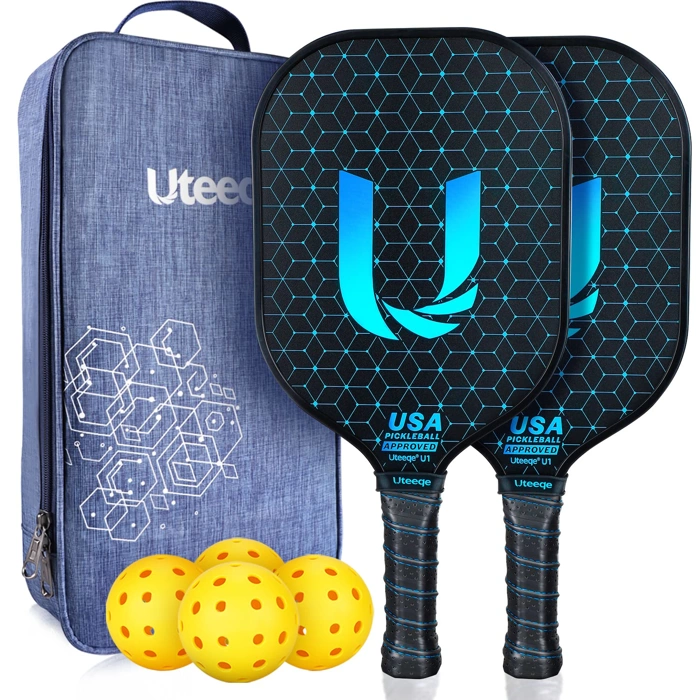
Uteeqe Graphite Thermoformed Semi-Textured Pickleball Paddles Set of 2
The Uteeqe Graphite Thermoformed Semi-Textured Pickleball Paddles arrive as a set of two, making them a practical choice for players looking to equip multiple family members or keep a backup on hand. At EUR25.49 for the pair, this option brings graphite face construction into a budget-friendly bracket while incorporating thermoformed edge technology for improved durability at the paddle perimeter.
The graphite face delivers the responsive feel and crisp ball contact that many players associate with this material. The semi-textured surface adds grip on the ball for spin generation, and the thermoformed construction helps protect the edge guard from the chips and separations that plague lower-cost paddles over time. Rated 4.6 out of 5, this set offers solid value for recreational players who want graphite performance without premium pricing.
From an arm comfort perspective, the graphite face provides good feedback and a lively response, but it won't absorb as much vibration as a thicker composite or foam-core design. If you're managing elbow or wrist sensitivity, consider pairing these paddles with a cushioned replacement grip or padded overgrip to add a layer of shock absorption between your hand and the handle. A compression elbow sleeve or forearm brace can further reduce strain during longer sessions.
Weight and grip circumference details are not specified in the verified product data, so if you have specific requirements - such as a lighter paddle for faster hand speed or a larger grip to reduce squeeze effort - check the full product listing or contact the seller before purchasing. The set format makes these paddles particularly suitable for households introducing multiple players to the game, but each individual should assess whether the graphite face suits their joint comfort needs or whether additional dampening accessories will be necessary.
Check current price and availability to confirm in-stock status and review the complete specification sheet, including weight range and grip size, so you can match the paddle to your comfort preferences and decide whether a cushioned overgrip or support brace will round out your setup.
- ✅ Set of two paddles at EUR25.49 offers strong value for families or backup needs
- ✅ Graphite face provides responsive feel and crisp ball contact
- ✅ Thermoformed construction improves edge durability against chips and separation
- ✅ Semi-textured surface adds spin capability
- ✅ 4.6/5 rating reflects solid performance in the budget segment
- ⚠️ Graphite face transmits more vibration than thicker composite or foam-core designs
- ⚠️ Weight and grip size not specified in verified data - requires additional research
- ⚠️ May require cushioned overgrip or elbow support for players with joint sensitivity
- ⚠️ Budget construction may not match premium paddle longevity or advanced dampening features
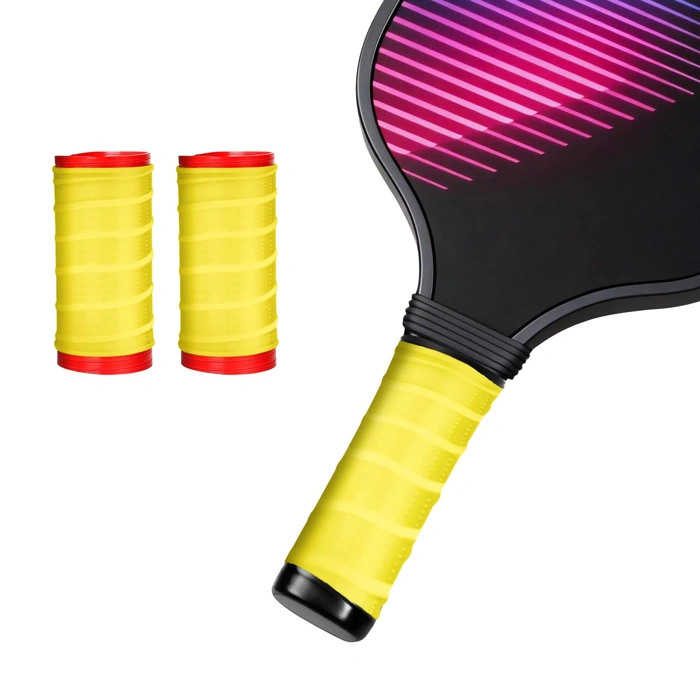
2 Pack Cold Shrink Overgrip for Pickleball and Tennis Rackets - Non-Slip, Yellow
Whether you play with a graphite or composite paddle, adding an overgrip can meaningfully improve comfort and reduce shock transfer to your arm. The 2 Pack Cold Shrink Overgrip offers a simple, affordable way to layer extra cushioning onto your existing handle without changing your paddle.
This cold shrink design slides over your handle and contracts for a secure fit - no adhesive backing or sticky residue to deal with. The non-slip surface helps maintain consistent grip pressure, which can reduce the need to squeeze tightly and lower forearm tension during long rallies. The added padding layer between your hand and the paddle absorbs some vibration before it reaches your wrist and elbow, making it a useful accessory for players experiencing discomfort with either paddle material.
At $9.99 for a 2-pack, this is an inexpensive first step before investing in a new paddle. If you're testing whether extra cushioning helps your arm, this overgrip lets you experiment without committing to a full equipment change. The bright yellow color also makes it easy to spot your paddle in a crowded bench area.
Installation is straightforward: slide the grip over your handle, and the cold shrink material tightens into place. You can replace the overgrip as it wears, keeping your handle feel fresh without permanent modification to your paddle. This approach works equally well on the firm handles common to graphite paddles and the slightly thicker grips often found on composite models.
With a 4.4/5 rating and current in-stock availability, this overgrip is a low-risk option for players looking to improve comfort across any paddle type.
- ✅ Cold shrink design installs without adhesive mess
- ✅ Adds cushioning layer to reduce vibration transfer
- ✅ Works with both graphite and composite paddle handles
- ✅ Affordable 2-pack at $9.99
- ✅ Non-slip surface helps maintain consistent grip pressure
- ⚠️ May add slight bulk to handle circumference
- ⚠️ Needs replacement as material wears over time
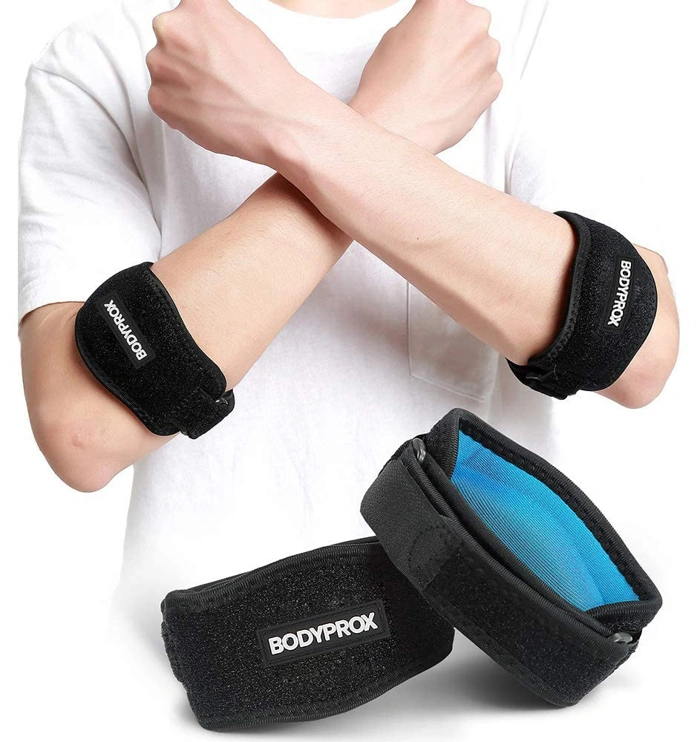
Bodyprox Elbow Brace, 2-Pack
When paddle material alone isn't enough to manage arm discomfort, targeted compression can help. The Bodyprox Elbow Brace 2-Pack offers localized support for the tendons most affected by repetitive hitting motions, whether you play with graphite or composite.
These braces provide compression around the forearm just below the elbow joint, helping stabilize soft tissue during play. While they don't replace proper paddle selection, they complement your material choice by reducing the impact of vibration that reaches the arm. Players dealing with early signs of elbow discomfort often use them alongside switching to a more shock-absorbent paddle.
The 2-pack design lets you rotate between uses or keep a spare in your gear bag. At $11.99 for two braces, they represent a practical addition to your comfort strategy without requiring a significant investment.
Compression braces work best when paired with appropriate paddle weight and grip technique. If you're choosing between graphite and composite based on arm comfort, adding targeted support can extend your playing time while your arm adjusts to new equipment or recovers from overuse.
- ✅ Two-pack design provides spare or rotation option
- ✅ Affordable support solution at $11.99
- ✅ Works with any paddle material choice
- ✅ Provides targeted compression below elbow joint
- ⚠️ Does not replace proper paddle material selection
- ⚠️ Effectiveness varies by individual fit and discomfort level
- ⚠️ May require adjustment period for comfort during play
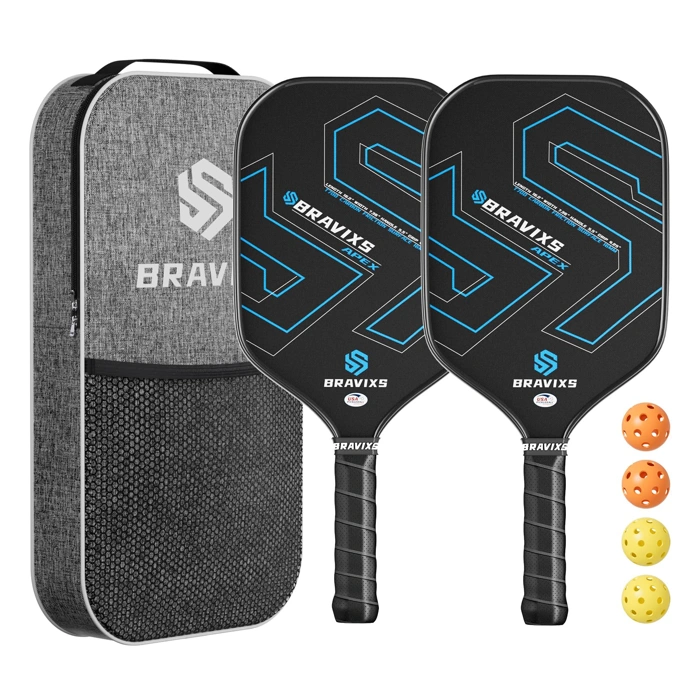
USAPA Approved T700 Raw Carbon Fiber Pickleball Paddles Set of 2 with Friction Surface
The USAPA Approved T700 Raw Carbon Fiber Pickleball Paddles offer a premium composite construction aimed at players seeking enhanced arm comfort alongside competitive performance. This set of two paddles features T700 carbon fiber faces, a material known for its vibration dampening properties compared to standard graphite, making it a solid choice for players with sensitive elbows or wrists.
The raw textured surface provides added friction for spin control, while the carbon fiber layup helps absorb shock across the paddle face. USAPA approval confirms tournament legality, and the set-of-2 format delivers value for doubles partners or households with multiple players. At $128.99 for the pair, this represents a higher investment than entry-level composite or graphite options, but the upgraded materials target players prioritizing joint comfort during extended play.
The paddle's construction focuses on reducing the harsh vibrations that can contribute to discomfort during repetitive play. Carbon fiber composites typically offer a softer feel on contact compared to pure graphite, which may benefit players managing existing arm sensitivity. The textured surface adds another dimension for players who rely on spin, though the slightly higher price point makes this a better fit for committed players rather than beginners still exploring paddle preferences.
Check current reviews to confirm the weight and grip circumference align with your comfort needs - carbon fiber paddles can vary in balance point and overall heft, which affects how strain distributes through your arm during play. The 4.8/5 rating suggests strong user satisfaction, but individual grip size and weight preferences remain critical for maximizing arm comfort.
- ✅ T700 carbon fiber construction for enhanced vibration dampening
- ✅ Set of 2 paddles at $128.99 offers value for pairs
- ✅ Raw textured surface adds spin control
- ✅ USAPA approved for tournament play
- ✅ 4.8/5 rating indicates strong user satisfaction
- ⚠️ Higher price point than basic graphite or composite options
- ⚠️ Weight and balance specifics not detailed - check reviews before purchase
- ⚠️ Premium investment better suited to committed players
What Are Graphite Pickleball Paddles? (Pros & Cons)
Graphite pickleball paddles feature a thin, rigid face made from woven carbon fiber material. This construction creates a hard, smooth hitting surface that responds quickly on contact. The face is typically layered over a polymer or aluminum honeycomb core, with the graphite layer measuring just a few millimeters thick.
The material's low density makes graphite paddles among the lightest options available, often weighing between 7.3 and 8.2 ounces. This reduced mass can help minimize arm fatigue during extended play, since you're swinging less weight through each stroke.
The firm surface deflects minimally on impact, which translates to a larger effective sweet spot for consistent ball response. Players notice quick energy transfer and predictable trajectory, especially on volleys and reset shots at the kitchen line.
However, the same rigidity that creates responsiveness also limits vibration dampening. When the ball strikes away from the paddle's center, the shock wave travels more directly through the handle to your hand, wrist, and elbow. Players with existing joint sensitivity or a history of tennis elbow often notice this transmission more acutely.
The stiff graphite face also produces a distinct, higher-pitched sound on contact compared to softer materials. While this doesn't affect arm comfort directly, it signals the paddle's firmer energy return - which means your arm absorbs impact rather than the paddle face.
Graphite paddles excel in control and touch, but they require clean contact and proper stroke mechanics to minimize stress on the arm. Off-center hits or mishits can send vibrations up the arm more noticeably than with paddles that use softer face materials or integrated dampening systems.
What Are Composite Pickleball Paddles? (Pros & Cons)
Composite pickleball paddles feature face materials made from fiberglass, carbon fiber, or layered blends of both. These paddles typically use a thicker core - often polymer honeycomb - paired with a softer, textured surface that creates a distinct feel at contact.
The construction involves bonding multiple layers together, which produces a face that flexes slightly more than graphite. This flex contributes to the paddle's ability to absorb impact energy rather than transmit it directly into your arm and elbow.
Composite faces are usually heavier by one to two ounces compared to graphite models of similar size. The added mass, combined with the softer surface, creates a forgiving hitting experience that many players with joint sensitivity find comfortable during extended play.
Pros of Composite Paddles
Composite construction excels at vibration dampening. The layered face materials and thicker core work together to reduce the sharp shock waves that travel up the handle when the ball strikes the paddle. This softer feel is especially noticeable on off-center hits, where graphite paddles tend to transmit more vibration.
The textured surface grips the ball longer, producing more spin and a controlled shot trajectory. For players who rely on placement over power, this extended dwell time offers predictable ball behavior.
Composite paddles are forgiving on mishits. The wider construction tolerance means shots that land outside the geometric center still feel solid and produce usable pace, reducing the penalty for imperfect contact.
Cons of Composite Paddles
Weight is the primary tradeoff. Composite paddles typically range from 7.8 to 8.5 ounces, compared to 6.5 to 7.8 ounces for graphite models. The added weight can increase fatigue during long matches or tournament play, especially if you already experience shoulder or wrist strain.
The true sweet spot - the area that delivers maximum energy transfer - is often smaller on composite paddles despite the forgiving feel. This means while mishits feel acceptable, they may not produce the same pace or depth as a well-struck graphite shot.
Composite faces can feel less responsive to quick exchanges at the net. The slight flex that helps with shock absorption also means the paddle returns less energy to the ball on fast volleys, requiring more active wrist movement to generate pace in tight situations.
Material durability varies by construction quality. Lower-cost composite paddles may develop surface wear or delamination faster than premium graphite models, though high-end carbon fiber composites match or exceed graphite longevity.
Head-to-Head: Which Material Is Better for Shock Absorption?
When it comes to shock absorption and vibration dampening, composite paddles have a structural advantage. The layered construction - fiberglass or carbon fiber woven with polymer resin - creates a material that flexes slightly on impact, absorbing more of the ball's energy before it can travel up the handle to your arm. This softer response is why many players with elbow or shoulder sensitivity gravitate toward composite options.
Graphite paddles, by contrast, are stiffer and thinner. That rigidity translates to a crisper feel and faster ball response, but it also means more vibration passes through the paddle face with each hit. If you're playing long sessions or already dealing with joint discomfort, that additional feedback can accumulate into fatigue or pain.
Carbon fiber composites sit between the two extremes. They're stiffer than fiberglass-based paddles, offering better control and a more solid hit, but they still dampen vibration more effectively than pure graphite. The woven carbon layers distribute impact forces across a wider area, reducing the sharp shock that reaches your wrist and elbow. For players who want both responsiveness and arm comfort, carbon fiber composites often provide the best balance.
The trade-off is clear: composite materials prioritize shock absorption and joint comfort, while graphite prioritizes ball feedback and quick exchanges at the net. If arm health is your primary concern, a paddle with a composite or carbon fiber face will deliver noticeably less vibration than a graphite one.
Comparing Control, Power, and Sweet Spot Size
While material choice significantly impacts comfort, it also shapes three performance characteristics that directly influence how your arm feels during and after play: control, power, and sweet spot size.
Control and Feedback
Graphite faces deliver crisper, more immediate feedback on contact. The stiffer surface transmits ball feel directly to your hand, making it easier to sense spin, placement, and pace. Players who rely on precise dinking and third-shot drops often prefer this tactile response. Composite faces offer a softer, more muted touch. The ball dwells on the surface slightly longer, which some players find helpful for absorption and placement but others describe as less direct. For comfort, the tradeoff is clear: graphite gives you more information but transmits more vibration; composite cushions impact but sacrifices some crispness.
Power Generation
Power depends more on core construction - polymer, Nomex, or aluminum - than on face material. Both graphite and composite paddles can deliver strong drives when paired with a responsive core. That said, composite faces with textured surfaces can generate additional spin, which translates to more pace on aggressive shots without requiring maximum swing effort. Graphite paddles tend to reward clean, controlled swings. If you're managing elbow or shoulder discomfort, a composite paddle with good core energy return may let you generate adequate power with less arm strain.
Sweet Spot Size and Forgiveness
Graphite's stiffness typically produces a larger effective sweet spot in the center of the paddle, where energy transfer is most efficient. Hits in this zone feel solid and controlled. Off-center contact, however, can feel harsher and transmit more shock up the arm. Composite paddles are generally more forgiving across the face. Edge hits and mishits don't produce the same jarring feedback, which reduces cumulative stress on your joints over long matches or tournament weekends. If you're still refining your stroke mechanics or play in windy conditions that increase mishit frequency, a composite paddle's forgiveness can meaningfully reduce arm fatigue.
Comfort and performance are not opposing goals. A forgiving sweet spot means fewer jarring mishits, softer feedback reduces vibration fatigue, and adequate power generation without maximum effort protects your arm. Match these characteristics to your playing style and current comfort needs to find the best balance for pain-free play.
Who Should Choose a Graphite Paddle?
Graphite paddles are best suited for players who have already developed solid technique and consistently hit the sweet spot. These paddles reward clean contact with exceptional ball response and control, but they offer less forgiveness on mis-hits compared to composite options.
If you prefer a lightweight paddle to reduce shoulder and wrist fatigue during longer play sessions, graphite delivers. The reduced swing weight makes it easier to maneuver at the net and react quickly during fast exchanges. Players who value precision and feel over shock absorption will appreciate how graphite transmits feedback from every shot.
However, the tradeoff is important to understand: graphite paddles provide less vibration dampening than composite cores. This means off-center hits transfer more impact directly to your arm. If you don't currently experience elbow or shoulder discomfort and maintain good form throughout your games, this tradeoff is manageable. But players with existing joint issues or developing technique may find the reduced shock absorption increases stress on the arm over time.
Graphite works well for players who have moved past the beginner stage and can reliably control their swing mechanics. The material rewards efficiency and consistency rather than compensating for errors, making it a strong choice for intermediate to advanced players focused on precision play.
Who Should Choose a Composite Paddle?
Composite paddles are the better choice for players who prioritize arm comfort and joint health over raw power or precision feedback. If you experience discomfort in your elbow, shoulder, or wrist after playing - even occasionally - the shock-absorbing properties of composite materials can make a meaningful difference during longer sessions.
Older players and those managing existing joint sensitivity often find composite paddles significantly more forgiving. The polymer or fiberglass face absorbs more impact energy before it reaches your arm, reducing the cumulative stress that leads to fatigue or pain. This makes composite an excellent option if you're recovering from tennis elbow, rotator cuff issues, or general joint wear.
The tradeoff is real: composite paddles tend to be slightly heavier and deliver less crisp, tactile feedback compared to graphite. You won't feel the same sharp "pop" on contact, and some players find the softer response less satisfying for finesse shots. However, if your goal is to play pain-free through multiple games or practice sessions, the comfort advantage outweighs the loss in feedback clarity.
Composite paddles also offer a larger sweet spot and more consistent performance on off-center hits. If your swing mechanics aren't perfect or you're still developing consistency, the forgiving nature of composite can help you maintain control without punishing your arm for mistimed contact.
In short, choose composite if long-term joint health and comfort are your top priorities, and you're willing to accept a slightly softer feel in exchange for better shock absorption and reduced vibration.
Other Factors That Affect Comfort: Core Thickness, Grip, and Accessories
Choosing between graphite and composite face materials is an important step toward more comfortable play, but the paddle face is only one part of the equation. Several other design factors and accessories work together to reduce shock and vibration before they reach your arm.
Core material plays a significant role in how a paddle absorbs impact. Polymer (polypropylene) cores are widely recognized for their softer feel and superior dampening compared to older Nomex or aluminum cores. When the ball compresses into a polymer honeycomb, more energy is absorbed internally rather than transmitted back through the handle. If arm comfort is a priority, look for paddles with polymer cores regardless of whether the face is graphite or composite.
Core thickness also matters. Paddles with thicker cores - typically 16 mm rather than 13 mm - provide a larger cushion zone and a softer response on contact. The tradeoff is slightly less power and a different balance point, but many players find the added comfort worth it, especially during long sessions or tournament weekends.
Grip circumference and cushioning affect how shock travels into your hand and forearm. A grip that's too small forces you to squeeze harder, increasing strain. A grip that's too large can limit wrist mobility and control. Most players do best with a circumference that lets them hold the paddle firmly without excessive tension. Adding a cushioned overgrip can further dampen vibration and improve tactile comfort, though it will increase the effective grip size slightly.
Finally, accessories like padded overgrips, compression sleeves, and elbow braces can provide an extra layer of protection. While they don't replace proper paddle selection and technique, they can help manage existing discomfort or reduce fatigue during back-to-back matches. Choosing a paddle that pairs a comfortable face material with a polymer core, appropriate thickness, and the right grip setup gives you the best foundation for pain-free play.
Making the Best Choice for Your Body and Game
Choosing between graphite and composite paddles ultimately depends on your body's needs and playing style. If you're managing joint discomfort, have a history of elbow or shoulder issues, or simply want maximum vibration dampening, composite paddles - especially those with carbon fiber faces - offer the best protection. Their shock-absorbing properties and slightly softer feel reduce the stress transmitted through your arm on every shot.
If you have no joint concerns, use proper technique, and value lightweight responsiveness above all else, graphite paddles can serve you well. Their crisp feel and precise control appeal to players who don't need extra cushioning. However, remember that graphite's harder surface transmits more vibration, so even small technique flaws or long playing sessions may eventually cause discomfort.
Beyond face material, don't overlook the paddle core. Polymer cores absorb shock better than aluminum or Nomex, adding another layer of joint protection regardless of face material. Grip sizing and comfort also play a critical role - an oversized or undersized grip forces your hand and forearm to work harder, increasing strain. Consider exploring related content on paddle core construction and proper grip sizing to fine-tune your setup for maximum comfort.
Whenever possible, demo paddles before committing. What feels comfortable in a store may feel different after a few games. Pay attention to how your arm, elbow, and shoulder respond during and after play. If you notice increasing discomfort, it's worth reassessing your paddle choice, grip, or playing technique. Your body will tell you what works - listen to it, and don't hesitate to make adjustments that keep you playing pain-free and enjoying the game.