We may earn a commission when you buy through links on this page, at no extra cost to you. How this works.
Choosing the right pickleball paddle weight becomes increasingly important as players age. While younger athletes may prioritize power and spin potential, senior players benefit from carefully matching paddle weight to their strength, joint health, and playing frequency.
Heavier paddles - typically those above 8.4 ounces - demand more effort with each swing and can accelerate fatigue in the shoulder, elbow, and wrist. Over the course of a two-hour session or tournament day, that extra weight compounds stress on joints that may already be managing arthritis, tendinitis, or reduced range of motion.
Lighter paddles reduce the load on your arm and allow for quicker reaction time at the net, but they also transfer more vibration to your hand and require a longer, more deliberate swing to generate pace. The challenge is finding the weight range that gives you enough mass for stable contact and control without overtaxing your muscles or aggravating joint discomfort.
This guide walks through the practical weight ranges most senior players find comfortable, the tradeoffs between light and midweight designs, and how small adjustments - such as grip buildup or edge tape - can fine-tune your paddle to match your physical needs and playing style. Understanding these factors helps you make a decision grounded in real attributes rather than marketing claims, so you can play longer, recover faster, and enjoy the game with less risk of overuse injury.
Who This Guide Is For
This guide is written for senior pickleball players - typically age 60 and older - who play recreationally two to four times per week and want to enjoy the game without aggravating their joints or sacrificing comfort. If you've noticed shoulder fatigue, elbow tenderness, or wrist discomfort during or after play, paddle weight is one of the most important equipment factors you can adjust.
You may have existing sensitivity in your shoulder, tennis elbow, golfer's elbow, or arthritis in your hands or wrists. Perhaps you've taken time off due to an overuse injury and want to return to the court with a setup that reduces strain. Or you might simply be looking to play longer, more comfortably, and with better control as you age.
This guide focuses on sustained comfort and control rather than maximum power. It acknowledges that senior players often prioritize consistency, touch at the net, and reduced joint stress over aggressive baseline drives. Whether you're new to pickleball or transitioning from a heavier paddle, the information here will help you understand how weight affects your body and your game, so you can make an informed choice that supports long-term, pain-free play.
The Three Weight Categories and What They Mean
Pickleball paddles are grouped into three weight categories, each offering distinct advantages and tradeoffs. Understanding these ranges helps you match a paddle to your strength, playing style, and comfort needs.
Lightweight paddles (under 7.3 oz) are the easiest to maneuver and generate quick swing speed with minimal effort. They place less strain on the wrist, elbow, and shoulder during extended play, making them a popular choice for players managing joint sensitivity or fatigue. The tradeoff is reduced ball momentum - lightweight paddles transmit less energy into your shots, which can make driving the ball through the court more difficult. You may also feel more vibration on off-center hits, since there's less mass to absorb impact.
Midweight paddles (7.3 - 8.4 oz) strike a balance between maneuverability and power. They offer enough mass to stabilize the paddle face and add momentum to your shots without demanding significant arm strength. Most players find this range comfortable for all-around play, combining decent control at the kitchen line with enough drive on groundstrokes. Vibration is moderate, and joint load remains manageable for most senior players during typical session lengths.
Heavyweight paddles (over 8.4 oz) deliver maximum ball momentum and the most stable feel on contact. The added mass dampens vibration effectively and can help you punch through fast exchanges with less effort per swing. However, the increased weight requires more strength to control, especially during rapid volleys and overhead shots. For players with reduced grip strength or shoulder mobility, a heavyweight paddle can contribute to fatigue and place extra stress on joints over time.
Your ideal category depends on how you prioritize swing speed, shot power, vibration comfort, and joint load. If quick hands and reduced strain matter most, lightweight paddles often prove the best fit. If you want a blend of power and comfort without sacrificing too much control, midweight models offer the widest appeal. Heavyweight paddles suit players who retain good upper-body strength and prefer a solid, stable feel even when that adds physical demand.
Why Most Seniors Prefer Lightweight to Midweight Paddles
The majority of senior players gravitate toward paddles in the 7.0 to 8.0 ounce range because this weight category balances control with reduced physical demand. Lighter paddles require less energy to swing and recover, which becomes particularly important during longer rallies or back-to-back games when cumulative fatigue sets in.
A paddle under 7.5 ounces typically allows faster hand speed at the net, making it easier to react to quick volleys and dinks without overextending the shoulder or elbow. This faster recovery between shots helps maintain consistent positioning and reduces the repetitive strain that can accumulate over a two-hour session.
Paddles in the 7.5 to 8.0 ounce range offer a middle ground: enough mass to generate pace on groundstrokes without requiring a long, forceful swing, but still light enough to maneuver comfortably during fast exchanges. Players who have experienced shoulder discomfort or tendon sensitivity often report that staying within this weight window allows them to play more frequently without lingering soreness.
The biomechanical advantage centers on leverage and joint load. A lighter paddle reduces the torque applied to the wrist and elbow during each stroke, and the shorter moment arm means less rotational stress on the shoulder. Over the course of a match, these small reductions in force compound into meaningfully lower cumulative load on connective tissue.
That said, individual tolerance varies. A player with strong upper-body stability may feel comfortable at 8.2 ounces, while someone recovering from a rotator cuff strain may prefer 6.8 ounces. The 7.0 to 8.0 ounce window serves as a reliable starting point for most senior recreational players, but the final choice should reflect personal comfort, swing style, and any existing joint considerations.
Common Mistakes Senior Players Make with Paddle Weight
Many senior players make avoidable mistakes when choosing paddle weight, often because they rely on outdated advice or assume power always requires more mass. Recognizing these errors early helps prevent joint strain, wasted money, and frustration on the court.
Choosing a Heavyweight Paddle to Compensate for Power
One of the most common mistakes is selecting a paddle heavier than 8.5 ounces in the belief that more weight automatically delivers more power. While a heavier paddle can generate drive-through momentum on groundstrokes, it also demands greater grip strength and places more stress on the wrist, elbow, and shoulder with every swing. Senior players who already experience minor joint discomfort may find that a heavy paddle amplifies fatigue over the course of a two-hour session or multi-day tournament. Power comes from swing speed and paddle-face engagement, not mass alone, so a lighter paddle swung with good technique often produces comparable or better results with less cumulative strain.
Ignoring Cumulative Strain Over Weeks
A paddle that feels manageable during a single game may contribute to overuse injury when used several times per week. Senior players sometimes underestimate the additive effect of repetitive motion, especially when grip strength or rotator-cuff stability is already reduced. Shoulder soreness, tennis elbow, or wrist tendinitis can develop gradually, making it difficult to connect symptoms to paddle weight until the issue becomes persistent. Testing a paddle during one short rally does not reveal how it will feel after twenty dinks, fifty volleys, and a dozen overhead smashes across multiple sessions.
Not Testing Paddles Before Purchase
Buying a paddle based solely on online reviews, manufacturer marketing, or spec sheets skips the most important step: on-court evaluation. Weight distribution, balance point, and grip circumference interact with individual biomechanics in ways that cannot be predicted from a product page. A paddle listed at 7.8 ounces may feel head-heavy if the core and face materials shift the balance forward, while an 8.2-ounce model with a handle-biased balance may swing lighter. Demo programs, local pro shops, and club lending libraries allow senior players to compare paddles under real playing conditions before committing to a purchase.
Relying on Younger Players' Advice
Well-meaning partners and family members often recommend paddles that work for their own game without accounting for differences in joint health, grip strength, or playing style. A 30-year-old player who thrives with an 8.6-ounce power paddle may not experience the same wrist fatigue or shoulder strain that a 65-year-old encounters. Senior players benefit from seeking input from peers in the same age bracket or working with coaches who understand the biomechanical tradeoffs of paddle weight for older athletes. Advice should be filtered through personal comfort and long-term sustainability rather than adopted wholesale.
The Long-Term Cost of Poor Weight Matching
A poorly matched paddle does more than reduce enjoyment - it can shorten playing years. Chronic joint pain may force extended breaks or early retirement from the sport, while a well-chosen paddle preserves mobility and allows consistent participation. The financial cost of replacing a paddle after discovering it causes discomfort is minor compared to the opportunity cost of missed court time and diminished confidence. Senior players who invest time in proper weight selection protect both their bodies and their long-term engagement with pickleball.
How to Test Weight Before You Commit
The smartest way to find your ideal paddle weight is to test candidates under real playing conditions - not just a few swings during warm-up. Start by borrowing paddles from club members in different weight ranges: a lightweight option around 7.3 ounces, a mid-weight near 8.0 ounces, and a heavier model closer to 8.5 ounces. Many pickleball specialty stores and clubs host demo days where you can rotate through multiple paddles in one session; take advantage of these events to compare weights side by side.
When testing a paddle, commit to a full one-hour session of actual games - not just dinking drills. Pay attention to how your shoulder feels during overhead serves, whether your elbow stays comfortable through extended rallies, and if you can maintain consistent control on soft touch shots late in the hour. Write down quick notes immediately after play: fatigue level, accuracy on third-shot drops, and any discomfort during specific strokes.
The most revealing feedback comes the next day. Check for residual soreness in your shoulder, elbow, or wrist when you wake up. A paddle that felt manageable during play but triggers stiffness twelve hours later is too heavy or poorly balanced for your current strength and swing mechanics. If you're testing at home, use lead tape or weight coins placed at 3 and 9 o'clock on the paddle edge to simulate added mass; this lets you trial heavier configurations without buying a new paddle outright.
Rotate through at least three different weights over the course of a week, using the same playing schedule and opponents when possible. This controlled comparison removes variables and helps you identify the weight range where control, comfort, and power align. Trust the combination of in-game feel and next-day recovery more than any single measurement or recommendation - your body's response is the clearest guide to the right paddle weight for your play.
When to Consider Going Lighter vs. Staying Midweight
Choosing between a lighter paddle and a midweight option depends on your physical condition, play frequency, and performance priorities. Understanding when each weight category makes the most sense can help you avoid discomfort and maximize your time on the court.
Consider moving to a lighter paddle - typically in the 7.0 - 7.5 oz range - if you experience shoulder, elbow, or wrist discomfort after 30 to 45 minutes of play. This is especially important if you have a history of rotator cuff issues, tennis elbow, or arthritis. Players who are on the court three or more times per week also benefit from lighter paddles, as the reduced strain adds up over multiple sessions and helps prevent overuse injuries. If you find yourself shortening your grip or using more wrist to compensate for paddle weight, that's another signal that going lighter may improve your comfort and consistency.
Staying in the midweight range - around 7.6 - 8.2 oz - makes sense if you have strong, healthy shoulders and want more ball pace without adding extra swing effort. Midweight paddles offer better stability on hard drives and volleys, and they're a good fit if you play shorter sessions, such as one or two games a few times per week. Players who don't experience joint fatigue and prefer a more solid feel at contact often find midweight paddles give them the right balance of control and power without requiring significant muscle effort.
If you're uncertain, start by paying attention to how you feel during the second half of your play session. Fatigue, tightness, or reduced accuracy after 30 minutes often points to a paddle that's too heavy for your current conditioning. On the other hand, if you finish strong but wish you had more pop on your returns and drives, a slightly heavier paddle within the midweight range may be worth exploring. The goal is to match paddle weight to your body's feedback, not to an arbitrary standard.
Final Takeaway: Match Weight to Your Body, Not Your Ambition
The best pickleball paddle weight for a senior player is not a single number - it's the weight that lets you play comfortably for as long as you want, without pain or fatigue cutting your session short. If a paddle feels light in the first five minutes but causes elbow discomfort after twenty, it's not the right weight for you. If a heavier paddle delivers satisfying pop but leaves your shoulder aching the next morning, the tradeoff isn't worth it.
Lighter paddles do not mean weaker play. For most senior recreational players, control and consistency deliver better results than raw power. A 7.2-ounce paddle that you can swing accurately through an entire match will outperform an 8.4-ounce model that fatigues your arm after two games. Weight is a tool for managing joint stress and sustaining your swing mechanics, not a measure of your skill or ambition.
Start with your body's feedback. If you have a history of tennis elbow, rotator cuff sensitivity, or wrist discomfort, begin at the lighter end of the range - between 7.0 and 7.5 ounces - and add lead tape only if you need more stability on off-center hits. If you have no joint concerns and prefer a bit more mass behind your drives, explore the 7.6 to 8.0-ounce zone. Test each weight over multiple sessions, not just a few swings, and pay attention to how your arm feels the day after.
Remember that paddle weight works in combination with grip size, grip material, and swing technique. A paddle that feels perfect in the store may feel different after thirty minutes of play. Give yourself permission to adjust, experiment, and prioritize comfort over convention. The goal is sustainable play, not proving you can handle the heaviest option on the rack.
Match your paddle weight to your body and your play style, and you'll spend more time enjoying the game and less time managing soreness.
Key Factors to Consider Beyond Raw Weight
- Grip size and hand circumference: affects perceived weight and strain
- Paddle balance point: head-heavy vs. handle-heavy distribution
- Core thickness: thicker cores (13-16mm) absorb more shock
- Surface material: fiberglass offers more flex than carbon fiber
- Existing shoulder, elbow, or wrist sensitivity
- Typical session length: 1 hour vs. 2+ hours of play
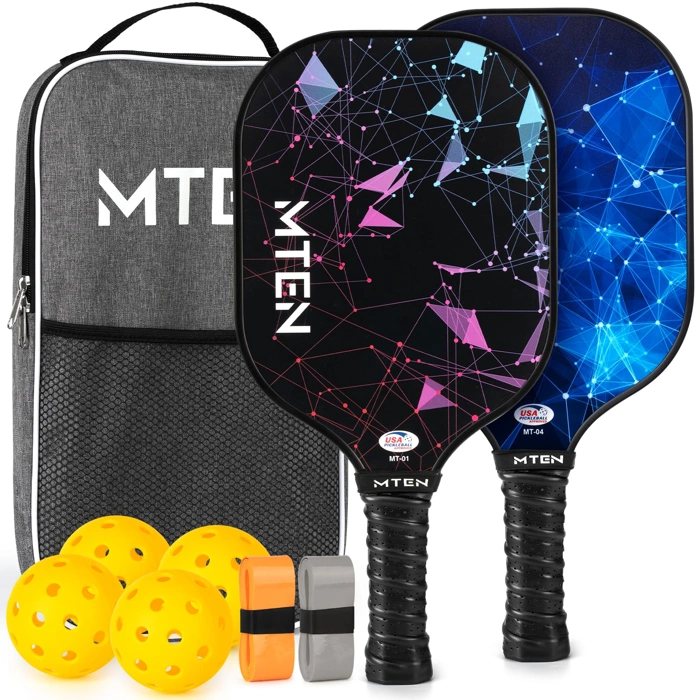
MTEN Pickleball Paddles Set of 2, USAPA Approved, Fiberglass Surface with Accessories
The MTEN Pickleball Paddles Set of 2 offers an accessible entry point for seniors exploring the listed size weight range. With USAPA approval and a fiberglass surface, this set is designed for recreational play and provides both paddles and accessories at an approachable price of $39.99.
Fiberglass surfaces are known for their natural flex, which can help dampen vibration on contact - a feature that matters when wrist and elbow comfort are priorities. The lighter weight profile falls into the range many senior players find easier to maneuver during extended play, reducing the demand on shoulder and forearm muscles while maintaining adequate stability for controlled volleys and dinks.
Because this is a two-paddle set, it suits seniors who play with a regular partner or want a backup paddle on hand. The included accessories add convenience, though the focus here is on the paddle's core attributes: manageable weight, softer surface feedback, and tournament-legal construction. USAPA approval confirms the paddle meets regulation standards for organized play.
This set works well for players testing whether a lighter paddle in the mid-7-oz range delivers the right balance of swing speed and stability. It's not built for high-power baseline drives, but it supports a control-first game style common among senior recreational players. The fiberglass face won't deliver the same pop as carbon fiber, but it offers a forgiving feel that can reduce joint impact during repetitive strokes.
With a 4.7 out of 5 rating and in-stock availability, the MTEN set represents a low-risk option for seniors wanting to experience a lighter, softer-surface paddle without a significant upfront investment. It's a practical choice for those prioritizing comfort and playability over advanced performance features.
- ✅ Lightweight design in the 7.0 - 7.5 oz range supports easier maneuverability
- ✅ Fiberglass surface provides natural flex and vibration dampening
- ✅ USAPA approved for regulation play
- ✅ Set of two paddles with accessories at $39.99 offers strong value
- ✅ 4.7 out of 5 rating reflects positive user feedback
- ⚠️ Fiberglass surface delivers less power than carbon fiber alternatives
- ⚠️ Limited brand information and detailed specifications available
- ⚠️ Best suited for recreational play rather than competitive performance
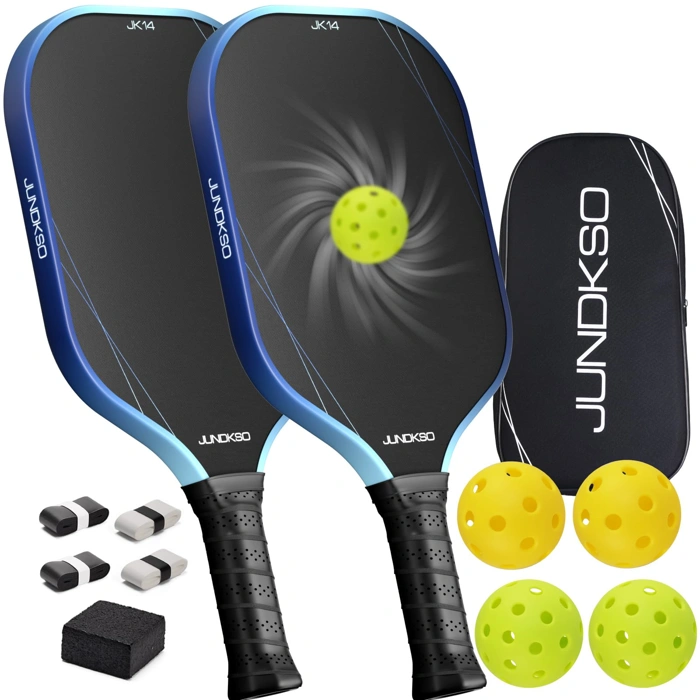
Pickleball Paddles Set of 2 - Graphite Carbon Fiber, USAPA Approved, 14mm Honeycomb Core
This graphite carbon fiber paddle set offers a midweight construction with a 14mm honeycomb core, designed to balance responsiveness with vibration absorption. The graphite face provides a firmer feel compared to composite alternatives, while the 14mm core thickness helps cushion impact without adding excessive weight to the paddle head.
The USAPA-approved design meets tournament standards and typically falls in the listed size range common to graphite paddles with this core thickness. Senior players who prefer a slightly firmer response for drives and volleys may find this paddle provides adequate feedback without the heft of thicker-core or heavyweight models.
The set includes two paddles, which can be practical for practice sessions or household use. The graphite surface tends to offer less texture than polymer or composite faces, which affects spin generation but can make ball placement more predictable. Players with sensitive joints should test the paddle's vibration profile, as graphite faces transmit more feedback than softer materials.
Core thickness is a key consideration: the 14mm honeycomb provides moderate cushioning, sitting between thinner multiple cores (which favor control and responsiveness) and thicker multiple cores (which prioritize comfort and reduced vibration). Senior players seeking a balance between touch and joint comfort may prefer this middle-ground construction, though those with acute wrist or elbow sensitivity may still find thicker cores more forgiving during extended play.
- ✅ 14mm honeycomb core offers moderate vibration absorption
- ✅ Graphite carbon fiber face provides firm, predictable response
- ✅ USAPA approved for tournament play
- ✅ Set of two paddles included
- ✅ Midweight construction balances control and comfort
- ⚠️ Graphite face transmits more vibration than softer composite materials
- ⚠️ Less texture for spin generation compared to textured surfaces
- ⚠️ May not provide enough cushioning for players with acute joint sensitivity
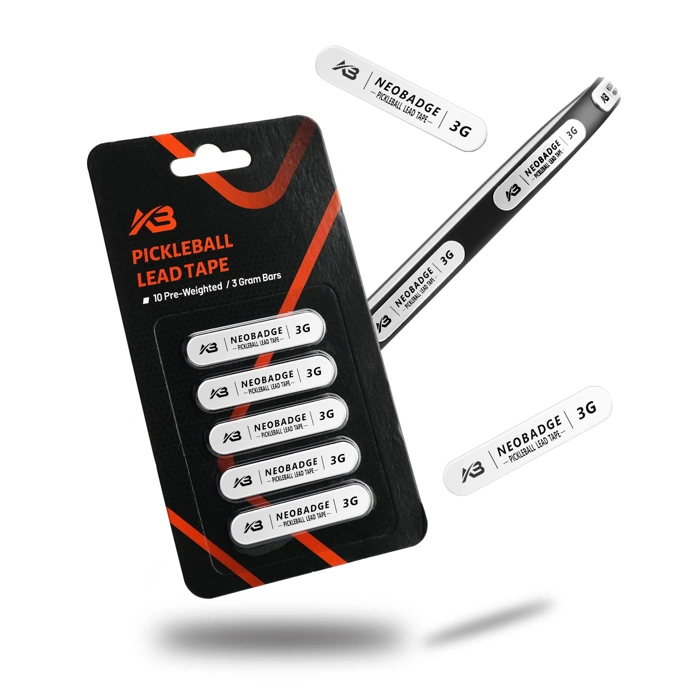
Super High Adhesive Pickleball Lead Tape
Lead tape offers a precision approach to paddle customization, allowing seniors to add small increments of weight - typically the listed size - to specific zones of the paddle. This granular control is particularly valuable if you've found a paddle that feels almost right but slightly too light, and you want to fine-tune the balance without jumping to a completely different weight class.
The Super High Adhesive Pickleball Lead Tape provides a straightforward way to experiment with weight distribution. By placing strips at the top of the paddle head, you can increase power and stability on volleys. Positioning tape along the sides adds rotational weight for spin shots, while adding it near the handle shifts the balance point toward your hand for faster hand speed and maneuverability.
For senior players, the advantage lies in the ability to test small adjustments incrementally. Start with a single strip, play a few sessions, and assess how the change affects your comfort, swing speed, and joint stress. If the adjustment feels beneficial, you can add another small piece. This trial-and-error process helps you arrive at a personalized setup that matches your strength and playing style without the commitment of purchasing an entirely new paddle.
Keep in mind that lead tape is a semi-permanent modification - it adheres firmly and may leave residue if removed. Apply it carefully, and give yourself time to adapt to each change before adding more. The goal is subtle refinement, not a dramatic transformation, so patience and small steps yield the best results.
- ✅ Allows precise weight addition in 0.1 - 0.5 oz increments
- ✅ Enables zone-specific customization (head, sides, handle)
- ✅ Affordable way to fine-tune an existing paddle
- ✅ Strong adhesive for secure placement
- ⚠️ Semi-permanent; may leave residue when removed
- ⚠️ Requires experimentation to find optimal placement
- ⚠️ Adds complexity to paddle setup for beginners
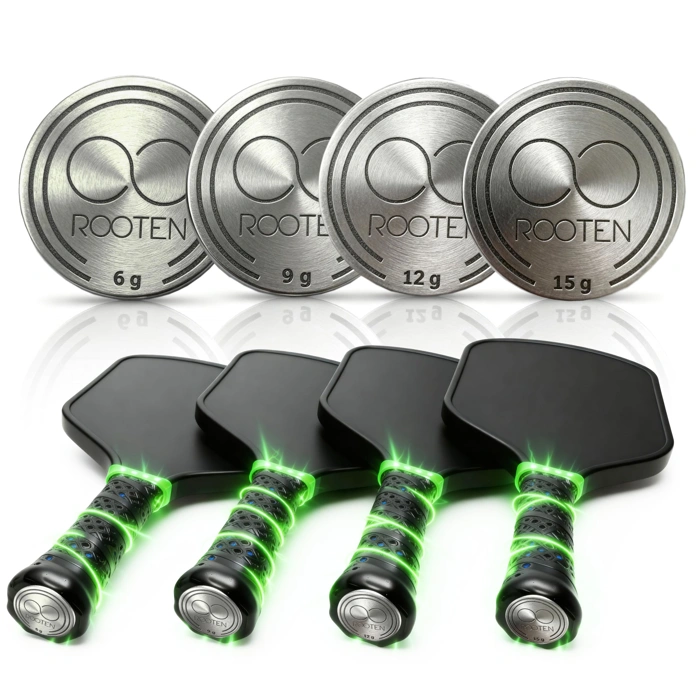
4-Pack Stainless Steel Pickleball Paddle Weight Cap Coins (6g, 9g, 12g, 15g)
Finding the right paddle weight often requires practical use, but adding lead tape or drilling into your paddle is permanent. The 4-Pack Stainless Steel Pickleball Paddle Weight Cap Coins offer a reversible alternative: four stainless steel coins (6g, 9g, 12g, and 15g) that insert into the paddle's end cap, letting you experiment with different weights without altering the paddle itself.
Each coin fits inside the handle cavity of most paddles that accept removable end caps. You can swap coins between sessions or even mid-match to feel how a lighter 6-gram addition compares to a heavier 15-gram load. This trial-and-error approach is especially valuable for senior players balancing the need for added stability against the risk of joint strain - testing multiple increments helps you identify the threshold where control improves without fatigue setting in.
Because the coins sit in the handle rather than on the face or edge, they shift the paddle's balance point toward your hand. This head-light feel can make the paddle easier to maneuver during fast exchanges at the net, though it won't add the same plow-through on groundstrokes that face-mounted lead tape provides. The stainless steel construction ensures the weights stay consistent over time, and removing a coin returns the paddle to its original specification instantly.
At $18.00 for the four-piece set, the kit costs less than a roll of lead tape plus the time spent measuring and repositioning strips. The 4.3/5 rating reflects solid user feedback, though the coins only work with paddles that have a removable end cap and sufficient handle cavity depth - always confirm your paddle's compatibility before ordering.
- ✅ Four weight options (6g, 9g, 12g, 15g) let you test multiple configurations
- ✅ Fully reversible - swap or remove coins without permanent modification
- ✅ Stainless steel construction for consistent, durable weight
- ✅ Less expensive than trial-and-error with lead tape
- ⚠️ Only compatible with paddles that have removable end caps and sufficient cavity depth
- ⚠️ Handle-mounted weight creates a head-light feel, not the same balance shift as face-mounted tape
- ⚠️ Does not add plow-through power on groundstrokes